Lisa Oppenheim
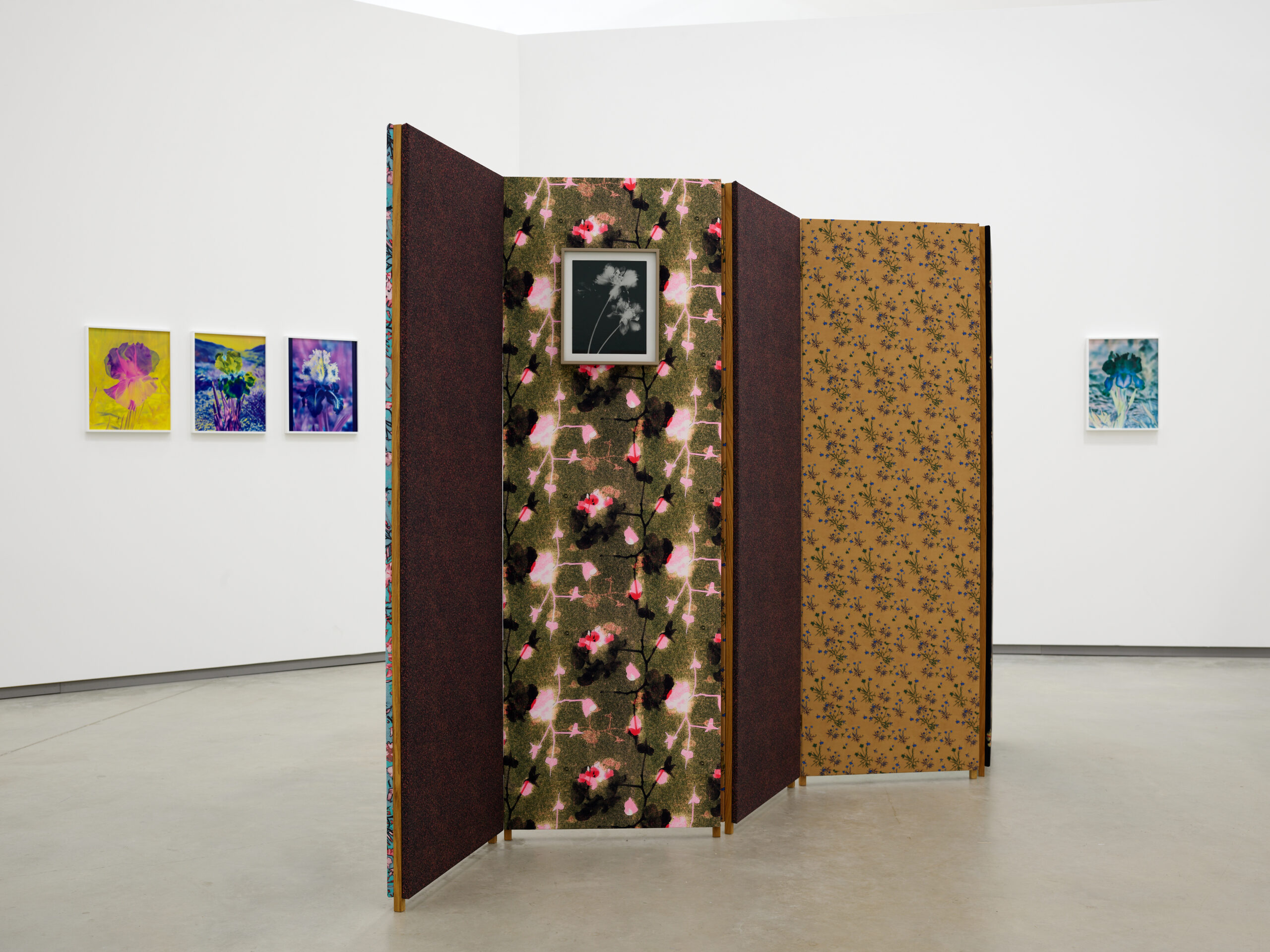
Monsieur Steichen, Letz Arles
The Artist as a Materialist Historian
In his essay “The Artist as Historian,”Mark Godfrey quotes from a lecture given by Matthew Buckingham at the Slade School of Art in 2006. Buckingham describes the vanishing point of history as forcing us “to confront history as a construction. It implies that when we reconsider past events, we’re not so much returning to another time and retrieving material or events. We are restaging those events here and now in order to think about what’s happening here and now, to think about the present.” (1) Furthermore, in the footnote Godfrey quotes Susan Buck-Morss’s The Dialectics of Seeing, (Benjamin) understood historical perspective as a focus on the past that made the present, as revolutionary ‘now time,’ its vanishing point.” (2) Lisa Oppenheim’s Monsieur Steichen first exhibited at The Contemporary Art Museum of Luxembourg, and which later travelled to Les Rencontres de la photographie d’Arles presented by Let’z Arts is a contemporary illustration of the relevance of this revolutionary attitude. Importantly, she represents the artist in the expanded field as more than just a maker but a critic, historian and even archivist. (3) Monsieur Steichen mines, mixes and reconstructs the past with various processes and techniques like the photograms, lunagrams, dye transfer and gives them new roles in image production. Playing the role of artist, artist historian and archivist Oppenheim invents a new genre of photographic materialist practice. The exhibition Monsieur Steichen is in fact, a historical survey of another counterfactual history of photography which is more material then optical. It takes the positivist history of photography and turns it on its head blending techniques from photographic history and collaging them together into singular and groups of compositions. Her work is beautiful and retinal in its exuberant colorful hues, but the main thrust of her work is to create an alternative history of the image in which materials and processes take center stage. “While the instantaneous images is circulated, celebrated, and amplified, the material objects and artifacts that comprise and define the archive, and thereby history, are at risk of being forgotten…Through a practice deeply grounded in research, Oppenheim explores the materials and processes that create the images that quite literally frame the way we see the world.”(4)
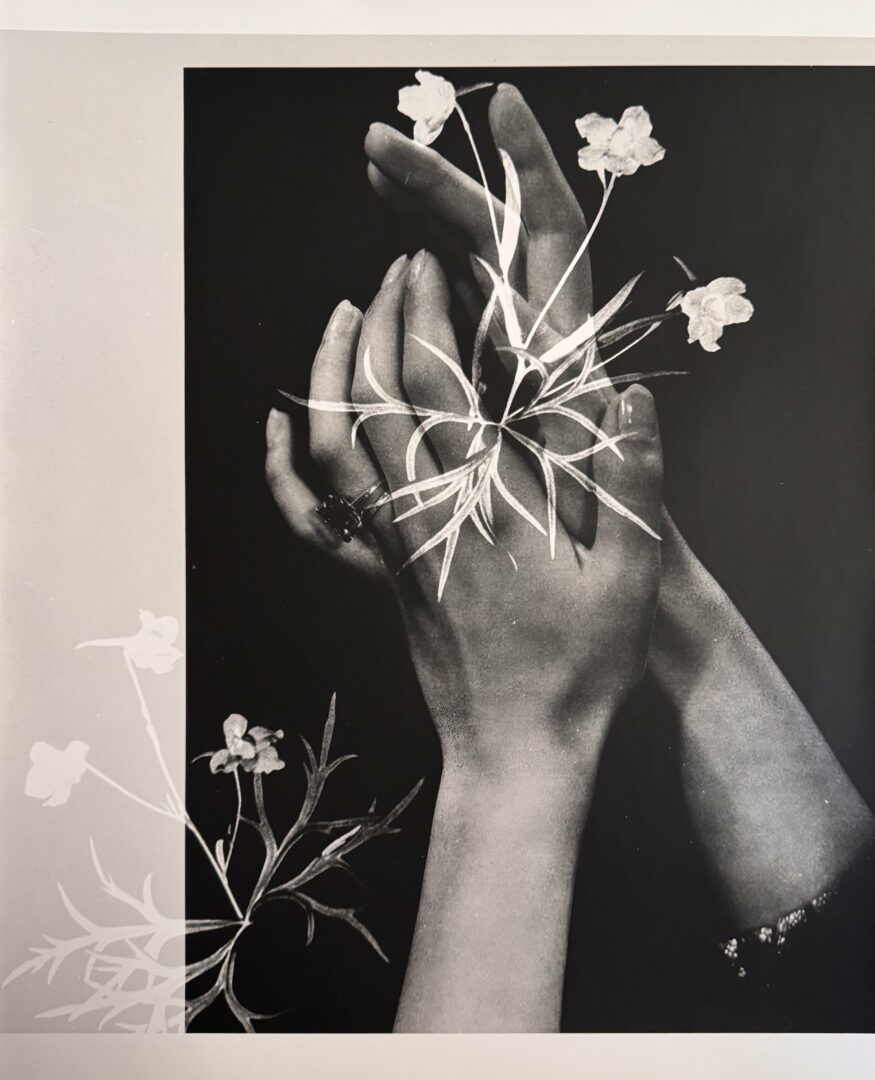
Monsieur Steichen focuses on the pictorialist photographer Edward Steichen’s hybrid practices, that entwine photography, tapestry and horticulture, or maybe even chlorophyll, chromosomes and silver salts, to create not the picturesque but something anti-formalist and conceptual to rethink and reimagine the present. Not the kind of dry, unemotional, drab, colorless unemotional conceptual art we are used but to one that is affective, full of life, colorful, performative and vital. To make works of art, that like Steichen’s, are contemporaneous to her own time. For Steichen it was modernism, humanism and industrialization for Oppenheim it is posthumanism, situated feminism and digital. What can art due to materially articulate and critique its immaterial social, political, technological, and cultural relations that are now suffocating us in the form of Big Data, social media and Generative Large Language Models. Whereas early conceptual artists before her like Art and Language and Joseph Kosuth were confronting excessive materiality of Fordist Industrialization with counter dematerializing moves elucidated by Lucy Lippard and John Chandler in The Dematerialization of Art, Oppenheim uses her role as an alternative historian, archivist and critic to create counterfactual pluripotential histories and emancipatory information economies to illuminate possible counter moves of creative intelligence. (5)
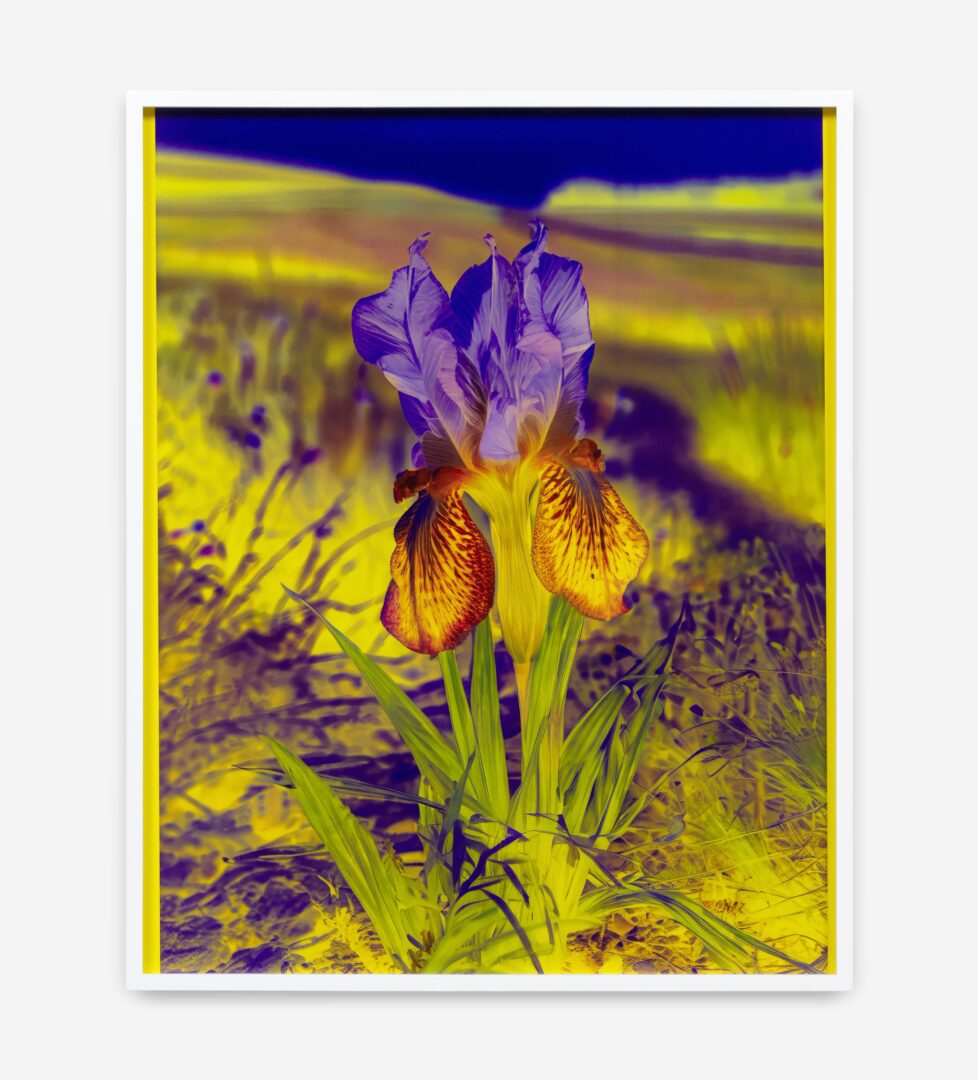
Unlike Beaumont Newhall in his catalogue for his exhibition Photography 1839–1937 Oppenheim eschews, what Douglas R. Nickel has described as Newhall’s technological determinism or a periodization of techniques, for a free form improvisational choreography of performing photo-based technics which elides temporal mapping: splashing Dektol developer, fixer and toner, interspersed with techniques of light contamination causing solarization as well as mixing up matrices and dyes in dye transfer prints.(6) In an interview with the artist Liz Deschenes, she elucidates clearly her intention as an anarchist interloper, “If printed ‘correctly,’ each of the new flower pictures could be a believable natural specimen. But by mixing up the matrices and dyes and printing them ‘incorrectly,’ color becomes a way of undermining photography’s persistent association with verisimilitude.” (7) Her hybrid practice is a pedagogy of the ways and means through which photography as a research tool can reinvigorate itself in its moment of demise, caused by digital photography and machine vision. Not through enlightened scientifical-rationality of the straight approach championed by the likes of Alfred Steiglitz, but rather through its counter praxis: uncovering latent truths through a praxis of defamiliarization.
Bibliography:
- Mark Godfrey, “The Artist as Historian,” October 120 (Spring 2007): 140–172.
- Susan Buck-Morss, The Dialectics of Seeing (Cambridge, MA: MIT Press, 1991), 339.
- Hal Foster, “An Archival Impulse,” October 110 (Fall 2004): 3–22.
- Jacob Proctor, “Ancient Libraries for Future Reference,” in Eternal Substitute, ed. Jacob Proctor (Berlin, Germany: Hatje Cantz, 2026).
- John Chandler and Lucy Lippard, “The Dematerialization of Art,” in Changing: Essays in Art Criticism, intro. Gregory Battcock (New York: E. P. Dutton).
- Douglas R. Nickel, “History of Photography: The State of Research,” The Art Bulletin 83, no. 3 (September 2001): 548–558.
- Liz Deschennes and Lisa Oppenheim, “Form and Format,” interview, in Eternal Substitute, ed. Jacob Proctor (Berlin, Germany: Hatje Cantz, 2026), 144.
Exhibition co-produced by Lët’z Arles, the Mudam Luxembourg – Grand-Duc Jean Museum of Modern Art and the Rencontres d’Arles.
Head image : exhibition view, Monsieur Steichen, Le’z Arles, été 2026.
- Share: ,
- By the same author: On the High Line, Not Everything is Given, Whitney ISP, New York,
Related articles
Manifesta 16 Ruhr
by Yasemin Koker
Hannah Darabi
by Guillaume Lasserre
Art-O-Rama 2026
by Giorgia Basili