Hannah Darabi
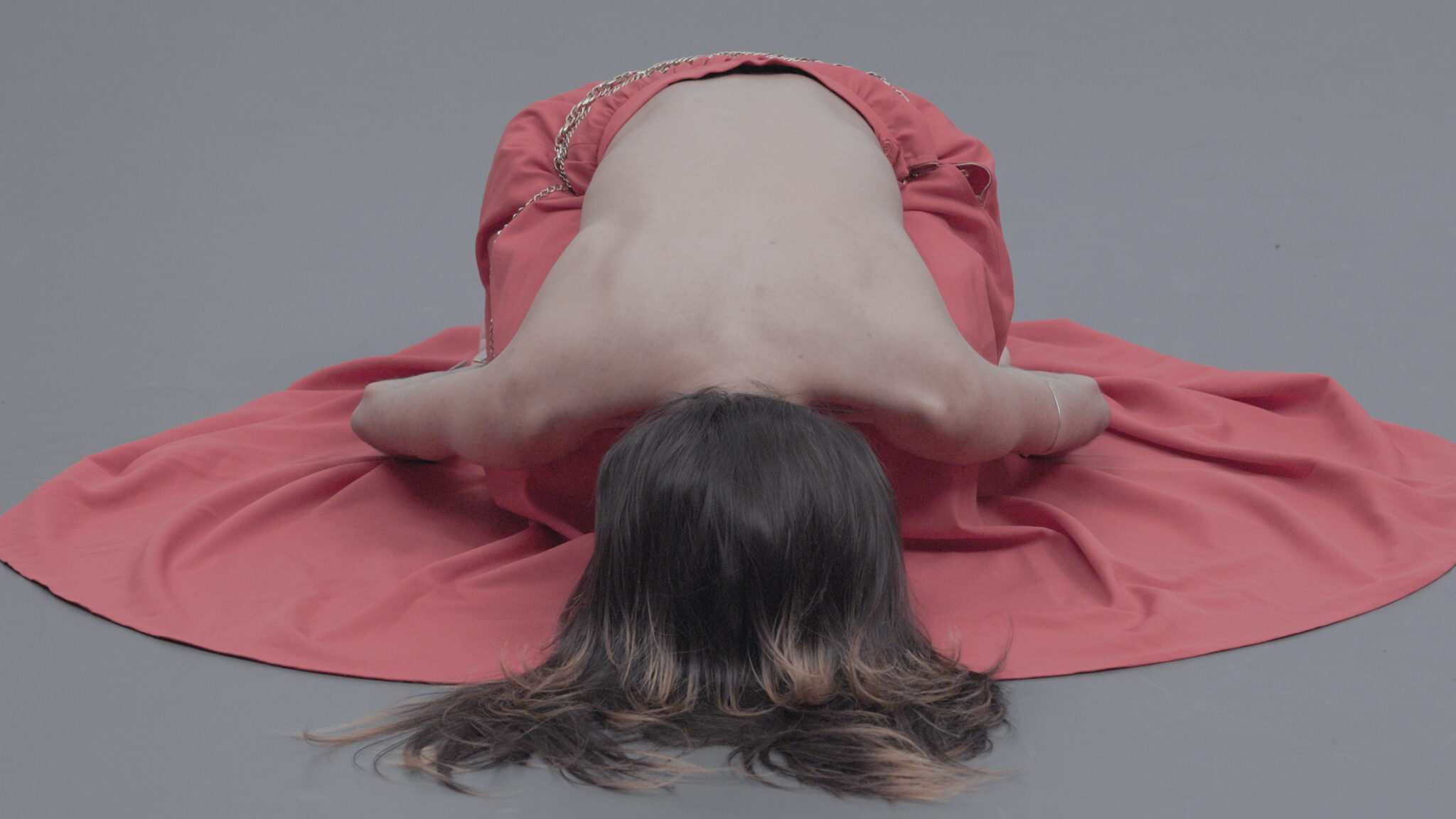
Hannah Darabi. Why Don’t You Dance?
Prix Elysée 2025, curated by Lydia Dorner
Photo Elysée, Lausanne, from 26 June to 1st November 2026.
In Lausanne, the winner of the 2025 Prix Elysée brings together three figures from Iranian popular culture to create, using fragile archive material and recorded movements, a tribute that is both sincere and generous to what dance has cost – and enabled – for those who practise it in Iran.
The exhibition by Hannah Darabi (born in 1981 in Tehran, lives and works in Paris), winner of the 2025 Prix Elysée, curated by Lydia Dorner at Photo Elysée, weaves together three names: Mahvash, a singer and cabaret dancer from the 1950s; Jamileh, a master of belly dancing and Jaheli dance; and Mohammad Khordadjan, a choreographer in exile in Los Angeles since 1979. ‘Transforming entertainment into a political act, the archive into a tool of resistance, and artistic performance into joyful resilience’ – a phrase that underpins the entire exhibition – perfectly sums up the project. This is the result of patient work carried out over several years, in which Hannah Darabi builds on the archival method already tried and tested in Rue Enghelab (2019) and Soleil of Persian Square (2021): creating a dialogue between her own photographs and private collections, ephemeral objects and press clippings gathered during fieldwork in Tehran, Los Angeles and Berlin.
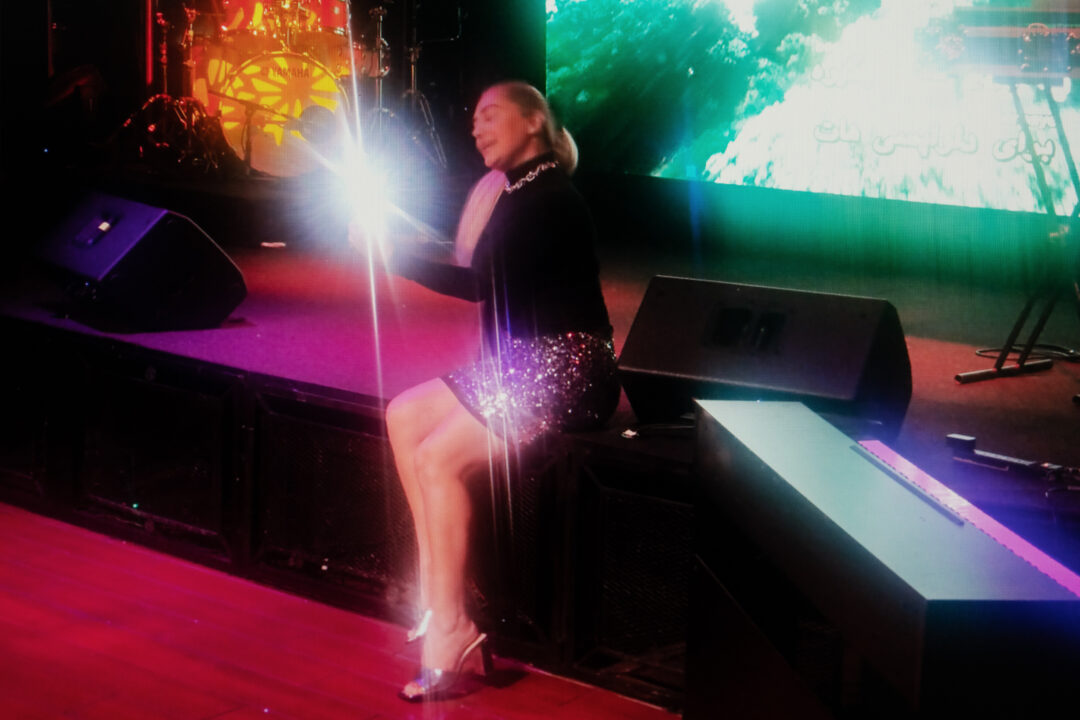
The choice of three figures avoids the pitfall of a singular, unambiguous portrait, and instead creates a polyphony that brings together a woman who died in the 1960s, a living artist who has experienced exile, and a choreographer from the diaspora whose work continues to circulate clandestinely in Iran. Each of these figures forms a part of the exhibition. Imagining a conversation between them is a way of saying that resistance through dance has no single face or era.
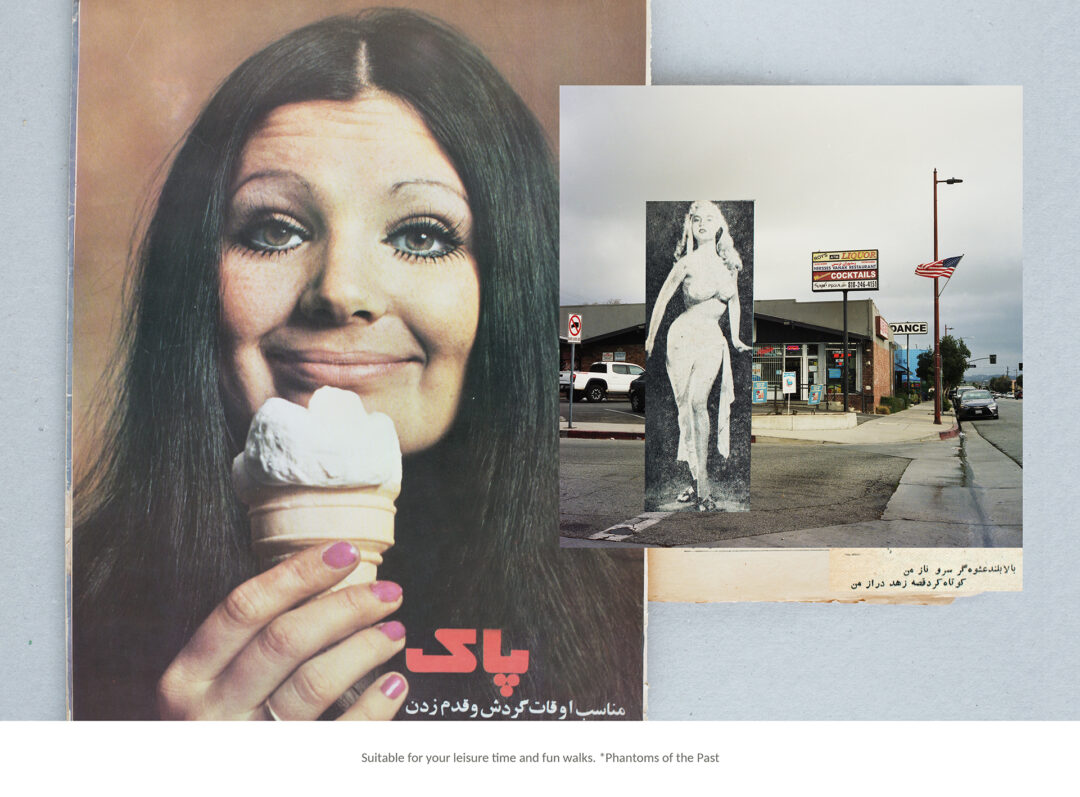
The Secrets of Sexual Fulfilment (1957), presented as a book ‘now rare because it was censored’, serves as the basis for collages in which Hannah Darabi juxtaposes the original pages with extracts from women’s magazines and her own photographs. The historical context gives this gesture its full significance. Mahvash, born Masoumeh Azizi Borujerdi into a modest family, was prosecuted for this book in 1960 and died prematurely the following year in a climate where her profession initially led to her being denied entry to the Holy Land. By reopening this book, Hannah Darabi performs an act of redress. She restores a physical, sensual and living presence to a woman whom official history had reduced first to a scandal and then to oblivion.
The fictional interview in which Mahvash, alongside two other figures, answers the questions ‘Who are you?’ and ‘Where do you come from?’, extends this logic of imaginary restitution. In the absence of sufficient oral archives, the artist invents a voice and embraces fiction as a tool of memory rather than a substitute for truth. Giving a voice to the dead is always perilous, but here it is the only possible course of action when history has left behind nothing but court records and scandalous photographs.
Jamileh, for her part, is described as the woman who reclaimed the Jaheli dance—originally a male art form—and transformed it into a model of emancipation. What the exhibition conveys between the lines, through the tension created by the three videos shot in Berlin, finds further resonance in the biography of the artist, born Fatemeh Sadeghi. After 1979, she was forced to sign a letter of repentance barring her from public performance, before rebuilding her career whilst in exile in Los Angeles. What Hannah Darabi terms a tension between tradition and modernity is not an abstract aesthetic motif, but the memory of a very real upheaval—a pain that the work transforms into the energy of dance.
The text accompanying the exhibition soberly traces Khordadian’s journey after 1979: her exile in Los Angeles and the immense, yet clandestine, success in Iran of her Iranian aerobics cassettes. It does not dwell on the harsher ordeals documented elsewhere by the press, notably his arrest upon returning to Tehran in 2002 and the ensuing trial, as well as his televised coming out in 2006 – one of the first by a prominent Iranian figure. This discretion regarding these episodes can be read as a choice of tact: Khordadian is alive and continues to tell his own story through the media of his choosing, and this media exposure should not decide on his behalf what aspects of his private life should be revealed. The statement attributed to him in the interview supplement: ‘I love Iranians, and I want my future life partner to be Iranian’, is enough for those who know how to listen, without ever forcing a confession that he himself has chosen to make elsewhere and in other words. It is a form of elegance that is rare in museum practice, where one all too often succumbs to the temptation to explain everything.

The Prix Elysée, the result of a partnership with the watchmaker Parmigiani Fleurier and worth 80,000 Swiss francs, has enabled this project to take shape in its most accomplished form, from the bilingual book to the photographic series and the videos shot especially for the occasion. Hannah Darabi revealed that she had answered questions from the press thirty-six hours after the US strikes on Iran in June 2025, whilst her family were in Tehran. The fact that the institution honoured its commitment at such a grave moment, without postponing or toning down the project, speaks volumes about the necessity of showing it now.
‘Why Don’t You Dance?’ succeeds in the difficult task of addressing resistance without exploiting suffering, and of speaking of joy without naivety. The exhibition does not claim to tell the whole story of Mahvash, Jamileh or Khordadian, but what it chooses to show, it shows with great precision, leaving it to the curious visitor to seek out, beyond the exhibition walls, the rest of a story that three lives can barely begin to tell.
Head iamge : Hannah Darabi, excerpt from the video Saeed, from the series Follow the Beat, Why Don’t You Dance, 2026 © Hannah Darabi
- Share: ,
- By the same author: Biennale Son, Camille Llobet, After the End. Maps for Another Future, Wolfgang Tillmans, Bergen Assembly,
Related articles
Art-O-Rama 2026
by Giorgia Basili
18th Lyon Biennale
by Sarah Ihler-Meyer
Bianca Bondi
by Agnès Violeau