Geister
Geister
Kunstmuseum Basel
September 20, 2025 – March 8, 2026
Curator: Eva Reifert
Spirit, are you there?
Ghosts are omnipresent in our cultural environment, even though “the presence of ghosts” is a linguistic speculation, even an oxymoron, since their very existence depends on a belief in an afterlife that transcends rationality. Since the existence of supernatural phenomena is subject to scientific verification, which requires that an experiment can be repeated identically when the conditions of its realization produce the same effects, it is difficult, to say the least, to attest to the reality of ghosts according to this methodology. The exhibition at the Kunstmuseum Basel is more about presenting a history of the representation of ghosts in art from the 18th century to the present day, with all that this implies in terms of the evolution of our relationship with this truly societal phenomenon. “Geister” brings together masterpieces from various museums and collections around the world, demonstrating an unwavering interest in spirits. The coexistence of pieces from different eras, from modern to contemporary, highlights the evolution of artists’ perspectives and approaches, ranging from the most pronounced mysticism to the most unbridled facetiousness.
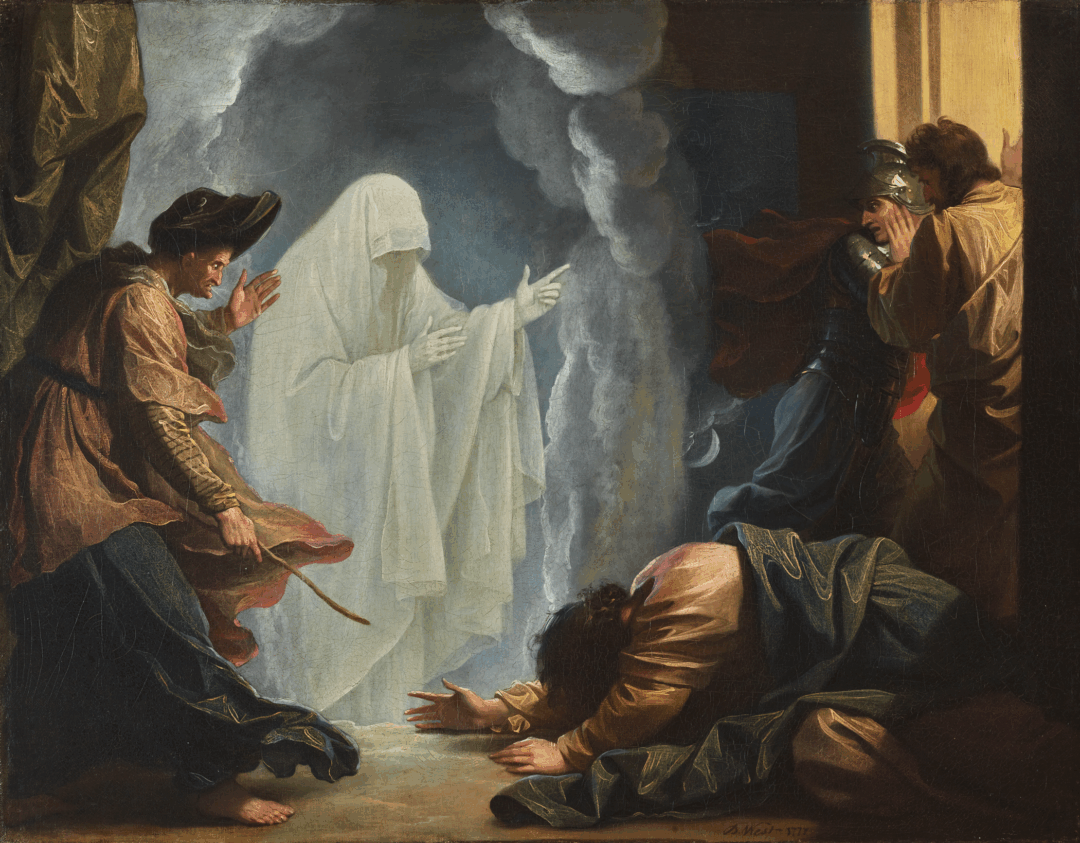
Huile sur toile / Oil on canvas. Wadsworth Atheneum Museum of Art, Hartford, CT. Bequest of Clara Hinton Gould.
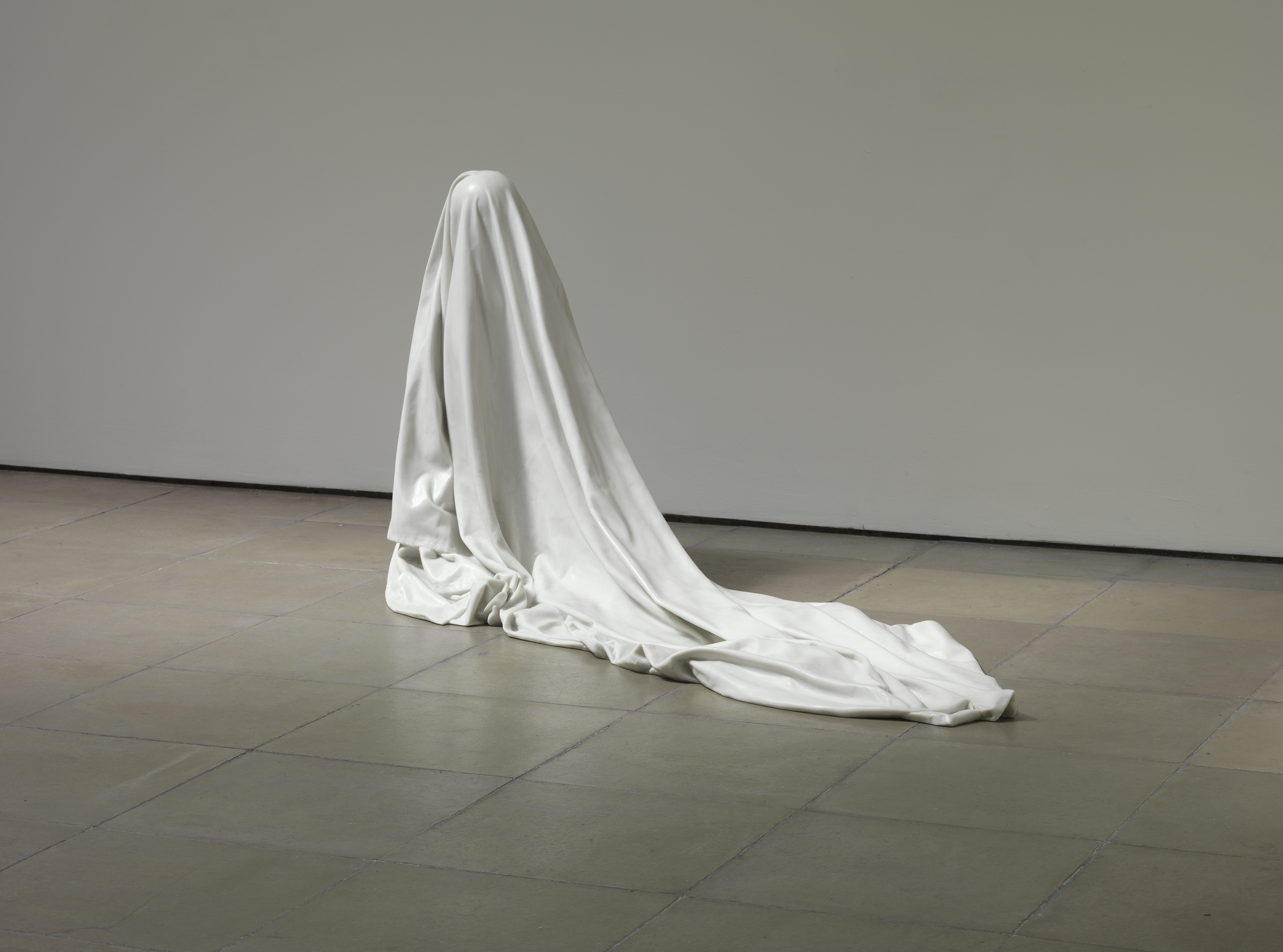
The exhibition’s approach is to mix different eras and atmospheres and to show an eminently fluctuating relationship with the afterlife. The first room of the museum immediately confronts us with the different themes that punctuate this exhibition. A pepper’s ghost sets the tone by immersing us in a play of disconcerting reflections: a simple stage device consisting of a bay window giving the impression of a spectral presence, this well-known device, still in use today, evokes the atmosphere of cabaret and deception that long permeated our relationship with spirits during the 18th and 19th centuries, a favorite playground for charlatans and jugglers of all kinds who knew how to take advantage of the naivety of onlookers. In the next room, a marble sculpture by Ryan Gander stands alongside a neon sign by Susan MacWilliam (Where Are The Dead, 2013) heavy with meaning, while a projection shows excerpts from films illustrating the evolution of the treatment of ghosts in cinema: we are warned that the exhibition will oscillate between gravity and mystery, mysticism and humor, sensationalism and crude deception.
“Geister” is punctuated with historical works, some of which come from the great names in art of the time, such as William Blake, Eugène Delacroix, and Benjamin West, whose painting Saul and the Witch of Endor (1777) provides one of the first, if not the first, representations of an old man draped in white cloth, an image that would become viral, also showing its links with the Christian religion and the Old Testament. This is also proof that the history of ghosts questioned and inspired the artistic and intellectual elite of the time and continued throughout the 19th and even into the 20th century, as evidenced by the interest shown in it by such a famous writer as Thomas Mann, whose accounts of séances, displayed in a showcase, as well as a knife inexplicably broken into several pieces during one of these sessions, never cease to amaze. In the 19th century, the emergence of rational scientific thinking did not prevent mysticism from developing, even borrowing from scientific methods to establish proof of the existence of life after death: the exhibition richly documents this era when mediums, supposed to be the link between this world and the next, triumphed—countless works were produced with their help, while photographs of ghosts multiplied.
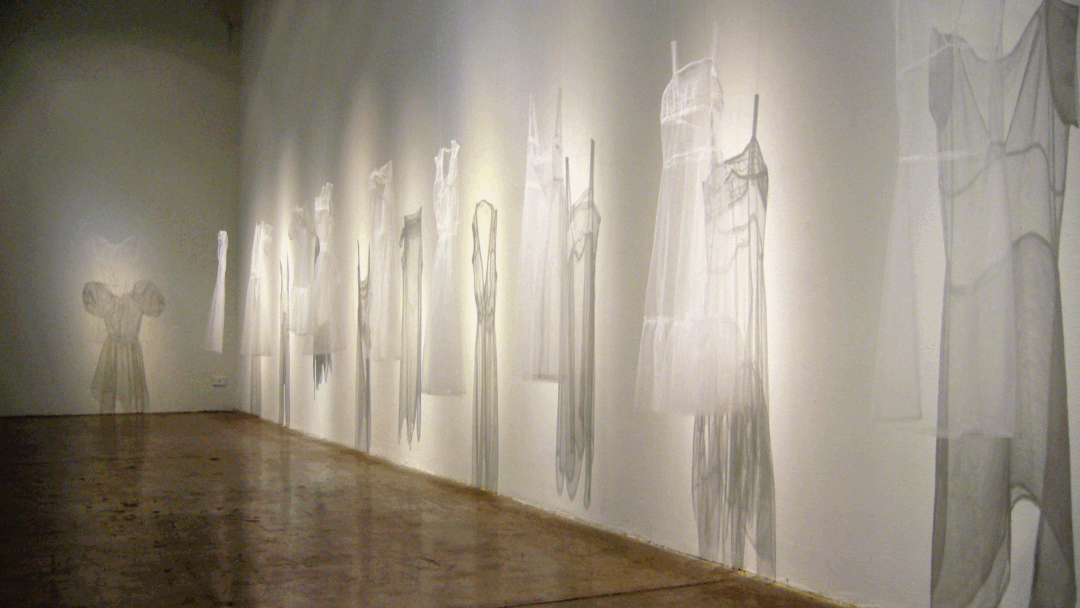
Tulle, propriété de l’artiste / property of the artist. Photo : Claudia Casarino.
In contemporary art, the relationship with ghosts and their representation takes on a completely different turn, much less dramatic and much more “spiritual.” Canonical representations of ghosts become the pretext for all kinds of facetious diversions: supposedly immaterial spirits become heavy marble statues (Ryan Gander, tell my mother not to worry, 2012), a broomstick covered with white cloth is enough to signify the presence of a ghost (Erwin Wurm), as is a draft of air passing through a huge empty room (again Ryan Gander, who seems particularly inspired by specters), Mike Kelley’s ectoplasms come out of his nostrils: anything goes when it comes to mocking the old representations of ghosts, whose photographic stratagems tend to raise a smile despite the serious poses adopted by the “witnesses” of the apparitions, such as Georgiana Houghton “with a spirit” by Frederick Hudson.
After the era of blind belief, when the use of fledgling photography served to establish “tangible” proof of the existence of ghosts—the subtleties of this nascent invention being accessible only to a small group of insiders—a long-lasting era of demystification began. At the end of the 20th century, ghosts no longer frighten people as they did in the 19th century. They have become part of everyday life and a mass-market product, thanks in part to the extraordinary impact of cinema. The public has gradually become accustomed to seeing them, to the point where they have become a cultural commodity like any other: they are hunted with a vacuum cleaner and adopted like any other pet; the little ghost Casper has entered children’s bedrooms when he was supposed to terrify them; what was once a radically strange and disturbing phenomenon has become a reassuring soft toy, symbolizing capitalism’s incredible alchemical power to transform any initial repulsion into a desire to buy. The presence of the ghost has been diluted in the mechanisms of society, no longer manifesting itself through outdated representations, but in the form of malfunctions that disrupt lighting systems (Philippe Parreno) or glitches that cause computers to bug, adapting to new forms of social functioning as it reanimates machines, just to disrupt the supposed rationality of the world once again. But it also appears in the background of transgenerational stories that haunt our sexist patriarchal societies: Claudia Casarino’s play (Desvestidos, 2005), which projects the shadows of openwork nightgowns onto the wall opposite, acts as a perfect metaphor for those family ghosts who hesitate between transparency and concealment.
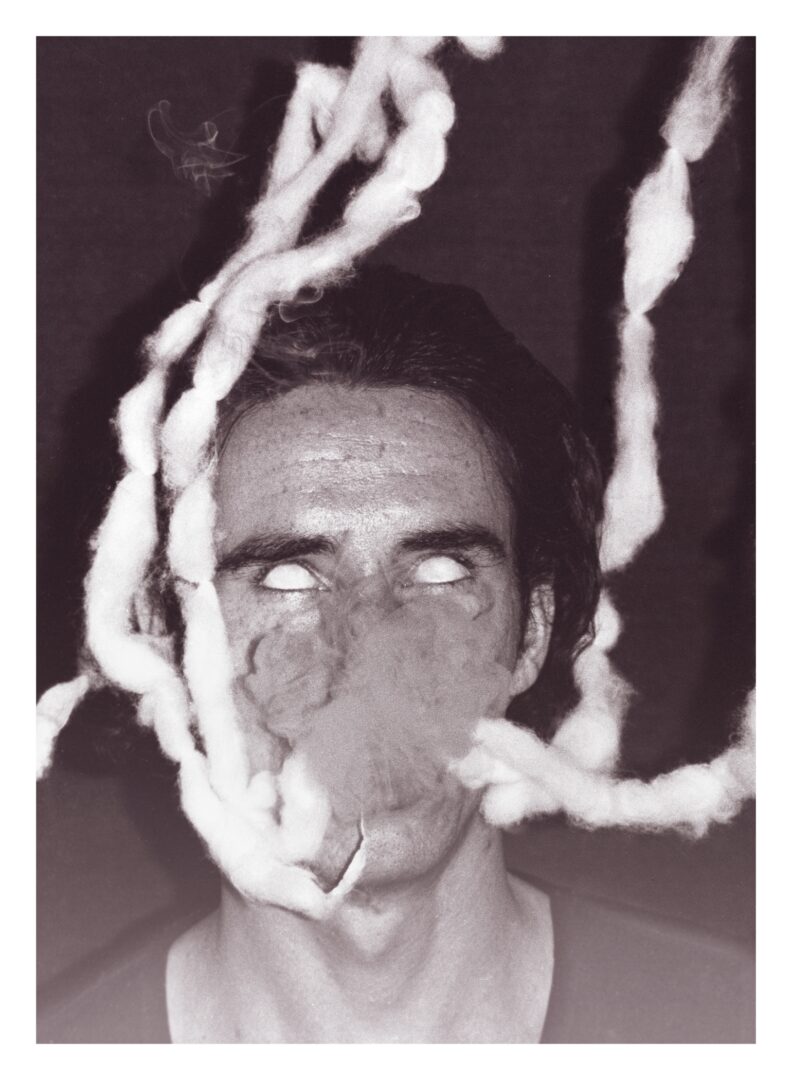
Chromogenic print, Edition of 5 (1 APs). Copyright: © Nachlass des Künstlers / estate of the artist. Creditline: Courtesy Mike Kelley Foundation for the Arts.
Head image : Ryan Gander, Tell my mother not to worry (ii), 2012. Une sculpture en marbre représentant la fille de l’artiste, Olive, faisant semblant d’être un fantôme en se couvrant d’un drap blanc / A marble sculpture representing the artist’s daughter, Olive, pretending to be a ghost by covering herself with a white bed sheet. Private Collection ; Anish Kapoor, London, Photo : Ken Adlard.
- Share: ,
- By the same author: The Arts of the Earth (Les Arts de la Terre), Saâdane Afif, Global Fascisms, The Story That Never Ends, Modern Love at musée d'art contemporain d'Athènes,