The Swiss model – miracle or plan?
By Gabriela Anco
In 2004, Pamela Rosenkranz was graduating from the Arts University in Bern and Nicolas Party from ECAL, in Lausanne, while Claudia Comte was beginning her studies at the same school. Three unknown students who were to become some of Switzerland’s most recognizable artists.
Addressing art scenes globally, interestingly, Switzerland never fails to appear among the most established. How is it that a country with a population of 9.1 million succeeds in competing with the US, France, Germany, the UK and China, repeatedly producing contemporary artists with disproportionate international visibility?
The 2000s were years of change and discovery: the new millennium. Culture was formally anchored in the Federal Constitution in 1999. Grants were about to become more plentiful.
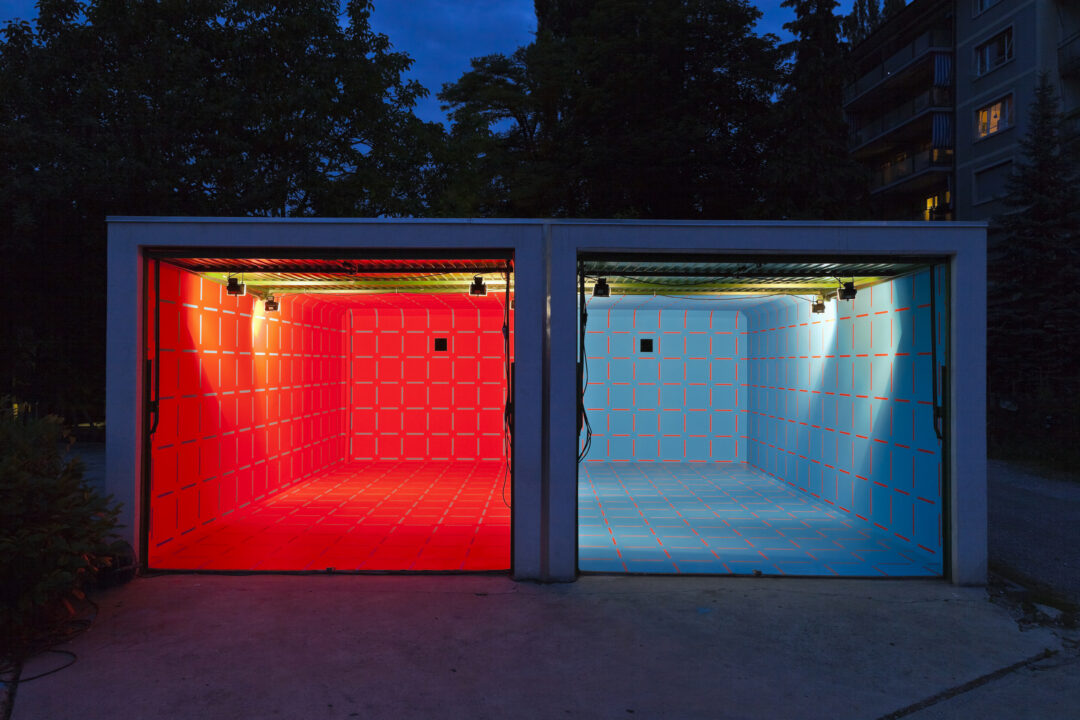
Students at ECAL were being taught by a concentrated segment of the Swiss art world. John Armleder, co-founder of the Geneva-based Ecart group and artist-run space (1968–82), instrumental in bringing the likes of Joseph Beuys, John Cage and Andy Warhol, had just left his position on the Federal Art Commission. Philippe Decrauzat had recently co-founded Circuit, an artist-run space established in Lausanne by a group of ECAL graduates, while Sylvie Fleury, Stéphane Dafflon and Francis Baudevin connected the school to Geneva and Lausanne’s galleries, independent spaces, museums and musical subcultures. Curator and art critic Lionel Bovier, founder of JRP|Ringier and today the director of MAMCO, was teaching theory.
Comparable overlaps between education and professional practice existed in Geneva, Basel, Zurich and Bern.
These networks also relied on figures connecting scenes and generations. Bern-born Olivier Mosset, co-founder of BMPT, became an important bridge between the Swiss and American scenes after moving to New York in 1977. Institutionally, MAMCO’s founding director, the late Christian Bernard played a central role in Geneva, where a younger generation of curators emerged around him, including his eventual successor, the aforementioned Lionel Bovier, but also Marc-Olivier Wahler. The latter extended these connections internationally, from MAMCO and CAN in Neuchâtel to the Swiss Institute in New York and the Palais de Tokyo in Paris.
This is common in cultural worlds where professionals are integrated into a web of structures responsible for the production and display of cultural goods. Teaching provides artists, often relatively young, with employment compatible with maintaining a studio practice, while students encounter teachers close to them in age and social context, learning not only theory but the practicality of being an artist.
Yet the same permeability that makes the system effective also makes it unusually dense. Teachers exhibit former students; artists sit on juries; curators teach; directors publish; artists establish spaces in which their peers exhibit. Such proximity facilitates the rapid circulation of information and opportunity, but it also raises a more uncomfortable question: how permeable is the network to those who do not already circulate within it?
By 2008, Party was a constant fixture within the Swiss ecosystem, having participated in exhibitions within established artist-run spaces such as Forde in Geneva or Circuit in Lausanne, and having earned the prestigious Kiefer Hablitzel twice with BLAKAM, the art collective he was part of, before moving to Glasgow to pursue his MFA. In his own words, Switzerland was too easy, and he wanted to be more challenged in a different country.[1]
Rosenkranz, on the other hand, was implanting herself in the Bernese crowd. After receiving a two-year studio grant from the Canton of Bern in 2006 and participating in exhibitions at Kunsthalle Bern, Annex 14 and Zentrum Paul Klee, she was on her way to becoming established as an international artist, with participation in the 2008 Berlin Biennale and Manifesta 7.
Claudia Comte’s post-student years were a continuation of prestigious funded residencies such as the Cité Internationale des Arts in Paris and Istituto Svizzero in Rome, which eventually led her to the same Kiefer Hablitzel Award in 2012. In Switzerland, she circulated in the Suisse Romande scene with group shows at the Musée cantonal des Beaux-Arts, as well as the usual suspects: Circuit and Forde.
The question, nonetheless, is not to biographically analyze the career ascent of these three artists — pardon the paralipsis — but rather to understand how the Swiss art ecosystem integrates and accommodates practices that are different in their concept, rendering, production and display.
But was Switzerland always so generous with its artists? Like its fellow European countries, a certain investment in art had been present since the end of the 19th century, with a first Federal Decree on the Promotion and Elevation of Swiss Art signed in 1887, which authorized periodic national exhibitions and federal acquisitions of work by Swiss artists. That said, most funding was granted through municipal purchases — such as the development of the Zurich and Bern municipal art collections — which dictated a conservative taste in art.
A big change came, however, in the interwar period, with the formation of the Basel Kunstcredit in 1919, which functioned essentially as an emergency support mechanism through purchases and commissions that alleviated artists’ material hardship. Other cities followed: Lausanne created its Fonds des arts plastiques in 1932, and Geneva opened its cantonal and municipal funds in 1949 and 1950. And then, in 1968–69, the Canton of Aargau established the Aargauer Kuratorium, with its professional peer-based allocation of cantonal cultural funding instead of simply purchasing art. This eventually led other cantons to develop similar structures, contributing to the professionalisation of artistic practice as an economic field. Support progressively moved beyond the simple acquisition of a finished work: grants, residencies, public commissions, teaching positions, artist-run organisations and institutional exhibitions became part of an increasingly complex circuit through which artistic labour could be financed. The Federal Office of Culture was established in 1975.
Pro Helvetia, the organization mandated today by the federal government to distribute its share of the cultural budget, was founded in the late 1930s with an original role of “spiritual national defence” against fascist and Nazi propaganda,[2] and not as an artistic fund at all. It is important to clarify that Switzerland’s overall culture budget, before and after the establishment of a federal strategy, is an uneven compilation, with about 50% coming from municipal funds, 40% from cantonal funds and the rest from the Confederation.[3] It is in that context that the Culture Promotion Act was not adopted until 2009, and it came into force in 2012. Today, Pro Helvetia operates on roughly CHF 45 million yearly, from an overall national culture spending of roughly CHF 3 billion. Compare that to the neighbors. In 2023, public expenditure on cultural services amounted to €2.8 billion in Switzerland, about €18.2 billion in France and €16 billion in Germany.[4] Per capita, however, Switzerland comes out ahead: approximately €309 per inhabitant, against €267 in France and €189 in Germany. But forget not that the Confederation is uneven; for instance, in 2022 Basel-Stadt spent CHF 1,071 per inhabitant on culture at the cantonal + municipal level, while Schwyz spent only CHF 104.
Today, this decentralized structure translates into a rich network of overlapping opportunities. Municipal and cantonal grants coexist with federal prizes such as the Swiss Art Awards, residencies and artist-run spaces; Kunsthallen and art centres provide institutional visibility, while Pro Helvetia facilitates international circulation. Commercial galleries and private foundations enter the equation alongside public funding, rather than simply replacing it. Once a year, in June, many of these layers converge in the same city, Basel — Art Basel and its constellation of six other fairs, including Liste, coincide with the Swiss Art Awards; museums and foundations put on their best shows; independent spaces, galleries, collectors and international curators operate within remarkable proximity.
Two decades later, Party, Rosenkranz and Comte offer three strikingly different examples of what happens when this infrastructure encounters the market.
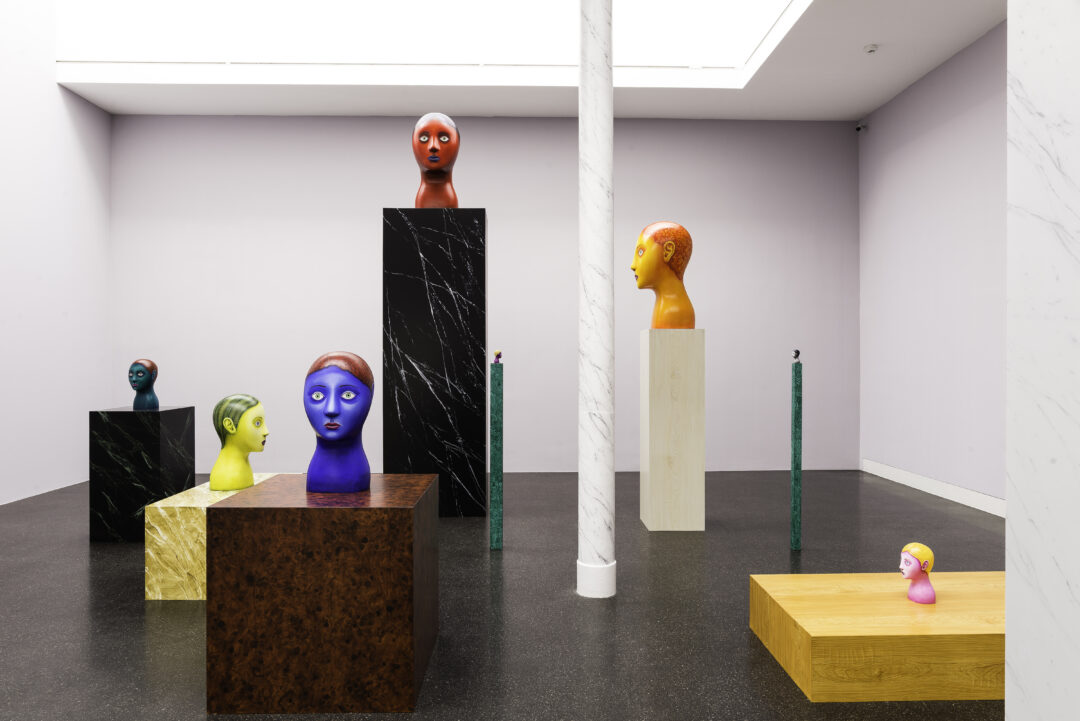
By 2015, Party had exhibited at the Swiss Institute in New York and the Galerie Gregor Staiger in Zurich, and had had a solo show at the Centre culturel suisse in Paris. His first large solo exhibition in Switzerland took place at SALTS in Basel. In about a decade, he pivoted first from street art and later from collaborative work in Lausanne towards a more conventional painting practice. In 2013, inspired by a Picasso pastel, he fully embraced the medium, developing the highly polished portraits, still lifes and landscapes in vivid, often contrasting colours for which he is now known, drawing on Hodler, Vallotton, Morandi, Redon and Magritte. Parallel to a more conventional format — paintings on canvas or paper — Party configures his museum installations around a spatial thinking inherited from his earlier mural work.
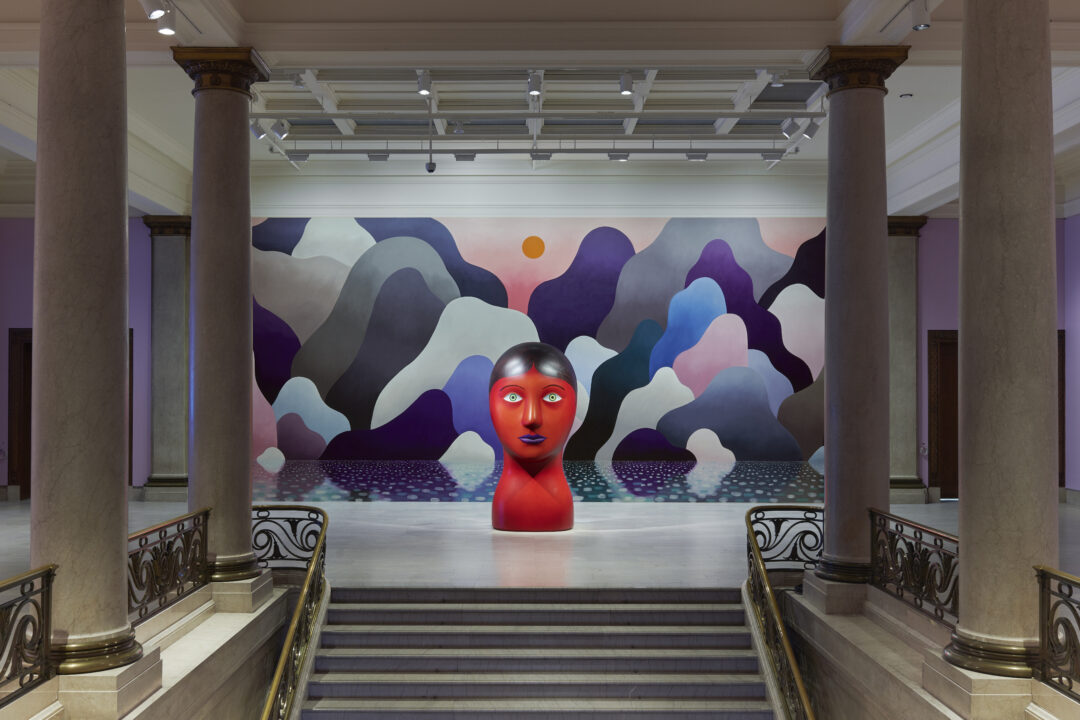
What sets Party apart is his simultaneous association with six art galleries, of which two are Swiss: Gregor Staiger and, recently, Hauser & Wirth. The arrival of the latter predictably pushed his primary prices firmly into six figures, while some auction sales reached seven.
Party accepted the game of the market, and even revolutionized it to the extent that all his galleries retain 50% of sales without any holding superiority over the others.[5] Over the last two years, his works were some of the most sought-after during the fairs. All six galleries participated in Art Basel in Basel in 2026, demonstrating that the scarcity of his work is not necessarily the result of limited production, but of exceptionally high demand.
At studio level, Party’s mature practice operates with comparatively modest material and fabrication requirements and doesn’t employ assistants to produce the paintings. On the other hand, the shows he stages in museums are often supported by both his gallery partners and state funding, a virtuous cycle that allows everyone to benefit from each other: the galleries from sales, the country from its representation abroad on the art market, the artist from the possibility of continuing his work without compromising.
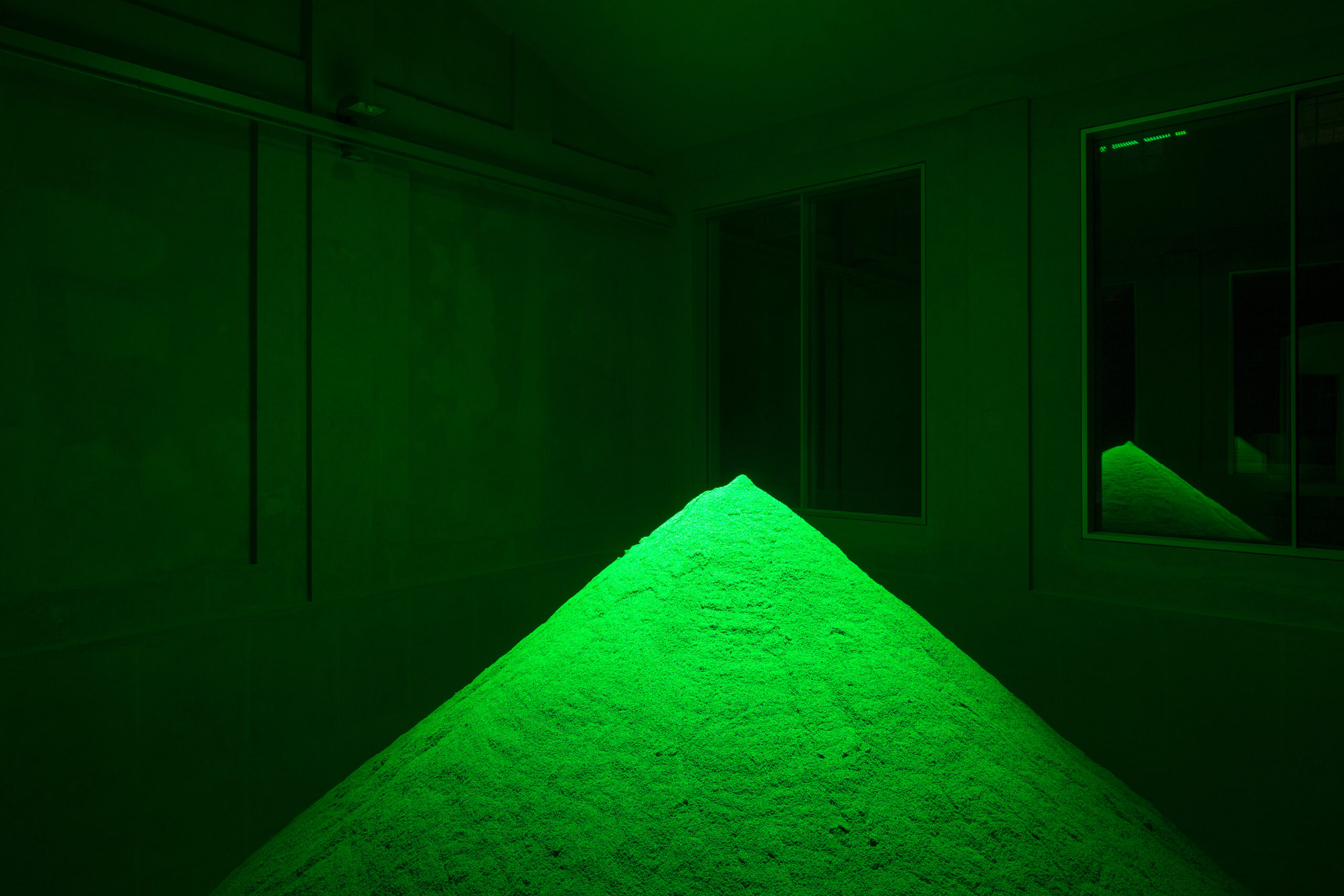
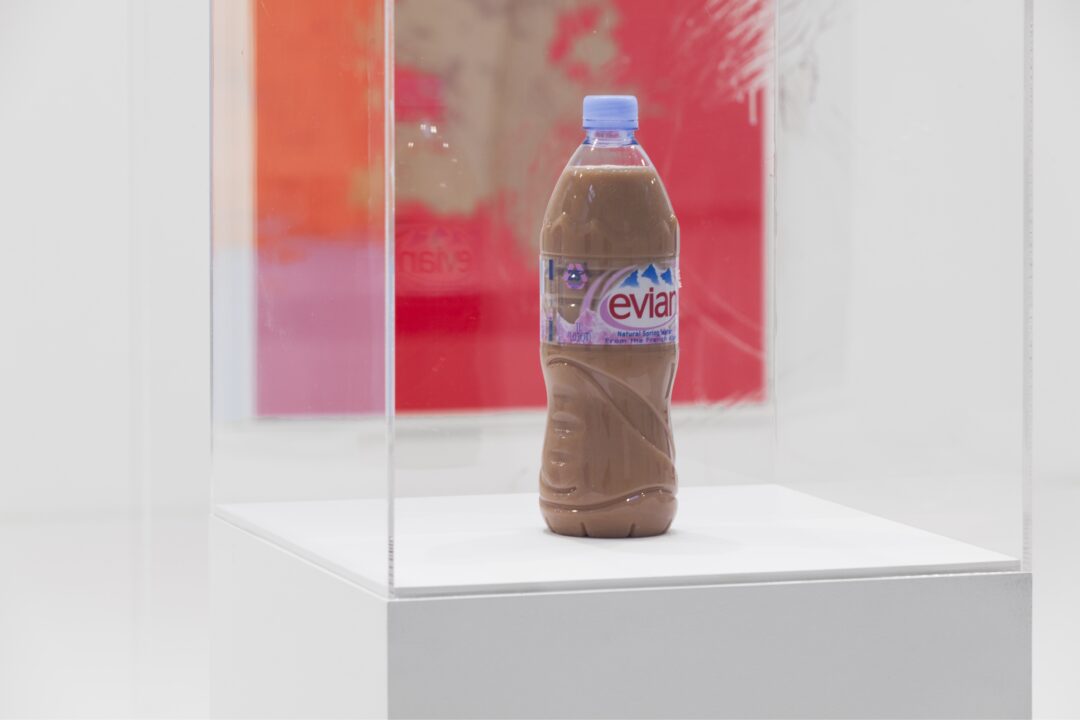
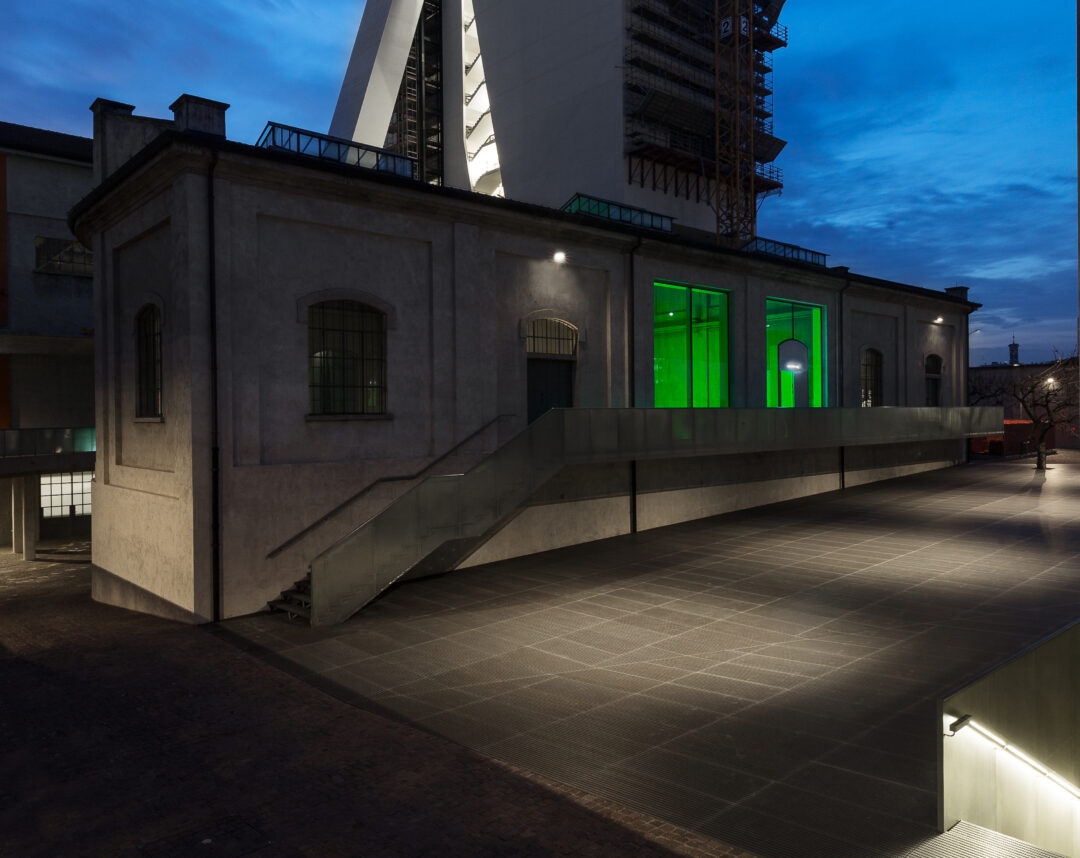
In 2015, Rosenkranz was representing Switzerland at the Venice Biennale, after having spent two years at the Rijksakademie in Amsterdam, a period in which she had shown at the Swiss Institute in New York, Kunsthalle Basel and the Centre d’Art Contemporain Genève. Contrary to Party, her work leans towards a fully conceptual practice, where she explores the constructed distinction between nature and culture; biochemical determination; bodies and perception; consumer products; technology and evolutionary biology. Her work is deeply minimalistic, while her installations excel at immersing the viewer in monochrome colour environments, often touching upon all our senses. Her installation Infection at Fondazione Prada in 2017 filled the Cisterna with an enormous mound of sand illuminated with green RGB light and impregnated it with a synthetic recreation of cat pheromones, the smell of which overwhelmed visitors. Rosenkranz’ process is founded on deep research covering economic, philosophical, biological and moral/ethical sciences. Moreover, the production of her installations requires a wide range of technical and institutional partners. Even though her work provides immediate sensory accessibility, it also excels in conceptual opacity. Granted, she still received the 2025 Swiss Grand Award for Art/Prix Meret Oppenheim, one of the most prestigious prizes awarded to mid-career artists in Switzerland. Her subsequent institutional recognition suggests that contemporary Swiss cultural support no longer depends upon broad public legibility as its principal criterion of value, thus allowing a greater variety of practices to flourish within the system.
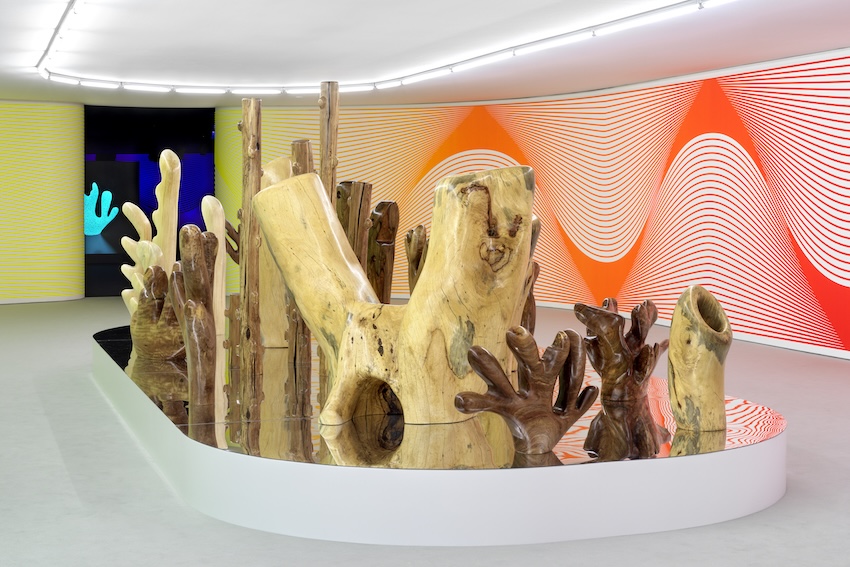
Claudia Comte followed her trajectory through SALTS in 2012, Centre Pasquart and the Centre culturel suisse in 2013, Haus Konstruktiv in 2014 and the Musée cantonal des Beaux-Arts in Lausanne by 2016. Her career oscillates between extensive research-based projects and smaller formats produced in the studio, ranging across sculpture, wall painting, installation, machine production and increasingly ecological imagery — waves, cacti, forests, geological strata, biomorphic systems. Although rooted in research, her practice speaks first through form, scale and visual experience. Through a precise vocabulary of recognizable objects and motifs, the work acquired a strong formal identity across different media. While extensively present on the market and represented by four galleries, Comte benefits from substantial support from private foundations such as TBA21, with which she began collaborating in 2018. Comte has become an increasingly prominent voice within ecological art, showing and speaking about marine ecosystems, deforestation, biodiversity and the relationship between human and non-human forms of life. The collaboration with TBA21 eventually led her to a residency at the Alligator Head Foundation in Jamaica, where scientific research into coral regeneration informed the project Underwater Cacti (2019), a group of sculptures installed on the seabed and intended to become substrates for marine life.
By no means do I suggest that the success of these artists is due exclusively to the Swiss model — no model can help on empty ground, and here, the ground is very fertile. As such, the Swiss model’s achievement may not be that it creates great artists. It is not its role. Rather, it helps them by creating time, space, employment, visibility and repeated opportunities well before the market or institutions decide whether they are economically and culturally valuable. And yet, its weakness is the inverse of its strength: the denser the ecosystem, the more power accumulates among the relatively small number of people who teach, select, exhibit, fund and validate within it. Switzerland’s art world is therefore neither miracle nor centrally designed plan. It is a highly developed network — and networks are exceptionally good at supporting those who enter them. The more difficult question is who gets in.
[1] Nicolas Party, interviewed by Russell Tovey and Robert Diament, Talk Art, Season 16, Episode, 1, 3 March 2023.
[2] From “Message concernant l’encouragement de la culture pour la période 2021 à 2024”, by Pro Helvetia, page 3045.
[3] Federal Office of Culture, Taschenstatistik Kultur in der Schweiz 2021, section “Kulturfinanzierung.”
[4] Eurostat, General Government Expenditure by Function (COFOG), group 08.2, “Cultural services,” 2023.
[5] Nicolas Party, interviewed by Russell Tovey and Robert Diament, Talk Art, Season 16, Episode 1, 3 March 2023.
head image : Pamela Rosenkranz, Infection, 2017, exhibition view of / vue de l’exposition « Slight Agitation 2/4: Pamela Rosenkranz », Fondazione Prada, Milan, 9 February–14 May 2017 / 9 février–14 mai 2017. Courtesy: Fondazione Prada. Photo: Delfino Sisto Legnani, Marco Cappelletti.
- Share: ,
- By the same author: Sarah Benslimane,
Related articles
Everything Must Change
by Patrice Joly
Sarah Benslimane
by Gabriela Anco
Mondes nouveaux
by Patrice Joly