ITV Sophie Kaplan / 40 years of La Criée
ITV Sophie Kaplan / 40 years of La Criée
La Criée is 40 years old; it is one of the oldest art centres in France, situated right in the heart of Rennes, next to the covered market from which it takes its name. Sophie Kaplan has been at the helm of this institution for fourteen years, succeeding Larys Frogier, who himself had succeeded Yannick Miloux, who inaugurated the centre four decades ago when he took over its management. Since the 1980s, which saw the emergence of regional arts funds and art centres across France, contemporary art has gradually become part of the national cultural landscape, bringing art into the heart of major cities and to a population for whom art was previously perceived as the preserve of an elite, a form of art that was current and contemporary, predominantly housed in museums that did not exactly stand out for their boldness, save for a few rare institutions such as the Centre Pompidou in Paris, which had been delivering a programme of the highest calibre since the mid-1970s. La Criée has flourished within a highly favourable cultural ecosystem in Rennes, under the auspices of supportive authorities who continue to place their trust in art centre directors and artists, granting them complete creative freedom. This is a situation that is becoming increasingly rare in a country where threats to contemporary art and culture in general appear to be growing ever more brazen – a situation which we fear may soon be seen as the exception rather than the rule.
02 You took over as director of La Criée in 2012, an art centre already well established on the national contemporary art scene thanks to the work carried out by your predecessors and the commitment of Rennes City Council, but also thanks to the support of the Regional Council and the DRAC Bretagne. Can you tell us about the situation in Rennes when you took up your post?
SK When I arrived at La Criée in September 2012, the current events in Rennes at the time allowed me to very quickly gauge the dynamism of the visual arts scene: the Frac Bretagne had just moved to Rennes and inaugurated its spacious building in the new Beauregard district; the Rennes Biennale, an initiative supported both by local authorities and through the patronage of Art Norac, was launching its third edition, curated by Anne Bonnin. Entitled ‘Les Prairies’, this highly successful edition took place in the spaces at the Mabilay (the former National Centre for Telecommunications Studies), which were then undergoing refurbishment, as well as in the many venues across Rennes dedicated to contemporary art: the FRAC, La Criée, 40mcube, Phakt – Colombier Cultural Centre, the Artist’s Book Centre and the art & essai gallery at the University of Rennes 2, as well as the Museum of Fine Arts (which, incidentally, Anne Dary’s arrival would go on to open up decisively to contemporary art). I was also immediately able to experience the vitality of the emerging scene in all its diversity, whether at the School of Fine Arts, the Ateliers du Vent, or in the venues opened by students or recent graduates of the school and the university (Standards, Le Praticable, Vivarium Studio, etc.). By the early 2010s, the City of Rennes was already developing a proactive policy on studios, and artists were forming collectives (La Collective, Le Marché Noir, etc.). In short, I discovered an open and welcoming scene, and I was inspired by the quality of the exchanges between the various stakeholders and with the artists.
02 Over the past forty years, what has changed in this Breton city? How has the scene evolved, and how has La Criée transformed?
SK I would say that over the past forty years, Rennes’ visual arts scene has taken shape, then developed, and subsequently become more structured and professionalised. La Criée has followed the same trajectory, evolving from a student volunteer organisation into an accredited municipal cultural centre (La Criée became a CACIN – Centre for Contemporary Art of National Interest – in 2018), with a team of ten staff members, welcoming 40,000 visitors both within and outside its walls. Its beating heart, however, has remained the same since the very beginning: supporting artists, contemporary creation and making it accessible to all audiences.
Rennes has benefited from strong support for contemporary art since the early 1980s, driven by both national public policy (the Jack Lang years) and local policy (the Martial Gabillard years, a Socialist councillor responsible for culture from 1977 until the late 1990s). In 1985, the Frac moved to Châteaugiron, fifteen kilometres from Rennes, and the ‘art & essai’ gallery at the University of Rennes 2 was inaugurated. The following year saw the opening of La Criée and the Oniris gallery. In 1989, the Archives de la critique d’art were founded by Jean-Marc Poinsot. It is a period that those involved remember as an age of boundless possibilities. I feel it is important to emphasise that the links between the university – as a place of education, experimentation and research all at once – and the rest of the Rennes art scene were forged as early as the 1980s and have remained fruitful ever since. The 1990s and 2000s saw the arrival of new, dynamic and influential players, often spearheaded by artists and/or young professionals – notably 40mcube, Lendroit éditions and Le Bon Accueil. These players drove the young local scene, and some also regularly reflected the national and European scenes. This enriching openness to the diversity of the art scenes, which La Criée has championed since its inception, was further strengthened by the creation of the Rennes International Biennale in 2008. Its first two editions, curated by Raphaële Jeune, explored the links between art and the economy, and then between art, time and history, echoing a recurring concern within the Rennes arts scene: the question of art’s social and societal roots. It was also during these years that the concept of sharing the sensory experience gained traction in Rennes, notably through a committed and forward-looking approach to arts outreach. The work of the public engagement departments at the FRAC and La Criée is, in my view, exemplary in this regard. Brittany was, moreover, the first region to establish a Resource Centre for Artistic and Cultural Education (Préac) specialising in contemporary art.
Finally, more recently, at the turn of the 2020s, a major player emerged: the Pinault Collection, which took up residence in the newly renovated Jacobins Convent during the summers of 2018, 2021, 2023 and 2025. At the same time, the Rennes Biennale gave way to Exporama, a summer programme with the dual aim of bringing together all stakeholders in the visual arts and attracting a wide audience, including summer tourists. It was within this framework that a remarkable example of collaboration between different organisations took place: Jeremy Deller’s exhibition, which was staged in 2023 at the FRAC, the Musée des Beaux-Arts and La Criée.
02 La Criée was part of this ‘epic’ you mention. Yannick Miloux and Larys Frogier each contributed to this dynamic, whilst bringing their own distinctive style to the table. It’s no easy task to follow in the footsteps of two such strong and inspired figures. Is there a ‘Criée spirit’ – a particular approach that you’ve refined and made your own over the course of these fourteen years – or have you changed direction entirely?
SK I believe there is a continuity of spirit at La Criée. This continuity owes much to the very ‘genius’ of the place: its location right in the heart of the city and the market, its space with its perfectly balanced volumes and proportions. Yannick Miloux recently said that he had experienced and conceived of La Criée as a place and an indispensable stage between the studio and the museum. This remains the case forty years on: artists find there both a testing ground and a space to showcase new works.
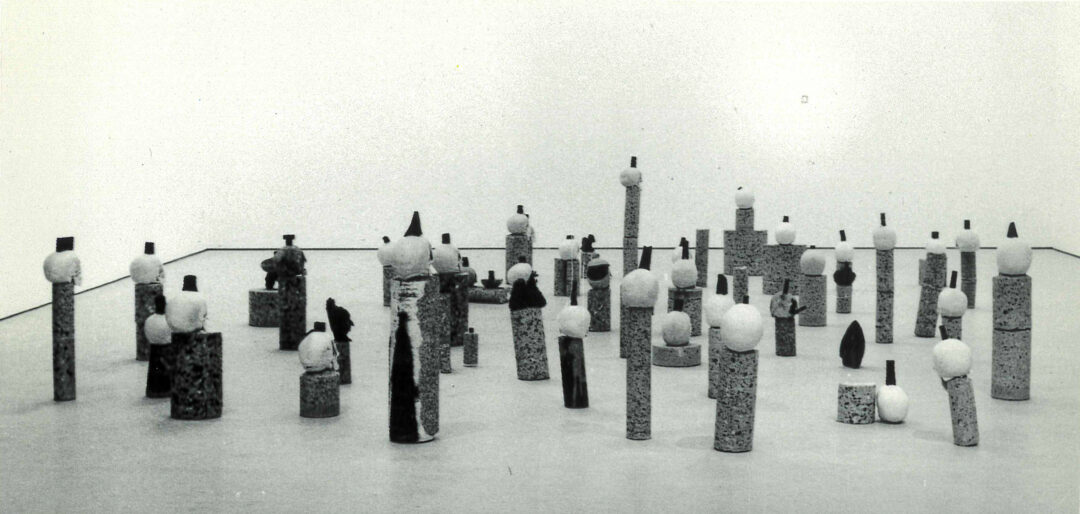
Nevertheless, each of the three directors has imbued the venue with their own distinctive spirit. Under Yannick Miloux, the richness and vibrancy of the French (Alain Séchas, Gloria Friedmann, Présence Panchounette, Hubert Duprat…), the European (Erik Dietman, Jochen Gerz, Ettore Spalletti, Braco Dimitrijević…) and the North American (Dan Graham, Maria Nordman) art scenes arrived in Rennes and very quickly encountered an audience that was astonished, sometimes bewildered, but always curious: a real eye-opener!
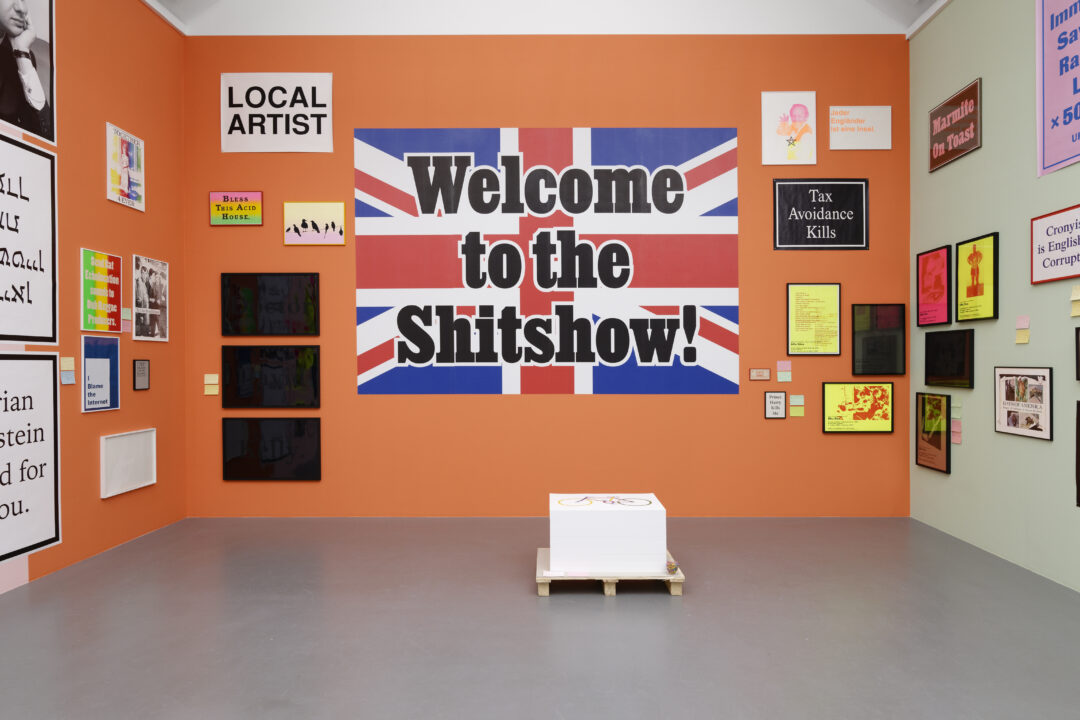
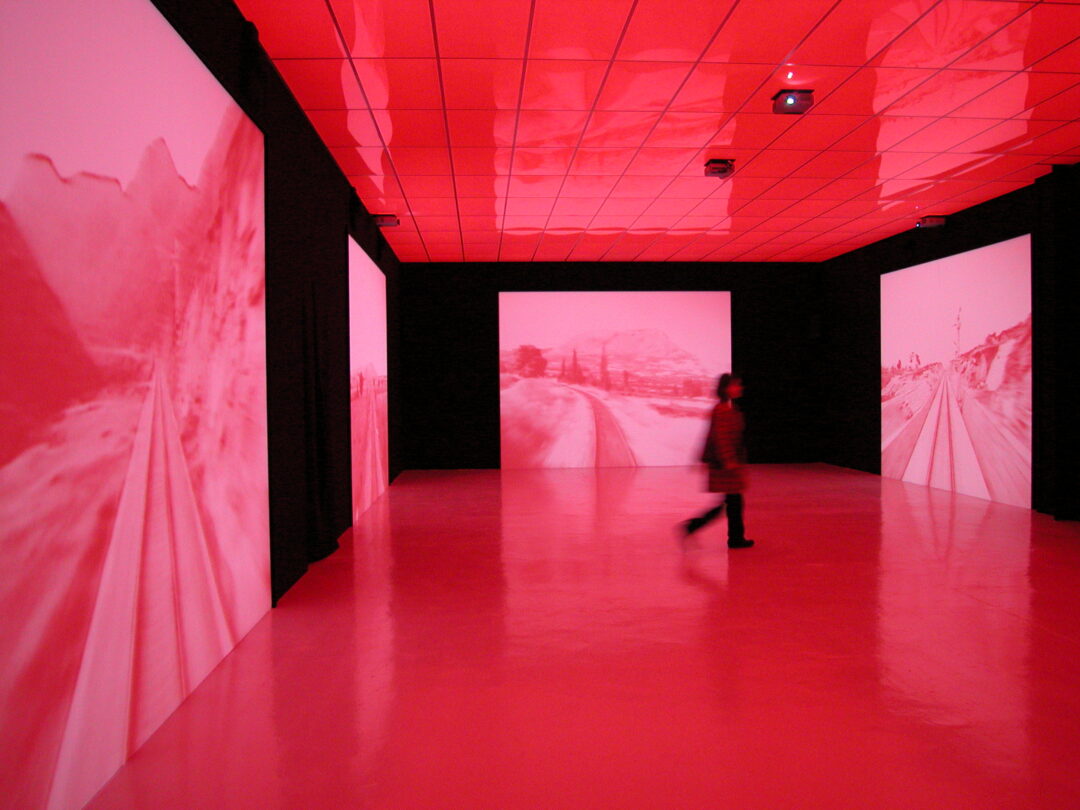
Thanks to Larys Frogier, artists and narratives from marginalised and/or underrepresented groups found in La Criée one of their first platforms in France – African-American artists (‘Love Supreme’, 2006), feminist or queer artists (‘Campy Vampy Tacky’, 2002), artists from the Global South (Ângela Ferreira, Jota Castro, Barthélémy Toguo), the working class and marginalised communities (Allan Sekula, Boris Mikhaïlov) are thus exhibited on a very regular basis. The Breton and French art scenes are also highlighted (Julie C. Fortier, Marcel Dinahet, Adel Abdessemed…), as are the links between contemporary art, dance and performance (Catherine Contour, Latifa Laâbissi…).
I share with Yannick and Larys the trust and freedom we give to artists. These are essential in that they enable artists to produce works that move them – and us. I also share their European and international outlook. And I bring new elements to the table: the poetic prism (David Horvitz, Seulgi Lee, Charbel-Joseph H. Boutros, etc.), the prominent place given to narratives and their polyphony (Éléonore Saintagnan, Bertille Bak, Rasmus Myrup, Euridice Zaituna Kala, etc.), long-term collaboration with artists and thinkers, developed through the invitation of associate artists (Jan Kopp, Ariane Michel, Yann Sérandour, Julien Bismuth, Katia Kameli, etc.), as well as the establishment of thematic cycles, such as ‘Lili, la rozell et le marimba’ (2019–2022), which explored the links between contemporary creations and vernacular knowledge and craftsmanship, to give just one example. I am also deeply interested in the points of (dis)connection between the different spheres of the visual arts, between different artistic fields, and between art and knowledge.
02 From the way you talk about La Criée, one gets the impression that the situation – caused by the City and the Region – is something of an exception, particularly when compared to the situation in the Pays de la Loire, to name but one, where the withdrawal of funding – both regional (the Chapelle du Genêteil in Château-Gontier) but also municipal (the Grand Café in Saint-Nazaire) – is leading to the closure of accredited art centres. What are your thoughts on this series of closures, which are set to have a devastating impact on the contemporary art scene in the Pays de la Loire and beyond, even though you are not directly affected? Do you think that the coming years will see an increase in this sort of withdrawal of support, without any significant reaction (neither from the Ministry, nor from the public, nor from the media, with a few exceptions) to safeguard these venues, which I believe are essential for the dissemination of contemporary art? Are we witnessing the end of an era?
SK In Brittany, as everywhere else, the visual arts – and the cultural sector in general – are facing increasingly severe budgetary pressures, linked to rising costs and cuts in funding, even if these remain, on the whole, moderate for the time being. On the other hand, elected representatives and public policy-makers in Rennes and Brittany continue to defend creative freedom and the importance of art and culture as a catalyst for social change, which is infinitely valuable. Sadly, this is no longer the case in many regions. In this regard, the situations at the Chapelle du Genêteil in Château-Gontier and the Grand Café in Saint-Nazaire – our neighbours, those close to us – have deeply shaken us, and we have been powerless to prevent the worst, despite the mobilisation of the sector and loyal audiences. Every art centre that closes represents the loss of an essential building block of what constitutes art, emancipation, civic life, social cohesion – in short, society.
We are navigating an unprecedented period of economic, geopolitical and environmental tensions; we have entered an era of democratic decline that has direct and destructive consequences for creative endeavour and for the spaces dedicated to it. To cope with the anxiety and uncertainty that stem from this and which are overwhelming us, it seems to me that it is essential not only to think and act collectively, but also to make room for joy and hope. That is why we organised a huge party to mark the opening of our 40th-anniversary exhibition, ‘Bienvenue à La Criée’, whose title is, incidentally, quite programmatic. That is why, this summer, we collaborated with the Tombées de la nuit festival to jointly programme the Bal des Ardentes, a therapeutic and defiant dancefloor conceived by Johanna Rocard (visual artist and performer) and Amandine Braud (DJ and, incidentally, youth outreach coordinator at La Criée), from the Brave Compagnie.
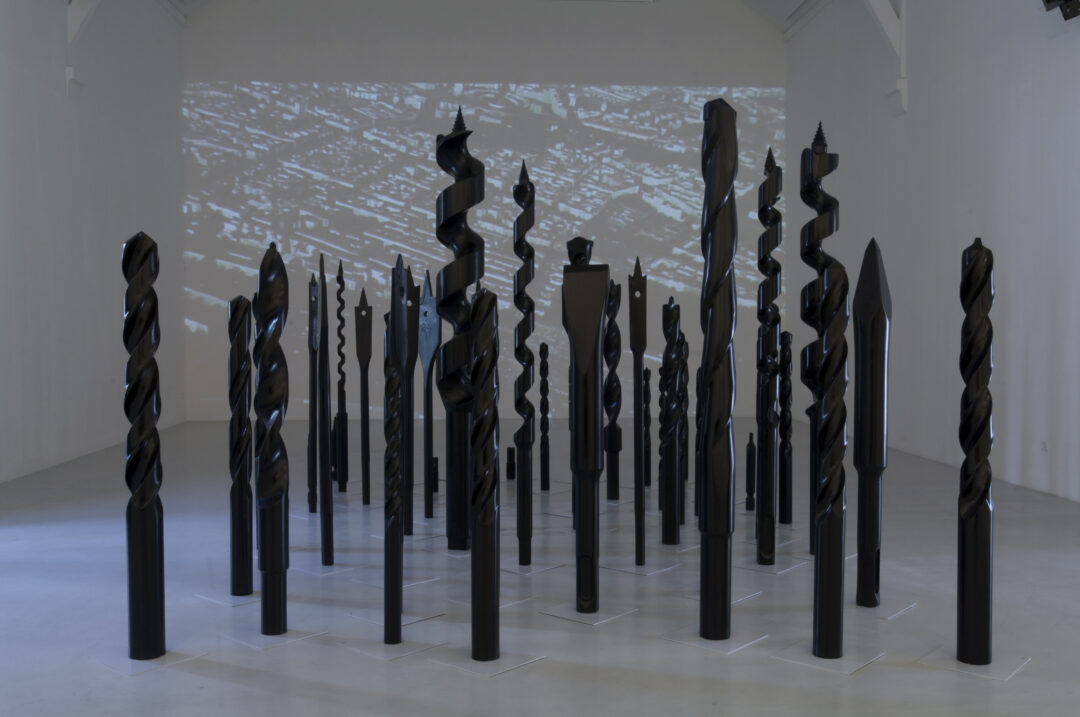
02 How can we navigate the treacherous waters looming on the horizon? Can we combine lucidity with fantasy, pragmatism with poetry? Can you give us a glimpse of the upcoming programme?
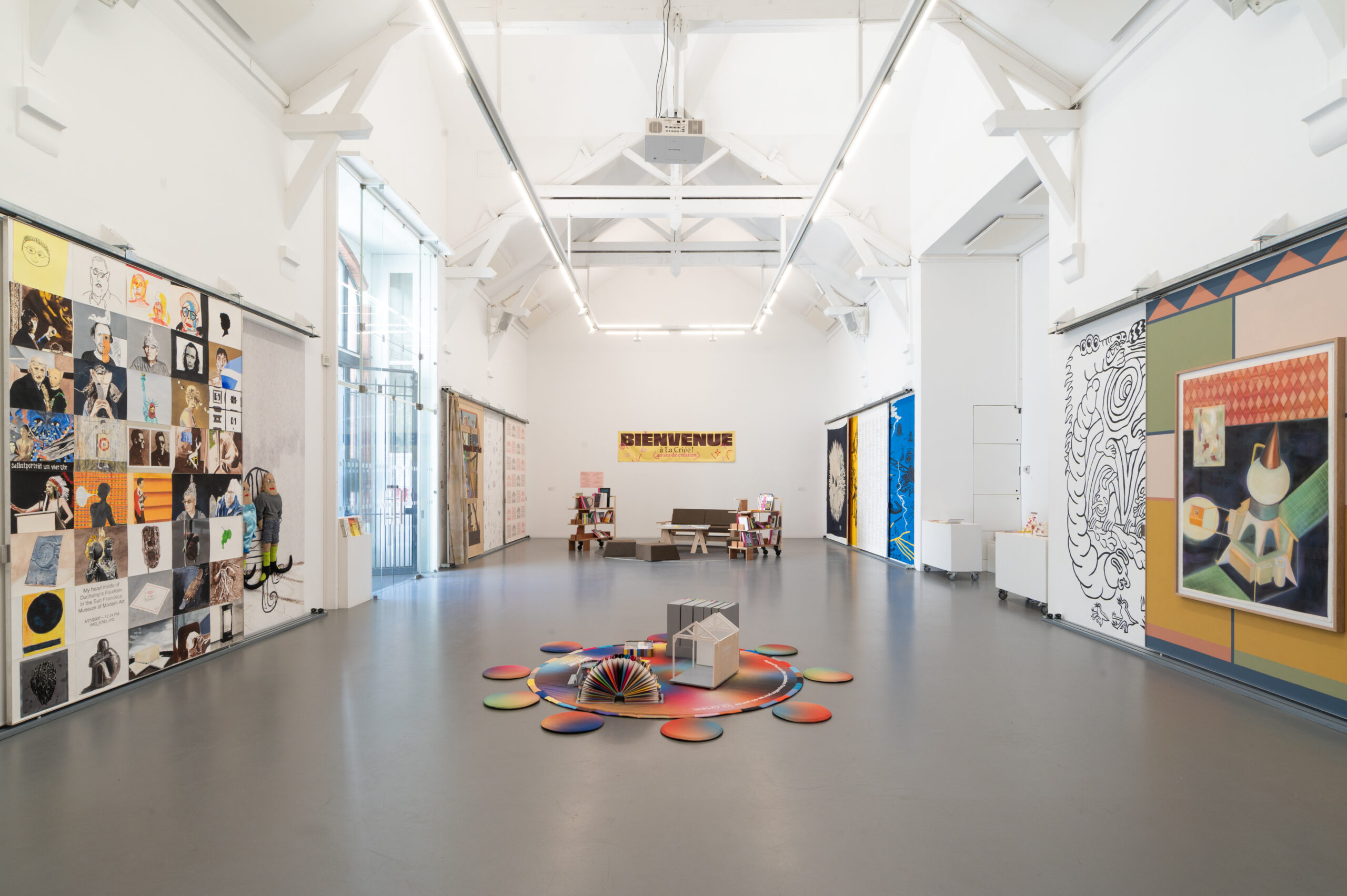
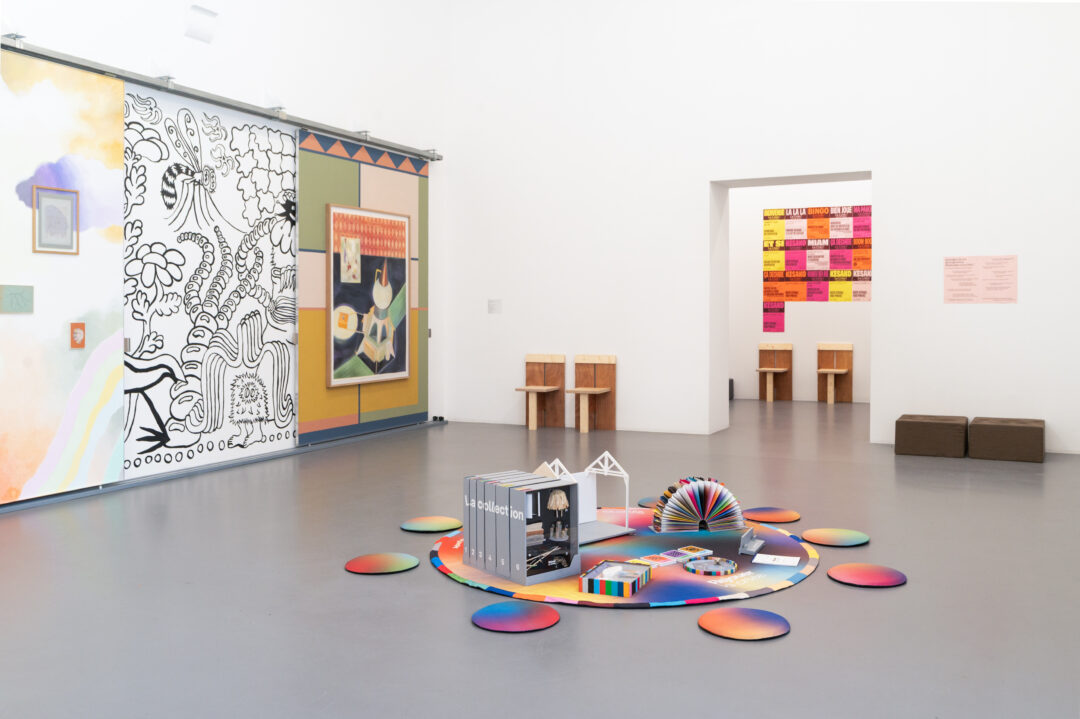
SK Until 20 December, La Criée is presenting the exhibition ‘Bienvenue à La Criée’. It brings together fourteen artists who were commissioned to create a work that echoes the real or imagined history of La Criée, including Théophile Peris, Rika Tanaka, Alun Williams and Marianne Mispelaëre. The works are displayed on movable panels that visitors are invited to rearrange, thereby creating their own version of the exhibition. A board game also allows visitors to create their own exhibition – in miniature this time – using forty works produced by the art centre. In putting together ‘Welcome to La Criée’, we gave a great deal of thought to issues relating to the use of the art centre, particularly those of a warm welcome and participation. This reflection forms part of the ‘navigation’ you mention, in that it aims to strengthen and renew the links between the artists, the art centre and its visitors.
From March 2027, La Criée will launch a new thematic cycle, entitled ‘Laisser la vie déborder’. It will build on some of the questions raised during the previous cycle, ‘Festina Lente (hurry slowly)’, as well as those explored during the art centre’s 40th anniversary, when we asked ourselves: how and what does it mean to welcome artists and audiences to an art space today? Why and how do we make art when the future is uncertain and so much is falling apart all around us? Why and how do we build a sense of community?
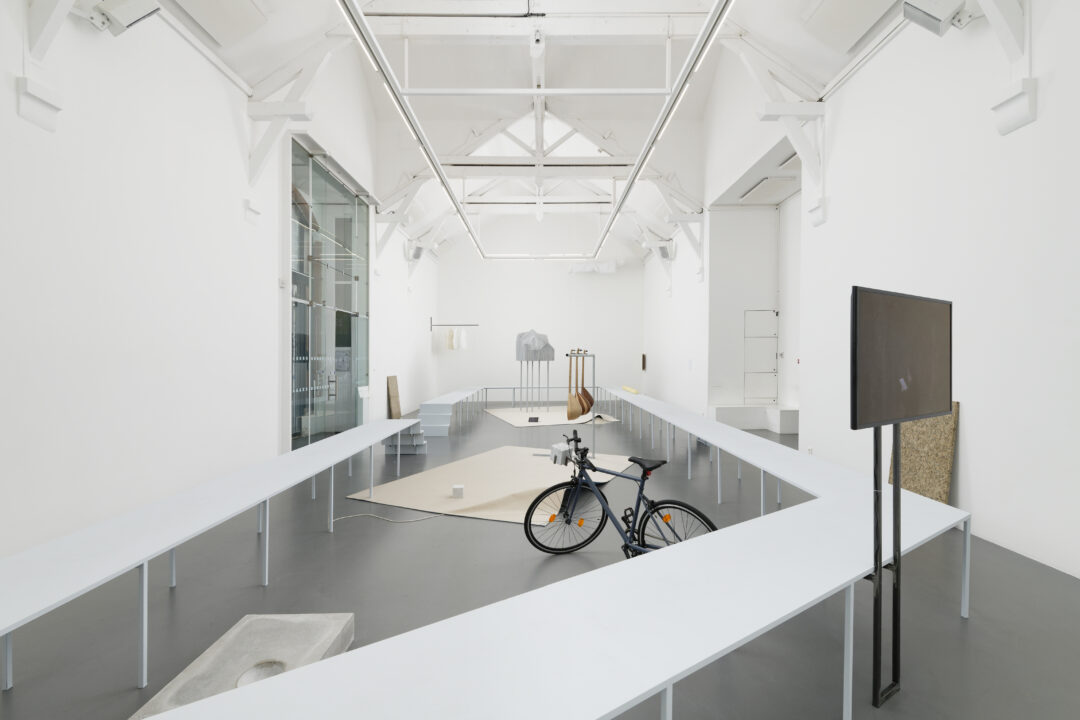
Building on these reflections, the thematic cycle ‘Let Life Overflow’aims to challenge the established norms, expectations and other preconceived (or hackneyed) notions associated with art and its exhibition. It will question the ways in which we classify, label and prioritise. It will invite us to view art from alternative perspectives: from the collective, from childhood, from the realm of struggles, from the margins and the fringes. ‘Let Life Overflow’will assert that art is a choice, that it delights in taking the road less travelled and moving towards the unexpected, the unknown and the other. It seems to me, therefore, that this series is a way of combining lucidity and fantasy, politics and poetry.
The first exhibition in this cycle will be organised by students on the Master’s programme in Exhibition Arts and Professions at the University of Rennes 2. It will present a selection of works co-created from the collection of ‘La S’ Grand Atelier, a centre for art brut and contemporary art located in Vielsalm, Belgium. ‘La “S” Grand Atelier’ is a place where experiences are lived out and invented, and where valuable artistic and human relationships are forged, which can serve as models. It is an art centre and artistic laboratory offering a series of creative workshops (in the visual and performing arts) for artists associated with art brut, and which hosts contemporary artists in residence for co-creation projects. It champions a model of sharing and interconnection, where talents can flourish freely, where the distinctions between disability and non-disability no longer apply, and where the barriers between the worlds of art are being dismantled. Here too, the decision to exhibit works from the ‘S’ Grand Atelier workshops and to entrust the curation to the students is part of a journey that takes unique routes, full of detours and surprises, and which in no way succumbs to the dead-end avenues.
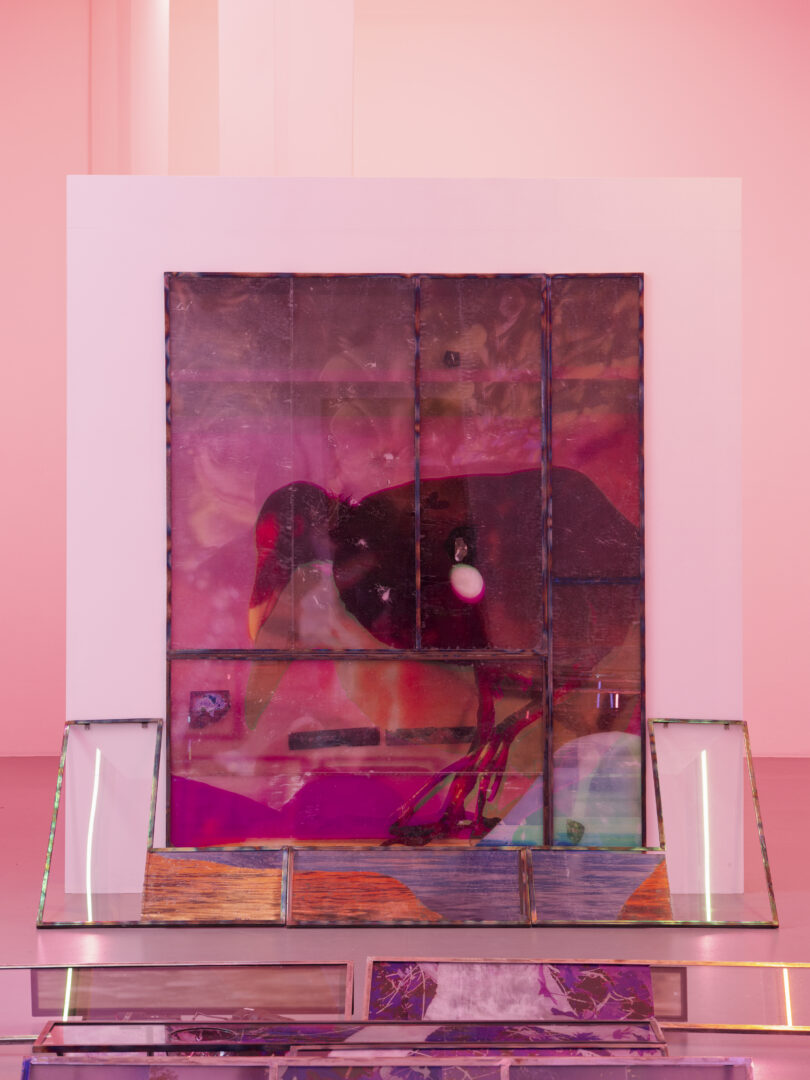
Head image : ienvenue à La Criée, 40 ans de création et bien plus encore !, La Criée centre d’art contemporain, Rennes, 2026 © Estelle Chaigne
- Share: ,
- By the same author: Ouassila Arras, The Theatre of Cruelty (Theater of Cruelty), Vanessa Theodoropoulou, Chris Sharp,
Related articles
Mai-Thu Perret
by Gabriela Anco
Ouassila Arras
by Patrice Joly
The Theatre of Cruelty (Theater of Cruelty)
by Patrice Joly