Kill Baby Kill
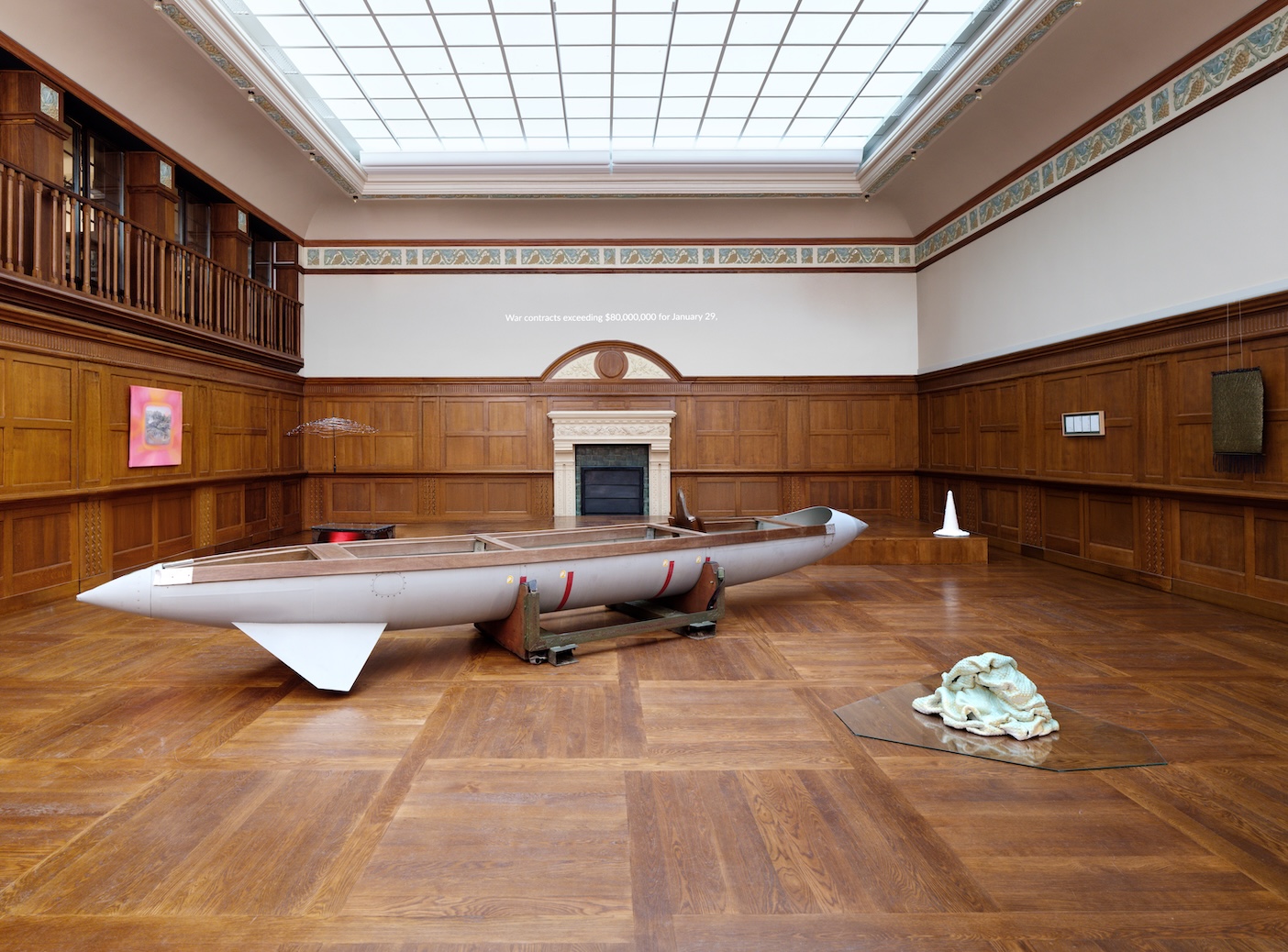
On the occasion of a symposium1 dedicated to analyzing the factors surrounding the phenomenon of war—in its many manifestations, some more visible, others more hidden—in which we are currently immersed, Hadas Zahavi of Columbia University brought together numerous researchers, historians, and geographers, but also and above all artists who are interested, directly or indirectly, in a phenomenon that is becoming increasingly pervasive in our daily lives. In the context of a magazine such as 02, dedicated to contemporary art news, there will be no attempt at geopolitics to analyze its causes, predict its outcomes, or speculate on its potential dramatic consequences—as this terrain is sufficiently occupied by the media. Rather, the focus will be on exploring alternative paths—those taken by artists in particular to approach this phenomenon from new angles that do not stem from a logic of highlighting military power dynamics or celebrating a Manichean view of conflicts, but rather focus on bringing to light hidden aspects such as pollution caused by munitions and, in a more novel way, reveal the damage inflicted by the omnipresence of military installations on the populations of countries at peace. The value of an artistic approach to conflict lies in the fact that it does not take a one-sided stance on the phenomenon of war but instead casts a sideways glance at its effects, consequences, and causes. The difficulty often lies in the challenge of representing war without aestheticizing it, or of aestheticizing it without making it acceptable, or even desirable—which the media unconsciously do throughout their reports, fascinated by images of war machines, fighter jets, and aircraft carriers, and by the power they embody, particularly in the sight of missile trails lighting up the skies over bombed cities. Indeed, in his time, Jacques Vaché described this fascination with the lights of war in poems that would later give rise to one of the most influential movements of the 20th century, Surrealism… Here, we will no longer allow ourselves to be captivated by the “enchantment” of the fires of war, but rather will examine the hidden narratives of the military-industrial complex and the implications of the latest technological advances, among which artificial intelligence represents a major turning point in the conduct of warfare. We will attempt to shed light on the multiple denials of government apparatuses that sometimes acknowledge the reality of war and sometimes refute it, the unthought consequences of a masculine hubris that stops at nothing, heedless of the suffering inflicted on populations, and whose effects seem to fade only to reappear, two generations later, in an inexplicable manner, as Laurent Mauvignier’s latest book, *La Maison vide*, teaches us, recounting the distant consequences of the conflagrations of the last century.
Beyond Denial
In a short work published in late 2025 largely devoted to the blindness of European societies in the face of the impending invasion of Ukrainian territory, Stéphane Audoin-Rouzeau speaks of a denial of war2 that emerged prior to the outbreak of hostilities, when the buildup of Russian troops on the border with Ukraine and warnings from U.S. intelligence left little doubt as to Russia’s bellicose intentions. But this blindness, which has cost Ukraine dearly by depriving it of the possibility of much earlier and more intense European involvement, seems to persist regarding the inevitability of its defeat. This analysis by the historian examines the multiple causes that, in his view, have led to war disappearing from our Western societies, replaced in our collective imaginations and representations by eternal peace, a parousia. As this text is being written, a new explosion has just shaken the geopolitical order, threatening to permanently destabilize a Middle East already severely shaken by successive conflicts that have engulfed its populations since World War II and which the two Gulf Wars have only exacerbated.
Speaking of the conflict between Ukraine and Russia, Stéphane Audoin-Rouzeau notes, however, that even if Russia were to triumph militarily over Ukraine, it would have already lost on the social and civic front, imposing on a numb population a regime of terror and surveillance worthy of Orwellian fiction. It is this entire section—significantly less developed by the author than the one concerning the loss of a “culture of war” in our Western societies “spoiled by peace”—that interests us here. The historian strives to circumscribe a conflict in space and time as if borders were not subject to change and as if, to quote Raymond Aron’s *Les Guerres en chaîne*, every recent occurrence of a war in Europe could not be linked to an unresolved conflict—World War II just as much as the Russian-Ukrainian war3. Certainly, the warning highlighting the multiple denials by those in power is beneficial when it comes to acknowledging ongoing conflicts. But this traditional approach, which seeks above all to prevent future outbreaks of violence, fails to account for the reality of widespread damage that never comes to light and that does not truly interest the media, which is more preoccupied with the sensationalism of war imagery. Audoin-Rouzeau’s book also refers to the linguistic shifts affecting leaders who can swing from a resolutely martial lexical register—such as Emmanuel Macron’s repeated use of “we are at war 4 ”—particularly during the events of 2015 when France was caught in the grip of terrorism—to a much more evasive stance; for example in March 2026, when the French Navy sent its fleet toward the coast of Cyprus, claiming that it was “merely” a matter of deploying an aircraft carrier and its accompanying squadron of frigates—the most impressive military force the French Navy could deploy—as a preventive measure, to provide assistance in the event of a potential spillover of the conflict onto European territory. We see how, depending on underlying economic and political motives, a threat is exaggerated or a reality is downplayed, for how can one not view the deployment of such a fleet as a display of power, a flexing of muscles?
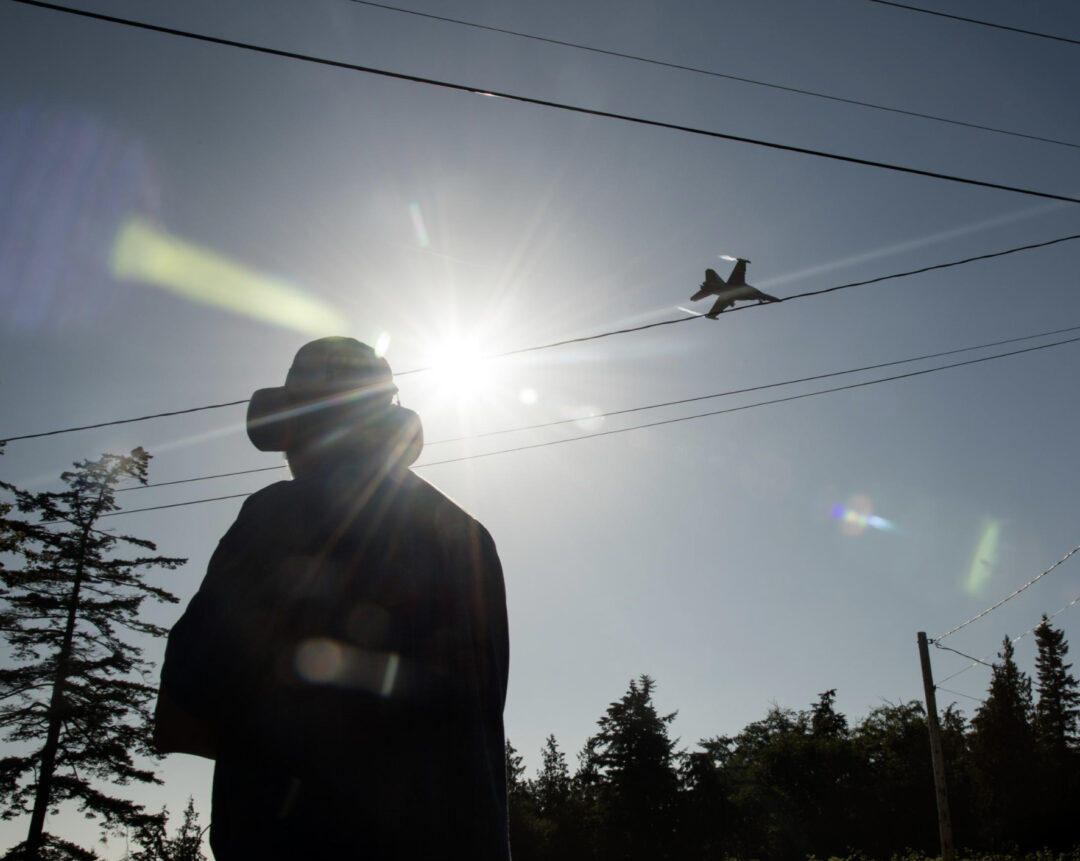
For Hadas Zahavi, organizer of the symposium The Memorial for Those Who Did Not Fall in War, these semantic distortions are a symptom of a denial more acute than that described by Stéphane Audoin-Rouzeau: the denial of the omnipresence of the damage caused by war, even in countries “at peace.” For her, war indirectly affects all segments of the population, and its effects ripple through time, leaving indelible marks on both the landscape and the mind. Nina Berman’s work perfectly reflects this reality: in her video When the Jets Fly, she films the residents of a small town in the U.S. whose quality of life has plummeted following the establishment of a training base for the F-35s, the latest aircraft in the U.S. Air Force and symbols of the technological advancement of the U.S. military. The deafening noise these planes make as they take off and fly over these suburban neighborhoods—located near a base that the Air Force has attached to a small provincial airport—has simply made life impossible for these residents, who have simultaneously seen the value of their property irreparably decline, preventing them from selling and relocating elsewhere. Compared to the violence of bombed cities in conflict zones such as Gaza, southern Lebanon, or Iran, this disruption of a comfortable life may seem trivial, but it highlights a largely overlooked phenomenon: the impact of indirect damage, ranging from soil pollution—caused by toxic materials used by the military, such as uranium in munitions—to the contamination of rivers and thus water resources, to the destruction of habitats and farmland following the mining of these areas.A decontamination effort that is left to the countries to handle once the occupying troops have departed, as the artist notes while listing the number of conflicts in which the U.S. military has been involved since World War II, from Korea to Vietnam, from Iraq to Iran. Beyond the obvious violence directed against civilian populations—who are supposed to be protected from deadly strikes under international law, though one wonders in which recent conflict this law has actually been applied— the symposium focused more on highlighting damage to populations that is more hidden than that which is immediately visible, including—and perhaps especially—the populations of countries at “peace,” because they are supposed to be spared these war-related hardships.
The implicit question this symposium poses is whether there are any regions that are entirely spared from the reality of war, given the economic, political, and ecological interdependencies, media, and symbolic interdependencies that countries maintain with one another, which mean that war can no longer be confined to a single country or region—not only because all collateral effects spill over geographical borders—as the ongoing Middle East conflict demonstrates—but also because any major conflict impacts our consciousness and affects our morale and our faith in the future. Another question raised by this symposium—which is by no means intended to be “defeatist”—is that of the possibility of reversing this war-driven tendency through means other than those that usually take the place of weapons, namely negotiation and diplomacy, which at present seem ineffective, to say the least.
The War-Driven Tendency
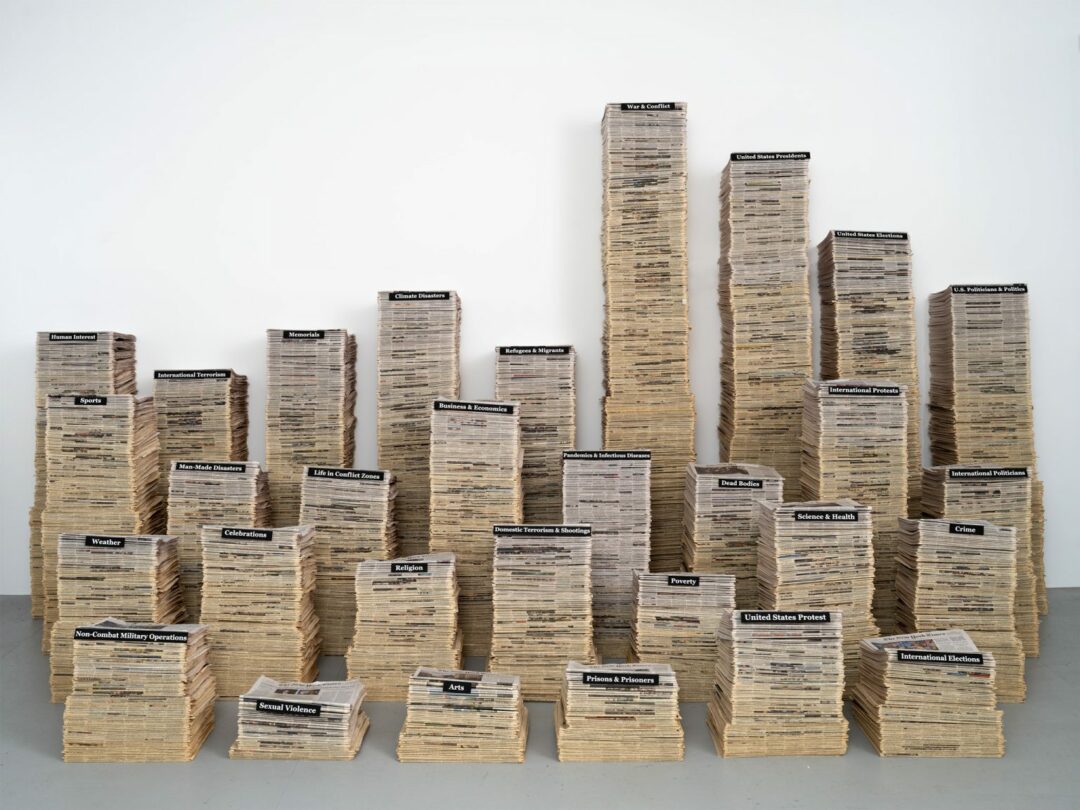
War, despite the euphemization of its reality and the downplaying of its impact on populations, insidiously affects minds bombarded with media information, where images of war serve as prime material not only for digital platforms but also for more conventional media—to such an extent that one can speak of a veritable immersion in war during peacetime. Lorie Novak’s work illustrates, in its own unique way, this imprint of war on our media environment. For twenty-two years, the American artist collected copies of the daily The New York Times to create stacks of newspapers organized according to the theme of their front pages (Above The Fold: 22 Years of War 1999-2021). The result is undeniable, revealing the predominance of conflict-related coverage by this major U.S. news outlet. This is not to deny the existence of these conflicts or to downplay the investigative work carried out by reporters—often at the risk of their own lives—but rather to highlight the pervasive nature of these images in our media landscape: when The New York Times devotes its front pages to war, it is almost certain that the rest of the press will follow suit, often with fewer ethical precautions than the major New York daily. As for television images, the phenomenon is even more glaring: live news channels broadcast the same footage—aircraft taking off from aircraft carriers, tanks rolling onto battlefields—nonstop, to the point of saturation, when conflicts erupt, fully aware of the fascination these images hold for viewers.
As for digital networks, this is perhaps even more glaring than in the print and television media, where regulations still exist; their operations are largely dominated by algorithms that we now know follow clickbait principles, where violent images far outweigh peaceful or non-violent ones. Their operators, despite their denials, have long accepted the fact that violence is more bankable than peace, in terms of user retention and click-through rates, even if this retention is based on moral principles that are questionable, to say the least. In his series Blind Spots, Syd Krochmalny attempts to thwart the strategies of platforms designed to prioritize the spectacular aspect of images by creating oil paintings that combine scenes of war or violence with flat areas of color derived from a chromatic average extracted from the palette used by these very platforms. By presenting only fragments of these scenes—which never reveal the full scope of the situations—and by reformulating them, the artist both exposes and contradicts the attention-grabbing logic implemented by algorithms. Similarly, by extracting these images from the flow of immediacy and importing them into the infinitely slower flow of painting, he subverts the platforms’ regimes of instantaneity and highlights the issues at the heart of circulation mechanisms.
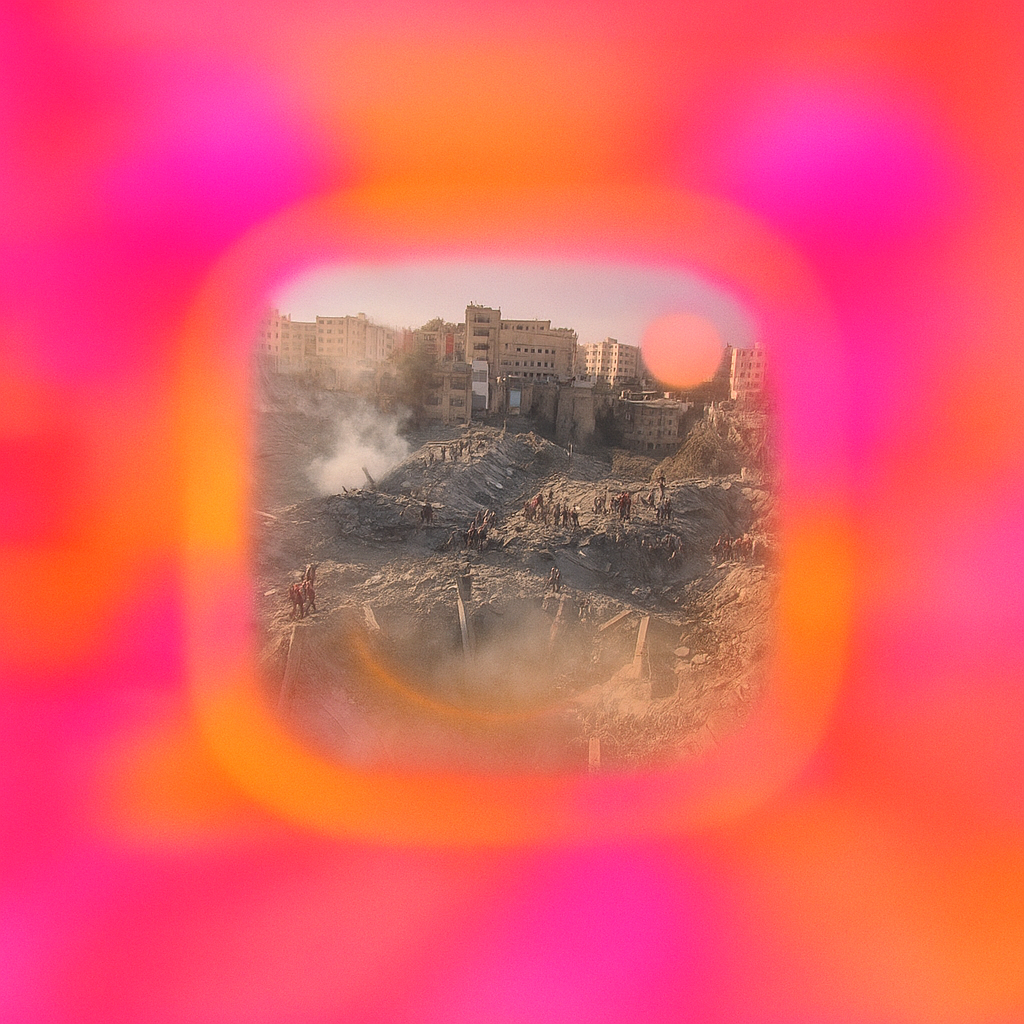
For the artist, “the paintings explore how contemporary regimes of visibility shape what we are capable—or unable—of seeing, and how these visual systems participate structuring the shifting boundaries between friend and enemy, between peace and war.” Challenging the logic of image circulation driven by platforms—which are more inclined to generate clicks than critical engagement—or shedding light on the suppression of realities affecting both countries at peace and those at war seem to be relevant measures to combat the deluge of images of war and violence that influence our perception of reality. With the widespread use of artificial intelligence across all digital media, the tendency to produce fake images and fake news will intensify further, contributing to an increasingly blurred relationship with reality and the possibility of “objective” information. Under these conditions, what can artists do in the face of the shock that increasingly powerless populations seem to accept as inevitable? Can the images and artifacts produced by artists compete with the avalanche of war images?
AI on the battlefield
One thing is certain: AI will not contribute to a reduction in global conflicts, but it will certainly alter the human presence in these conflicts. Grégoire Chamayou, in his seminal work, Theory of the Drone5, points to the existence of “moral buffers” designed to mitigate the potential guilt generated by the ability of soldiers to kill from a distance: “[…] the filtered nature of perception, the figurative reduction of the enemy, the non-reciprocity of perceptual fields, the dislocation of the phenomenological unity of the act.” The emotional impact, though certainly diminished by all these distancing effects, nevertheless continued to exist for these drone pilots, who were constantly reminded of their involvement in conflicts and their responsibilities through the presence of graffiti or billboards denouncing unjust or unnecessary wars along the route to their “offices.” Recent images “documenting” the U.S. military’s engagement in Iran have taken a further step in absolving “combatants” of responsibility. From a moral doubt the soldier might have felt on his screen at the moment of firing, we are moving—with the new modalities of remote conflict management and their presentation—toward an unambiguous assertion of the legitimacy of these practices: by blending video game codes with real-life images, these new visuals adopt a stance where guilt vanishes in favor of highlighting the speed and efficiency of the “first-person shooter” (FPS), in explicit reference to video games, whose visual codes are embraced by the creators of this imagery. Under these conditions, it is even easier to dismiss any sense of morality or guilt6.
With the intensification of AI use on the battlefield, are we heading toward a war between machines, toward a Terminator-style dystopia that would strip humans of their responsibilities and their involvement in combat? This is already a reality in current conflicts where machines are increasingly replacing humans, which raises the question of decision-making control when these machines are driven by artificial intelligences that do not follow the same decision-making criteria as humans and are, in fact, beyond any accountability and any possibility of choice other than the application of statistical averages by referencing visual databases about which we know almost nothing regarding their composition and validation. David Bates, like many theorists, warns against a dangerous shift in this trend toward replacing humans in conflicts that could become not a war between machines but a war between the most powerful tech companies, since ultimately it is their leaders—some driven by controversial ideologies (akin to Peter Thiel’s transhumanism)—who hold the keys to the development of future AI. The very recent clash between Anthropic CEO Dario Amodei and Donald Trump—regarding the provision of his flagship model Claude to the Pentagon and his refusal to allow the U.S. military, and more broadly the U.S. administration, from seizing AI algorithms for purposes that one might assume extend to the control and surveillance of citizens—for “ethical” reasons—gives us some reason to hope for more moderate positions on the part of tech executives (Le Monde, February 28, 2026). For David Bates, however, we must not fall into a technophobia that would run counter to the history and development of humanity. His conception of intelligence, as a kind of distribution between natural intelligence and artificial intelligence, draws on the theories of Leroi-Gourhan, and more recently, Bernard Stiegler: “[…] the human mind and technology constitute one another7.” Human intelligence has only been able to improve through contact with the tools it has invented, which have allowed it to develop its natural intelligence. This brings us back to a form of intelligence that accepts technology without falling into a dangerous and sterile dependence on it: “Technology does not invent futures; it does not dream, it does not ramble; it merely compiles statistics and makes predictions. The human brain is not a computer. “We should therefore not leave it to tech entrepreneurs—often steeped in transhumanist ideas, like Peter Thiel—to let technology take charge of all the problems facing humanity, while simultaneously providing a wide array of ready-made technological “solutions”8. Concern over such processes—which tend to deprive individuals of their decision-making capacity while simultaneously freeing them from all moral doubt, a scenario that would result in all the dystopian outcomes just mentioned—intensifies when one considers the influence that networks and platforms exert on children’s education.
Alternatives
For Warren Neidich, an artist and theorist, this concern is rooted in extensive research on the development of the human brain, which, he argues, absorbs a staggering amount of information from a very early age—information that will shape its future development and, as one might imagine, influence its future intellectual and behavioral trajectories. In an essay The Brain Without Organs: Ayahuasca and the Theory of Neural Regression published in the catalogue 44th National Salone of Artists in Periera, Columbia in 2016, he warns of the risks of posed by the widespread use of artificial intelligence on the brains and minds of the contemporary subject somewhat analogous to what Bernard Stiegler refers to as Proletarinization or the making us stupid.
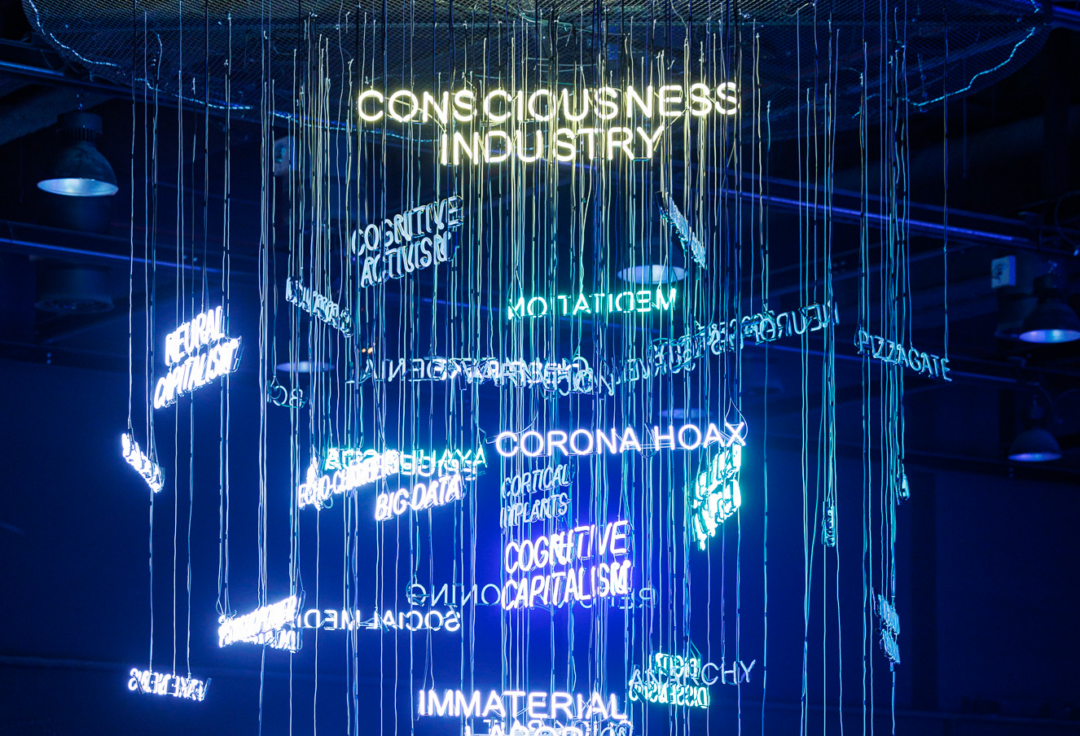
Digital Art Festival Taipei and Brutus Art Space.
The brains of young children who are exposed from a very early age to platforms and other digital networks, are especially at risk not based on the speculations of technophobic leftists but, on the contrary, on studies by scientists, like Nathalie Kosmyna at MIT Media Labs Fluid Interfaces, who meticulously analyze the effects of AI assistance on the frontal lobes and memory capacity of individuals during essay writing tasks. AI was found to direct the brain’s executive function as well as reducing the internal complexity of neural network activities in the process of decision making. Neidich understands the implications of machinic control as political and speculates upon the future possibility for cognitive despotism as these devices become more prevalent and accumulate becoming incorporated into our everyday work carried out on such devices as mobile phones which now are AI directed. Neidich appropriates Antonin Artaud’s concept of the body without organs to create the brain without organs to liberate it from these imminent threats and “cognitive constraints,” of the digital turn upon the brain’s neural plasticity and neural diversity. “Just as the body without organs refutes the mechanism of the Fordist assembly line, rendering the body unsuited to the machine’s theory of labor (in particular Babbage’s principle of calculating the labor required to estimate surplus value), the brain without organs makes it difficult to engage with mental surplus value.” That profit value above and beyond the labor power and cost of the machines necessary to carry it out. Neidich thus elaborates a scenario of emancipation aimed at what he calls the cognitariat, this new proletariat that is gradually replacing a “classical” workforce with a new class of digital laborers, unaware of their profound alienation as they voluntarily contribute to the creation of a capitalist windfall through their frenzied use of platforms and other digital networks. A process much like what occurred in the 3rd and 4th millennia BCE in Babylonia with the introduction of cuniform writing. A process which eventually led to ancient cortical areas being gradually exaptated for reading through what is commonly called neuronal recycling hypotheses, Neidich imagines that this same phenomenon could repeat itself, but this time by taking a different path than the one that led us to what extreme capitalism and patriarchy have produced: a civilization dedicated to excess profit, overconsumption, the depletion of natural resources, the extinction of countless species, global warming, and what appears to be the culmination of all humanity’s destructive impulses: war; a different path which, while accepting the inevitability of technological exosomatism (including artificial intelligence), leads to “decentering and displacing of the hegemonic anthropocentric-capitalocene axis, that currently governs our globe, and replacing it with a profoundly eco-planetary axis characterized by epistemological diversity.” In his textual works, such as the one he will install at the Gare du Nord for Nuit Blanche, the artist employs the techniques used in neon signage to deliver an alternative message to the one that strongly permeates our consumerist Western society—a message rooted in pacifism, queer identity, and environmental responsibility.
While we wait for these strategies to take effect on a humanity freed from its self-destructive tendencies and for the possibility of non-dystopian futures to emerge, how do artists contribute to overturning the dominant discourse—that of war—and how do they depict it without glorifying it, quite the contrary? The symposium’s discussion presented several approaches, as we saw earlier, notably Nina Berman’s idea of moving beyond the notion that only populations openly at war are affected, and Syd Krochmalny’s deconstruction of the construction of a one-sided image of war. Putin’s invasion of Ukraine has, of course, influenced an entire generation of young artists deeply shocked by a conflict that has claimed tens of thousands of lives and displaced six million Ukrainians. Many artists who had reached10 a mature stage in their work naturally turned to a subject that struck them in their daily lives, their minds, and sometimes their physical well-being. Daria Koltsova now lives in Paris, continuing to travel across Europe and many other countries, in a nomadic existence that is more imposed than chosen. Having observed that, to protect themselves from explosions, residents of targeted cities applied adhesive tape to their windows so that shards of glass would not injure them, the artist collected these ways of applying strips that follow no logic but rather reflect an empirical choice. These formal variations of adhesive tape, forming abstract and orderly patterns, have permeated the daily lives of millions of Ukrainians faced with the need to protect their homes. She noticed that certain patterns kept recurring, forming a sort of inventory whose variations she has explored repeatedly; the most spectacular of these (Theory of Protection, 2014) was exhibited for the first time at the Moscow Biennale in 2016, in a former factory, with the artist taking the risk of never returning to Ukraine…
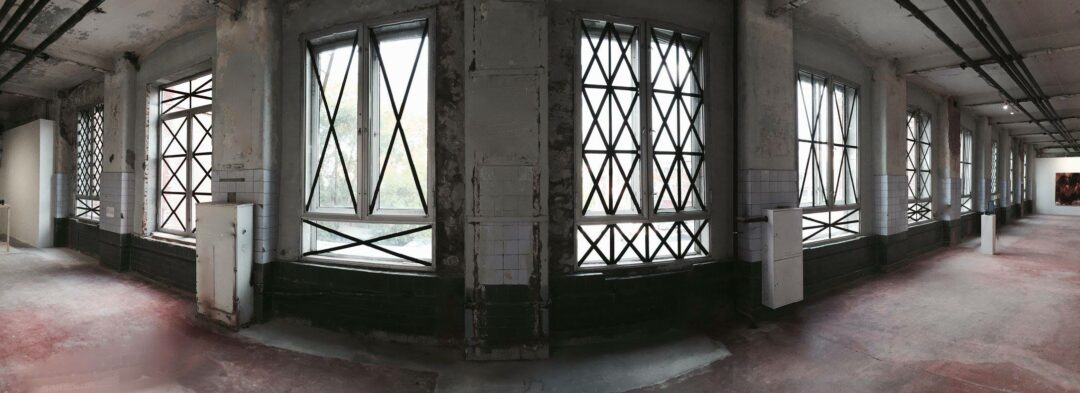
This courageous gesture was also intended to convey to the people of Moscow, who were in the grip of blatant denial, the reality of a conflict on their doorstep. Lesia Khomenko’s work unfolds as a journey through Ukraine’s recent history and its “struggles” with its Russian neighbor. Having grown up amid the ruins of the USSR and the gradual emergence of an independent Ukraine—from the Maidan Revolution to the 2022 invasion—she has witnessed her country’s cultural emancipation. Her work bears the legacy of Soviet realism and Ukrainian tradition, which she approaches critically. In her pictorial practice, deeply influenced by the surrounding conflict, broad swaths of gray-brown color envelop the bodies and faces of soldiers, gradually erasing their individuality. In her large-scale installations, such as Battle in the Trench (2025), visitors are invited to wander through her works, which define an immersive journey where different eras intertwine, reflecting a desire to engage the viewer, to take them beyond the role of a mere observer and place them “behind the viewfinder,” to make them the subject of a historical experience, while the soldier’s body is reduced to its fragility, to its status as a target.
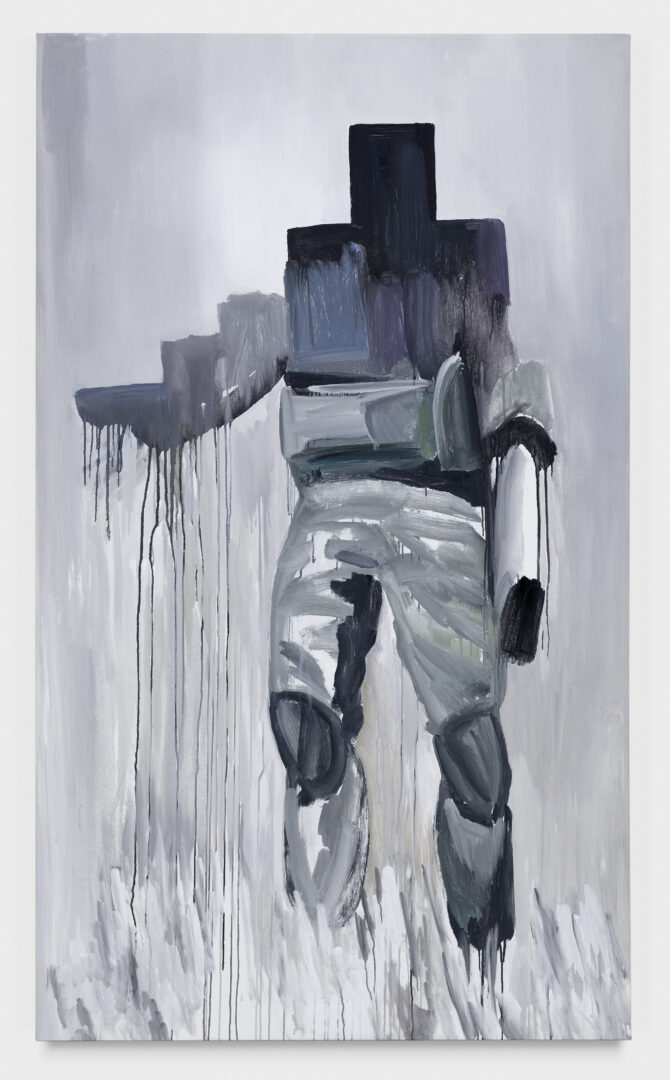
206×120 cm, Courtesy by artist and Voloshyn gallery. Photo credit : Fridman gallery
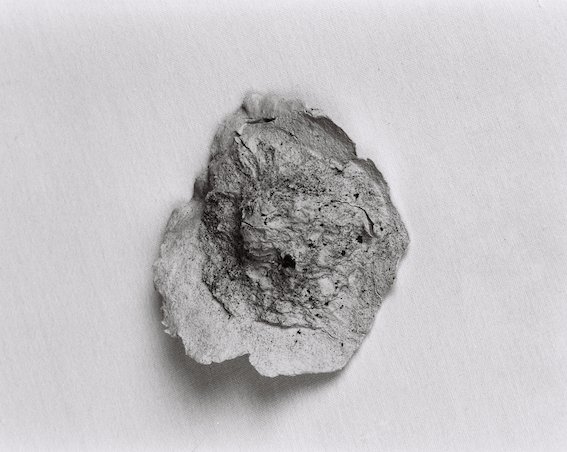
Paola Yacoub grew up in a city, Beirut, the capital of a country that seems never to have truly shaken off a colonial legacy that has shaped its current political configuration, preventing it from achieving full sovereignty. Bordered by troublesome, domineering, and aggressive neighbors, a regular target of their expansionist ambitions, and most recently of devastating bombings, the capital of this former Mediterranean paradise nonetheless harbors a cultural effervescence that seems to transcend the traumas of its population. Far from succumbing to the romanticism of ruin or the melancholy of fatalism, the Beirut-based artist has developed a documentary practice that distances her from the pitfalls mentioned above. Trained in archaeology, the artist approaches conflict zones—primarily in Beirut—as a subject of study that allows her to map the spatial and temporal damage inflicted on this territory, while also distancing herself from any pathos, all the while building a repository of memory for future generations11.
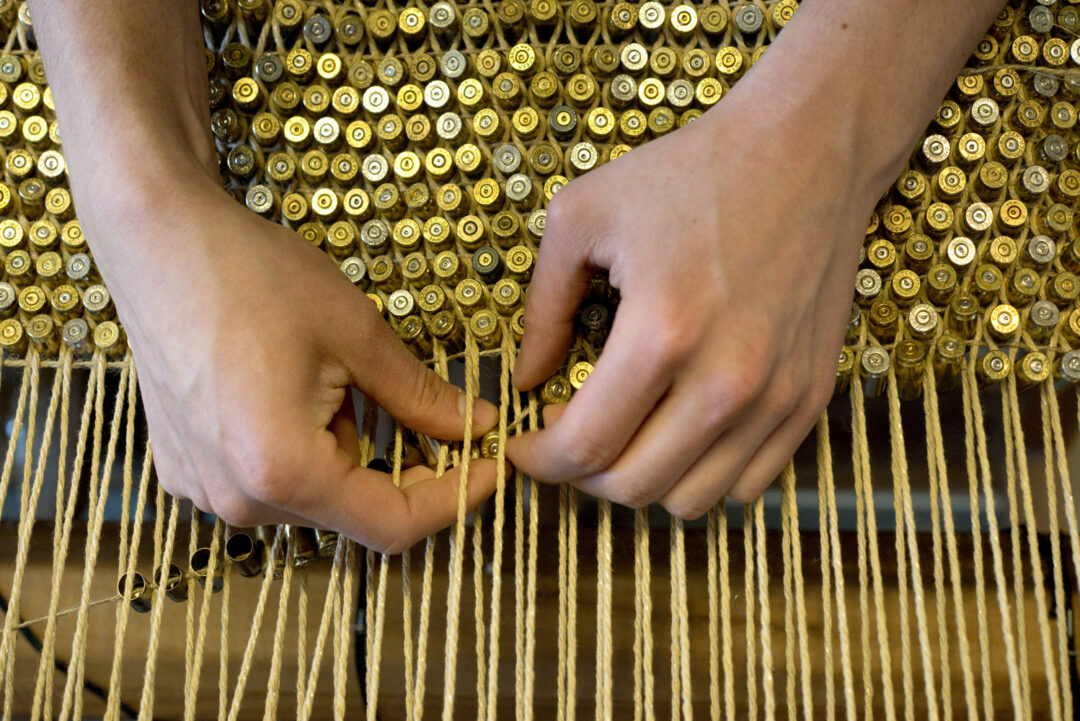
Raúl Martínez initially took an interest in the Viagra advertisements that had proliferated online, appropriating their catchy slogans in oversized murals that resonate with the architecture of exhibition spaces and the conceptualism of artists like Mel Bochner or Lawrence Weiner… though in a less rigid manner. While the artist recognized a genuine poetic dimension in these messages aimed at a male population anxious about their “performance,” he also highlighted the links between these spam messages—with their unapologetic crudeness—and “the hegemonic notions of masculinity that paved the way for disinformation and algorithm-generated content now cluttering the Internet.” In the hand-woven textile creations made from bullet casings that he produced as part of the Detext collective, the artist extends his reflections on the circulation of spam, which he compares to the proliferation of ammunition, pointing, beyond the disconcerting aesthetics of these carpets of bullets, the economic reality of a production that literally floods the world… mirroring all the bellicose imperatives—more or less visible, more or less acknowledged—that contribute to establishing a normality and a necessity of war.
1. “The Memorial for Those Who Did Not Fall in War” was held at the Columbia Global Paris Center from February 11 to 13, 2026.
2. Stéphane Audoin-Rouzeau, Notre déni de guerre, Paris, Seuil, “Libelle” collection, 2026.
3. Interview with Stéphane Audoin-Rouzeau, in Le Monde, February 9, 2026.
4. President Macron’s assertion seems far more defensible, however, than that of Mike Johnson, Speaker of the U.S. House of Representatives, who shamelessly declared the day after the massive strikes on Tehran: “We are not at war; we have no intention of being at war [sic].”
5. Grégoire Chamayou, Théorie du drone, Paris, La fabrique éditions, 2013, p. 168 ff.
6. Louis Lapeyrie, “War in Iran: ‘With Operation ‘Epic Fury,’ the United States is turning pop culture into the Pentagon’s language of violence,’” in Le Monde, March 17, 2026: “[…] this profile maintains an obvious closeness to the ideal type standardized by FPS (First-Person Shooter) games: a soldier impervious to moral doubt, for whom these rules are merely bureaucratic constraints to be transgressed. It is precisely this separation between the playful space and operational reality that the administration aims to deliberately break down.”
7. Marion Dupont, “David W. Bates, Cybernetics Specialist: ‘The Brain Is Not a Computer,’” interview in Le Monde, February 27, 2026.
8. Sylvie Laurent, The Californian Counter-Revolution, Paris, Seuil, “Libelle” collection, 2025. In this short essay, the author analyzes the origins of the various movements of the California right, the most prominent of which is certainly the libertarian movement, and what it has produced in terms of the denunciation of all union and collective thought, the rejection of all social action in favor of the promotion of an individualistic mindset, which, under the label “libertarian,” might suggest an ideology of emancipation, but which is more akin to a collusion between reactionary, segregationist, misogynistic, and technosolutionist thought, where the most radical form of capitalism hides beneath the guise of a coolness that is all the more deceptive. It stems from a seemingly wholesome brand of liberalism that, according to its adherents, suffers from a whiff of collectivism that must be eliminated at all costs. Its muse is the writer Ayn Rand, and its disciples are the tech executives, led by Peter Thiel and his advocacy of transhumanism. On the agenda: absolute profit, unbridled capitalism, extreme individualism, elitism, and white supremacy (both Peter Thiel and Elon Musk are of South African origin). Reagan paved the way in the 1980s by fostering lucrative deals between tech companies, the arms industry, and the space sector. Trump took up the torch in a more chaotic but equally profitable manner for California’s big bosses.
9. Concept developed by Stanislas Dehaene. https://www.college-de-france.fr/media/stanislas-dehaene/UPL54166_18.pdf
10. Due to Russia’s invasion of Ukraine and the exponential increase in the number of young men in the military, Ukrainian women artists are statistically overrepresented, even though women have enlisted in the Ukrainian army in large numbers: an estimated 70,000 women are involved in the conflict, representing 15% of the contingent. https://theconversation.com/lappel-aux-femmes-soldates-un-besoin-existentiel-pour-la-defense-et-la-survie-de-lukraine-233025
11. Paola Yacoub has also developed a body of work centered on documenting and casting bullet impact marks, building on her training as an archaeologist. The artist realized that this practice was shared by others, constituting what she called a “memorial commons” “onto which everyone inscribes their tragedies.” The concept of the “affordance” of materials at the scenes also contributes to this reflection on an indexical perception of the damage caused by conflicts.
Related articles
The World Through AI
by Warren Neidich
Paris noir
by Salomé Schlappi
Some white on the map
by Guillaume Gesvret