Geert Lovink : “Not a single generation stood up against Zuckerberg”
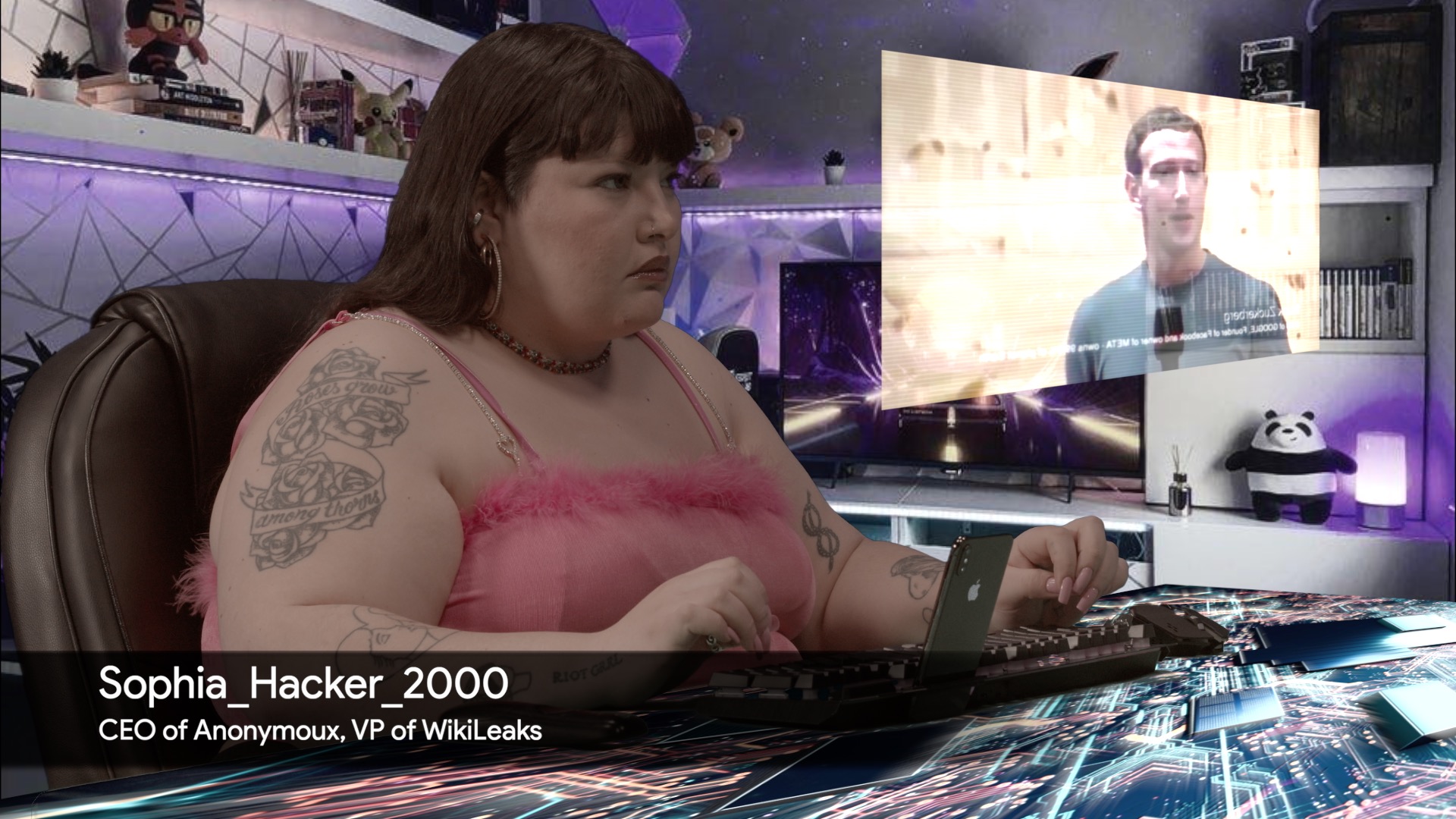
Different eras of the web have ticked by one after another: Web 1.0, Web 2.0, Web 3.0. Despite managing to enumerate, classify and even determine the dominant traits, aesthetics, techniques and ideologies of these versions, this periodization can only take us so far. Perhaps this is due to the fact that the vast majority have spent the last three decades in a state of immersion in the milieu—a type of amniotic fluid within which it has proven difficult to make out the contours of our surroundings. Without a doubt, this genealogical task also happens to be gaining traction in the French-speaking world at a time when a new version of the Internet—the third of its kind—is emerging, a time when we might be prescient to try to gain insight from the lessons of the previous versions of the technology. Dutch activist, author and researcher Geert Lovink, who is also a media and Internet theorist, has wholeheartedly embraced the two former fields—particularly because they are still in the process of becoming. Lovink has been involved in various collectives since the 1980s; since 2002, he has been involved in writing a series of books dedicated to what he has referred to as “critical Internet culture”. This lucid and politically-engaged series provides an encyclopedic scope with quasi-anthropological precision; a new genre emerges with each successive volume. With a French-language version cruelly lacking, the French discursive space will continue to lack adequate concepts in our theoretical toolbox; this at the very moment where obscure, opaque—and often anxiety-inducing—new challenges are appearing on the horizon. The following is an excerpt from an interview with Geert Lovink which took place at the École Universitaire de Recherche ArTeC de l’Université Paris 8 Vincennes – Saint Denis in April, 2024.
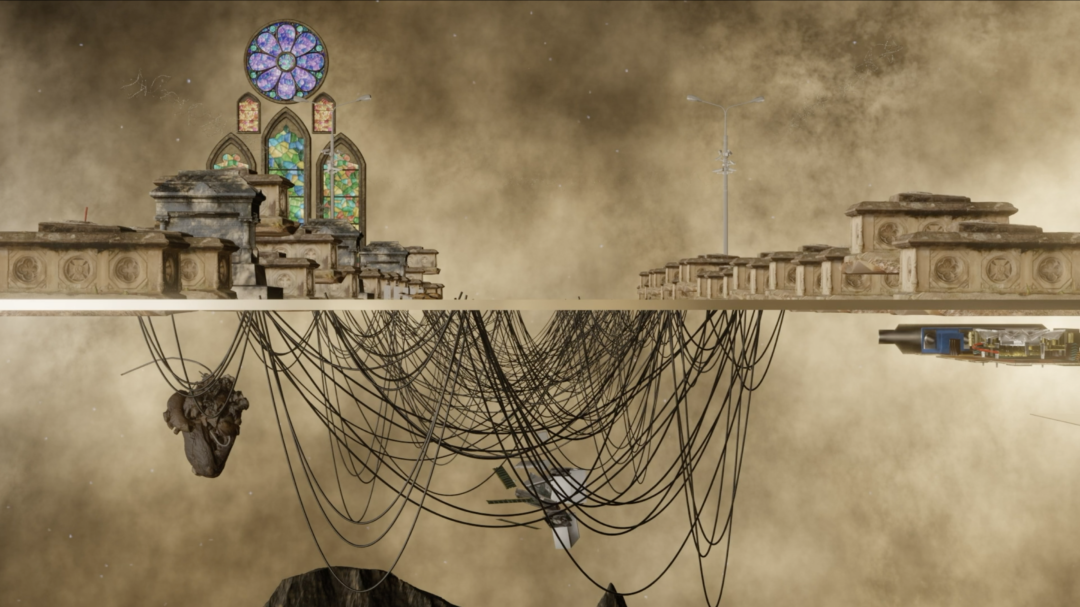
Film still. Courtesy de l’artiste et Exo Exo.
Ingrid Luquet-Gad: Since the beginning of your research you have been working on “critical Internet culture”. In fact, the title of your dissertation was “Dynamics of Critical Internet Culture (1994-2001)”. Since then, you have authored a wide-spanning series of essays charting its evolutions through social media (“Social Media Abyss” (2016), and “Organization after Social Media”, 2018 with Ned Rossiter), networks (“Uncanny Networks”, 2002; “Networks Without a Cause”, 2012) or platforms (“Stuck on the Platform”, 2022). What distinction do you make between these terms–social media, networks and platforms? Are they only chronological or is there also a qualitative dimension that comes into play?
Geert Lovink: It’s been a while but doesn’t feel like that, perhaps because there was so little ‘progress’ in this field. I played around with the Internet and computer networks for the first time in 1989 during the Galactic Hacker Party at Paradiso in which I took part. Then I got a built-in modem inside my Toshiba laptop in 1991 and wrote a first speculative essay with our Adilkno collective about ‘cyberspace’ in 1992. I got access in 1993. The ‘Internet criticism’ project with Pit Schultz started in 1994. Three decades later, with 5.2 billion users worldwide, the topic still feels niche. Academically speaking, Internet studies are everywhere and nowhere. Can you study it in France? I doubt it. One can do a theatre, film, or literature degree, but not telephone studies…
However, there is a steady number of lone critics who warn of the political, social and mental consequences of social media platforms—without consequences. There are a handful of research institutes, mainly in Europe and the US. It is as if the initial inner drive to distribute efforts into decentralized structures has self-sabotaged all efforts to create its own institutions. The rhizome has died in the process. First, the Internet was ignored, then it became a fad and now it’s presumed dead. Let’s face it, it was a neoliberal beast to begin with. As a consequence, little progress has been made with Internet theory. Its basic concepts had a revolutionary, disruptive, innovative period and then became hegemonic without proper grounding. In my own terminology: first, there were ‘media’ in the 1980s, then ‘networks’ during the roaring 1990s, which then scaled up into ‘platforms’ during the 2010s. This sounds chronological, I agree. The dynamics have been driven by hypergrowth, integrating different levels of infrastructure, social interaction and content into one digital collection of apps. Each of the three ‘layers’ emphasizes and amplifies different aspects: media transmit, networks connect and platforms integrate.
ILG: To come back to “critical Internet culture”, some scholars think (once again) that the internet does not exist anymore. You mentioned in your series the 2011 moment at the SXSW event where the Internet was proclaimed dead. Now, for instance, Tiziana Terranova’s book After the Internet: Digital Networks between Capital and the Common (2022) diagnoses “the end of the Internet as we know it”, which she names “post-Internet” (spanning in her genealogy from the 90s to the Covid moment). What do you think yourself of this new “death of the Internet”? Following the extensive framing of Internet that you have been delineating, what would the current moment correspond to?
GL: Can statistics-as-such signal death? There is this meme/t-shirt “Dead Inside.” I often have to think of that ironic image, designed in the ‘Intel Inside’ style. What happens when we can no longer see the end of the hockey stick because of its never-ending exponential growth? Study the roll-out of video on-demand services in Africa, smartphone use in India, growth of data centres in China, and e-commerce in Brazil. All of this runs on Internet protocols, yet we no longer associate it with ‘the Internet’. What you’re referring to I would relate to ‘the Internet’ as an intellectual-cultural project. A TGP, indeed, but nonetheless one with strategic moments of accelerated concept development, decision making and roll-out. One could define my generation as one that thought—mistakenly or not—networked hackers, artists and designers were able to steer the direction in which this medium potentially would develop. After all, operating systems, chip designs, and interfaces are all built on concepts that are turned into code. This code then structures the way information and the social are organized. In part, this is happening on the design side, in part also on the side of reviewing and critique—and ultimately (but rarely) culminating in the development of alternatives.
What has died is the collective imagination to design and shape another Internet. I have dealt with this in my essay “Extinction Internet”. Platform dependency became real: who can afford to leave Insta, TikTok, X and Facebook, say no to all the Google links they are offered to open, have to point at alternatives like Jitsi every time someone asks them to join a Zoom or Teams session. The early defeats of Linux and similar open-source and free software alternatives showed the way. Alternatives remained strictly inside the tech scene of geeks. The mental price we pay for this, getting stuck on the platform, and not able to move on, is high. It is not just a tragic anti-trust consumer story. The techno-regression I am describing here is, of course, related to a wider failure of progressive movements to create viable alternatives. The little energy that was left has been wasted on sectarian identity politics—played out on social media platforms that should have been deserted a decade ago. Not a single generation stood up against Zuckerberg. Again, what’s dead is the debate on how the medium should be shaped next. Its élan vital has dissipated and young people remain hooked, this time on Tik-Tok, an even worse clone of Instagram. This is why so many of the brightest minds have left the Internet context and joined the speculative debates around machine learning (mind you, without exiling social media), getting lost in metaphysical entities such as ‘intelligence’ and ‘artificiality’—leaving behind all the unresolved issues of the zombie space called the Internet. In the meanwhile, ‘media literacy’ is dropping and the masses remain clueless about how to deal with email fraud, fake news and deep fakes.
ILG: My own research looks at these matters sideways, through the lens of contemporary art and from a more restricted timespan (2008 to 2016). For me, this corresponds to a (Western) generation of artists and students that came of age in the wake of the financial /student debt crisis and found new hope in the tools of social media that would help them organize outside of inherited artistic institutions and the mainstream art world. You have frequently referred to artists and artist collectives as a wider part of a network of activists, hackers journalists, and critics. Inside these temporary, loose alliances, was or is it relevant for you to distinguish artists from other actors? The concept of tactical media especially has found a rich echo with artists, such as Critical Art Ensemble or the Yes Men…
GL: Those collectives were founded in the 80s and early 90s, but I see what you mean. We were naïve to believe that millennials would revolt against the powers that be, but they did not have the energy or imagination to build their own digital worlds. Why didn’t they get bored, revolt and move on? Why did they instead dig in and not think for a moment about organizing a collective exodus? It wasn’t all that hard to set up autonomous social networks. Instead, they sided with Meta, Twitter and Google. Why was it so hard to understand that these were the powers-that-be, the new mainstream that would not give anything back? I can see that for ten years the art establishment didn’t get it but this changed soon. Indeed, I am not a huge fan of ‘post-Internet art’ as I saw it as a part of a general tendency to walk away from the issues, at a time when an exodus from the platforms was still possible. Arguably, this was no longer the case after 2016 when the extractivist machines turned into a totality and closed in on the average user. From then on the capture was a fact. For me, it was a truism that the virtual exchange had a material grounding. Hybrid artworks are the best. We called it the infrastructural turn. Hybridity rulez.
Let’s focus on tactical media itself. Its emergence in the 1990s has been sufficiently historized. Over the past decades, it’s been a small but steady approach, a technique or toolbox, utilized by artists, designers and programmers that want to make a difference. An essential premise is to escape techno-solutionism. It is not the task of the artist to showcase new gizmos—for free. Tactical in this context not only refers to a one-off mix of different media (for instance print, digital, theatre and graffiti). The premise here: the situation will prescribe the use of tools. The real work is the investigative part to crack open loopholes, to hack and dig into gaps and black spots. The aim is to question power and hegemony. Tactical also means figuring out, on the spot, how content and aesthetics are related, which results in new insights. This ‘attitude’ is in contrast with the relentless commercial exploration of technologies such as AI, VR or NFTs (what mainstream institutions call ’emergent technologies’). Tactical interventions easily overcome the uncritical ‘eye candy’ while remaining focused on its own aesthetics. As it is an approach and not a style or movement (let alone an avant-garde), the tactical media approach can remain relevant and be picked up by young generations.
ILG: Specific artists of the 2010 generation used possibilities provided by digital platforms to break away from the artistic institutions. Collectives adopted the tools of corporate social media platforms (VVork, Jogging or Lucky PDF) or built their own para-institutions (K-HOLE, DISmagazine) to construct a functioning, alternative “art world” (encompassing also with critical apparatuses, e-flux Journal or DISmagazine again). In Networks without a Cause, you spoke of “strong organizational forms rooted in real life and capable of mobilizing (financial) resources”. Could this be applied to those artists and their attempts at escaping the art institution? Were you close to any artists, collectives, or scenes from the late Web 2.0 era?
GL: Most certainly. Collective self-organization is key but certainly not a given. As a result of the multitudes of defeats caused by neoliberalism, budget cuts, the rise of social media and at least 18 other factors, the organizational capacities inside arts and culture have steadily declined. In the period you’re talking about, which I would situate around 2015, our focus had shifted towards crypto and blockchain issues. In each of the MoneyLab editions we organized in that period (right now there are 13 of them) we worked with artists. This includes early ones that worked with artworks as tokens. However, we’ve always used a broader definition than ‘crypto’ in the narrow sense: how can artists make a living? For the MoneyLab network, what counted was precarity in the arts: the question of revenue models. This ranges from crowdfunding to basic income up to NFTs. We’ve indeed excluded the income that influencers were starting to make from their social media clicks and likes. The social media revenue model was only for a handful of lucky ones. And, really, how many artists that we know have been able to live from their Insta and YouTube income? The social media that the artists you refer to is one where content will be produced, and consumed, for free. Content creation and remuneration online is as problematic as it was 30 years ago. And Web3/crypto has not contributed anything to this.
ILG: Another aspect to discuss would be the close relationship bordering on dissolution that these artists maintain with capitalism – they have even been named “Young Incorporated Artists” in a 2014 article by Brian Droitcour in Art in America. Their idea was not nihilist but to make “art for the middle class” through consumer products (for DIS, through their retail-store DISown, this was a way to break loose from art for the 1% and the modernist myths of authorship, artwork, originality, etc.). Why do you think that for artists from the late Web 2.0 era, the alternative seemed to be either the institution or neoliberalism? Why was this illusion of “incorporation” as an emancipatory program so popular at the time, did you see other examples of this elsewhere?
GL: Do I favour the nihilist artists over the native and ‘positive’ ones? Yes. Is history, also the recent one, a blame game? No. My generation worked with two premises: to change society and ourselves we need to understand the workings of power (quite Foucauldian, right?). If you do not understand power you can’t take it apart. The other premise comes from resistance and social movements, also very 70s and 80s: you need to start building autonomous structures such as squats or collectively owned structures such as bars, theatres, printing presses, ateliers, graphic design collectives, women’s health centres, wood workshops, bike repair shops (just to mention examples from NL). Decades later it is understandable why it has become so much harder to do. The real-estate boom has pushed out this strategy, first out of the inner cities and then eliminated it altogether. Combine this with the rise of neoliberalism and the cultivation of the (online) self and you’ll understand why collective organizations have become so rare (even online). This could explain how we end up with the situation as you describe it.
But please, let’s not mourn or condemn the lost decade. It is important to recognize its power dynamics, the lure of neoliberal politics and the cult of the self that wasn’t about liberation and ended up in consumerism and policing identity. But it’s also easy to leave it all behind as there are so many urgencies to face, and new forms of the techno-social to discover.
ILG: This generation of artists did not appeal to a wider geographical scope, as the open-access ideals in fact formed networks restricted to traditional institutional art cities such as New York and later Berlin. In “Networks without a Cause” from 2011, you analyze national blogospheres (German, French, Iraqi) and anti-nationalist webs. What impact did national or regional frameworks have on social media organizations and modes of sociability? Did you perceive the late Web 2.0 as global or non-Western at all?
GL: The year 2011 turned out to be turbulent, from the Arab Spring via the movements of the squares to Occupy Wall Street. The blogospheres in different parts of the world at the time showed that regional variations of Internet culture were possible. This quickly faded, together with the movements. The energy quickly moved to social media—and resided there. This resulted in the geo-political Web. Facebook and Google were banned in China in 2009/2010. By and large the phenomenal growth of smartphones and the web outside of the West is something we know little about, here in Europe (but then, what do we know about European net cultures, really?). A website like Rest of the World is doing valuable work (with a focus on labour conditions), as did Vice at some point (but they are now bankrupt, a sad story we should know more about). We have better and better translation tools and could, in theory, communicate in all languages. But are we? I am hopeful that young generations will turn to these tools and use them to create together different media landscapes in which solutions, creativity and ideas play a central role, not likes and followers.
ILG: Retrospectively, what did work out for this generation of artists was that they did become “organized” — a generation met and showed their work online, which was a quicker stepping stone for becoming visible, first for each other. The 9th Berlin Biennale curated by DIS (2016) for instance was an indirect testimony to this, as one main critique was that all the art looked the same. Looking back at the 2010s, were the main uses of networks to create “weak links” or were there still alternative uses of the web to be devised?
GL: Digital technologies accelerate communication and bypass institutions, but we’ve always emphasized the takeover of new filters that result in new forms of exclusion and censorship. As you say, the logic of Big Tech has been to foster weak ties as they could not make much advertisement profit from relatively closed strong ties networks. Old art institutions have been boring and ‘dead’ for many decades now, taken over by the art market and politics. Political parties, think tanks and their ministers were never really interested in opening up these institutions.
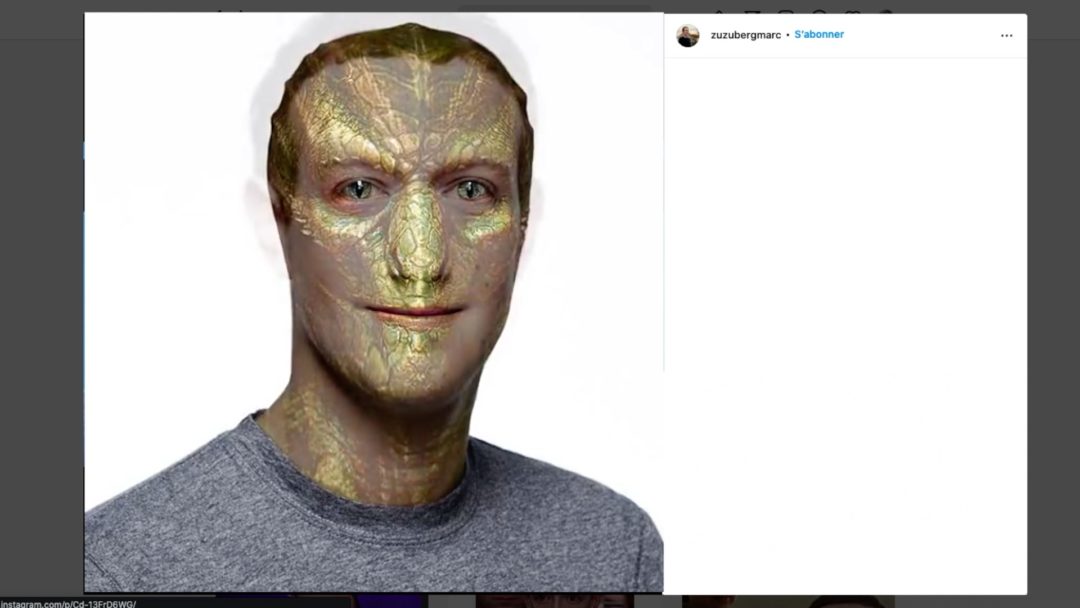
Film still. Courtesy de l’artiste.
ILG: Let’s end with the use you make of an archeology of critical Internet cultures. You have often spoken about how to write a theory of a present moment, such as when you wrote about the early days of blogs, in dialogue with Jodi Dean (your book, Zero Comments, 2008 and her own book, Blog Theory, 2010). Looking back, do you consider those books as historical documents or can they also be of use for the present moment, from inside another digital ecosystem?
GL: I am not working on books and my own writing full-time. I have tried to make a difference with collectives and media initiatives, from bluf! and Ravijn and my radio work, Adilkno and nettime, desk.nl but also my involvement in SUA, Mediamatic and Waag. And then, beginning in 2004, the Institute of Network Cultures. Books were always a long-term medium of storage and reflection of collective efforts. I have become more of an ‘author’ over the past two decades, but this wasn’t so much the case in the 1980s and 90s. This is one of the reasons why I entered academia late, at 43. I only started writing in English in 1994. My first book, Dark Fiber, reflecting on Web 1.0, appeared in 2002. I do not mind that I am merely writing a chronicle of critical Internet culture. I use the book format to document what happened and theorize what might unfold. I became cautious about pure speculative musings, even though I love doing it. The Internet itself is so much better equipped for the distribution of concepts, reports, interviews and dialogues. From early on the Internet as a medium has been defined by engineers and entrepreneurs, not by intellectuals or artists. This is why there was an influential French magazine about film called Cahiers du Cinéma but no Cahiers d’Internet. There isn’t even something that comes close to it in the US. Infrastructures like water, electricity, telecom or highways do not have their own theorists, unlike theatre or literature. That’s it. An interesting comparison would be the pop culture of radio, television and the music industry but even there the Internet doesn’t quite fit in. This is why I stick to two non-existing identities: media theorist and internet critic. I hesitate to call myself a historian, even though this would be a fair job description in this relentless real-time environment.
ILG: Let’s talk about the present. Several young artists have started to look again into digital cultures, after almost a decade where the predominant interests were in disconnection and ancestral/traditional techniques without technology or networks. There is a growing interest in Web 1.0 aesthetics and cybercultures of the 1990s. Why do you think this is the case? Would it be related to the safety of knowing that this era is gone, and its activist potential disqualified — becoming “art” when it has no use (in a Marcusean way…)? I know that you are now investigating current anxious affects, such as fatigue and loneliness, would you say this rekindled Web 1.0 interest is related or is it indicative of something else?
GL: Some say that GenZ is simply forced into media and politics because of their dramatic opportunities in terms of jobs, housing and other permanent crises. Millennials, in part, looked away and desperately tried to benefit from the system while feeling the full force of neoliberal ‘individuation’ in terms of temporary contracts, debt and mortgages. GenZ is merely cynically using social media. They are the kids of Zizek and Fischer but also Peterson and Land. GenZ is passionate about nostalgic media such as zines, LPs, cassettes and any old hardware. They have an interest in 90s Internet but only for its aesthetics, not for the slow modems via telephone lines and the UNIX command line. Their activism is strong and growing. And radical in its own way, growing out of despair. Art has a place in this but it’s no longer an art defined (and policed) by curators, galleries and museums. Institutions have withdrawn and indulged in their own history of the past century. From the current ‘crisis’ perspective the distinction between modern and contemporary arts is no longer a valid one. The withdrawing art system will continue to live off rotten corpses (expect an avalanche of dead baby boom retrospectives on top of the eternal return of the impressionists etc.). A clash is inevitable. In the meanwhile GenZ will find its own way. We can only presume that they will invent new forms of self-organization—including ‘financial justice’ solutions aimed at the redistribution of resources.
Head image : Lou Fauroux, WhatRemains, Genesis, 2023. Film still, courtesy l’artiste.
- From the issue: 109
- Share: ,
- By the same author: Calla Henkel & Max Pitegoff, Dena Yago, Émilie Brout & Maxime Marion, Hoël Duret, CLEARING,
Related articles
Interview with Camille Richert and Clémence Agnez
by Clémence Agnez
Vanessa Theodoropoulou
by Patrice Joly
Céline Poulin
by Clémence Agnez