Interview with Perrine Lacroix
ITV Perrine Lacroix
For thirty years, La BF15 has been evolving, a history marked by displacement, successive reconfigurations and constant exposure to different perspectives, uses and contexts. From the street to the shop window, from public spaces to the margins, the venue has established itself as a porous space, permeated by aesthetic and political commitments, keeping its distance from the mainstream. La BF15 has thus become closely involved with artists and works in progress, attentive to the processes, fragilities and temporalities of creation.
Artistic director since 2004, Perrine Lacroix has accompanied and shaped this history by extending the experimental identity of the place. Her curatorial practice, closely linked to her work as an artist, favours solo exhibitions, site-specific projects, long periods of discussion and production, and a constant focus on the transmission and visibility of artists, particularly women, and regional scenes.
As an artist and artistic director, how have you articulated your own vision with the heritage of the venue and the artistic, institutional and territorial expectations projected onto it?
I have remained fairly faithful to the founding team’s vision, which was “to show what was not being shown, to get involved, to assert something that engages taste and civic responsibility”, to quote Claire Peillod, director from 1995 to 2003. I would add that it engages otherness, curiosity and emotion. I became a curator as an extension of my artistic practice. It happened naturally, as if it were obvious, the important thing being to participate, in one way or another, in the development of this shifting material that is creation. Art in the making is a place full of promise.
When I arrived at La BF15 in 2004, my first (personal) motivation was to give more visibility to women artists, to try to reduce the staggering and glaring disparity of the early 21st century. This is an issue that concerns me as much as an artist as it does as a woman.
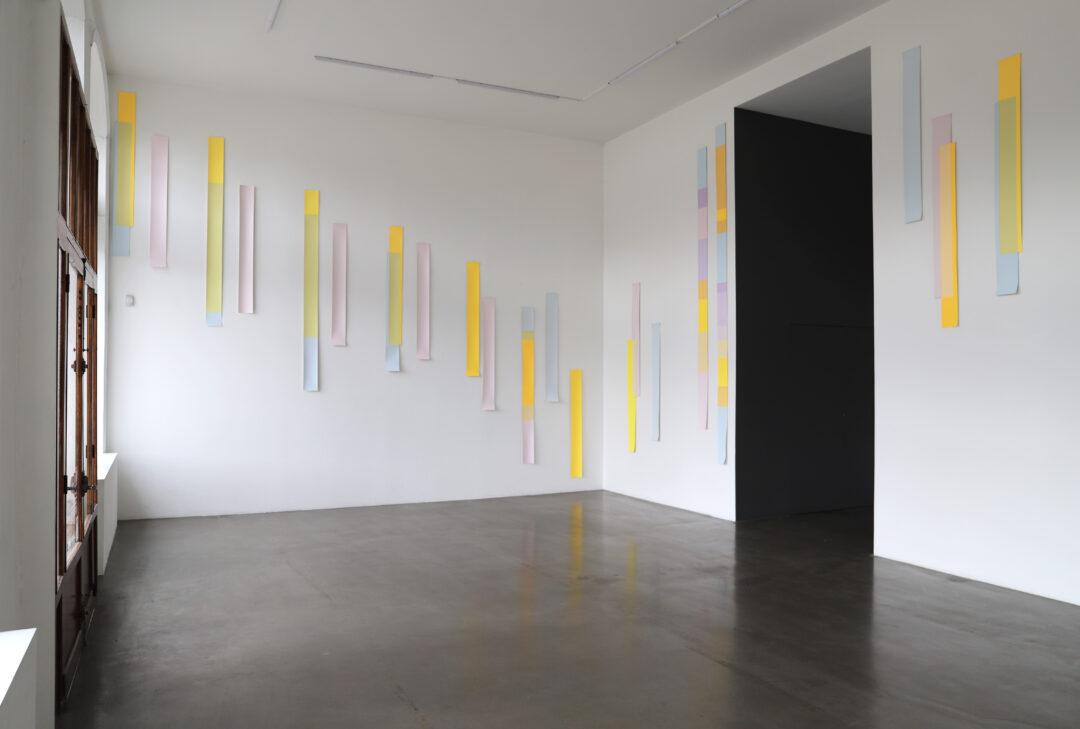
I also pay particular attention to the regional scene, where there are no fewer than five art schools and numerous artists. During the next biennial, I invite all visitors to extend their stay to visit the exhibition venues, associations and artists’ studios. There is a real landscape to discover.
My other conviction is the importance of transmission (after years of introductory contemporary art workshops for children, starting in 1992 in Naples and then in Lyon until 2017).
Art allows us to address a wide variety of concepts and sensations that are necessary for understanding our pluralistic world.
At BF15, welcoming the public in the afternoon and children in the morning is no longer a novelty. Accompanied by a civic service volunteer, Florence Meyssonnier, who is in charge of coordination and cultural activities, welcomes schoolchildren for visits and workshops tailored to their level. In this way, within each exhibition, the classes encounter a way of thinking, a universe and a practice.
La BF15 was built as a place for experimentation and support for contemporary creation. How has this identity been established over the years, and how has it evolved?
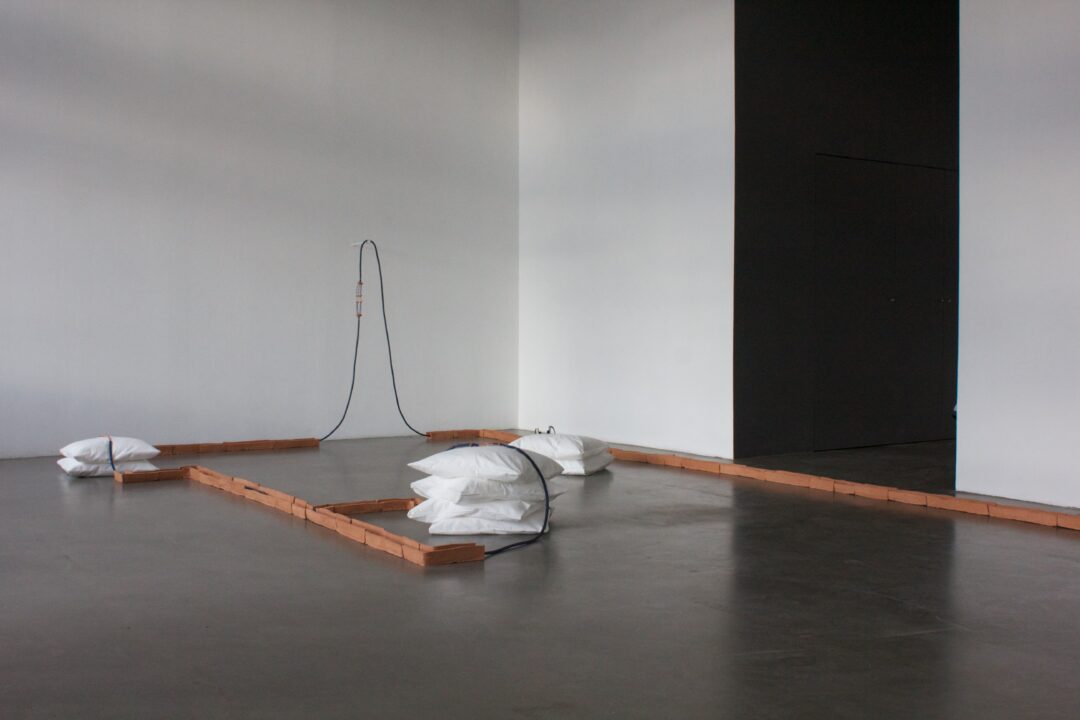
It is important to take care of our culture and our ability to imagine. In this sense, La BF15 works to offer artists the most conducive environment for experimentation. I invite artists from different generations and different fields, each of whom has developed a unique style, with a strong visual and poetic commitment. These are often their first exhibitions. The artists are invited in advance to take the time to exchange ideas and build together, to practise the space, to inhabit the work in progress, to envisage research in situ, to do it and undo it. I love this moment when everything is possible and everything is taking shape.
Each invitation is an opportunity to conceive a specific project, in harmony with the place and its environment, in connection with the spatio-temporal context, the “here and now”. These are essentially solo exhibitions, designed to highlight a particular universe and allow us to immerse ourselves in it, to create a context and encourage encounters with the public, so that they can immerse themselves in the work. This tailor-made approach allows us to forge links with our immediate and wider territory and to develop the partnerships necessary to carry out our projects.
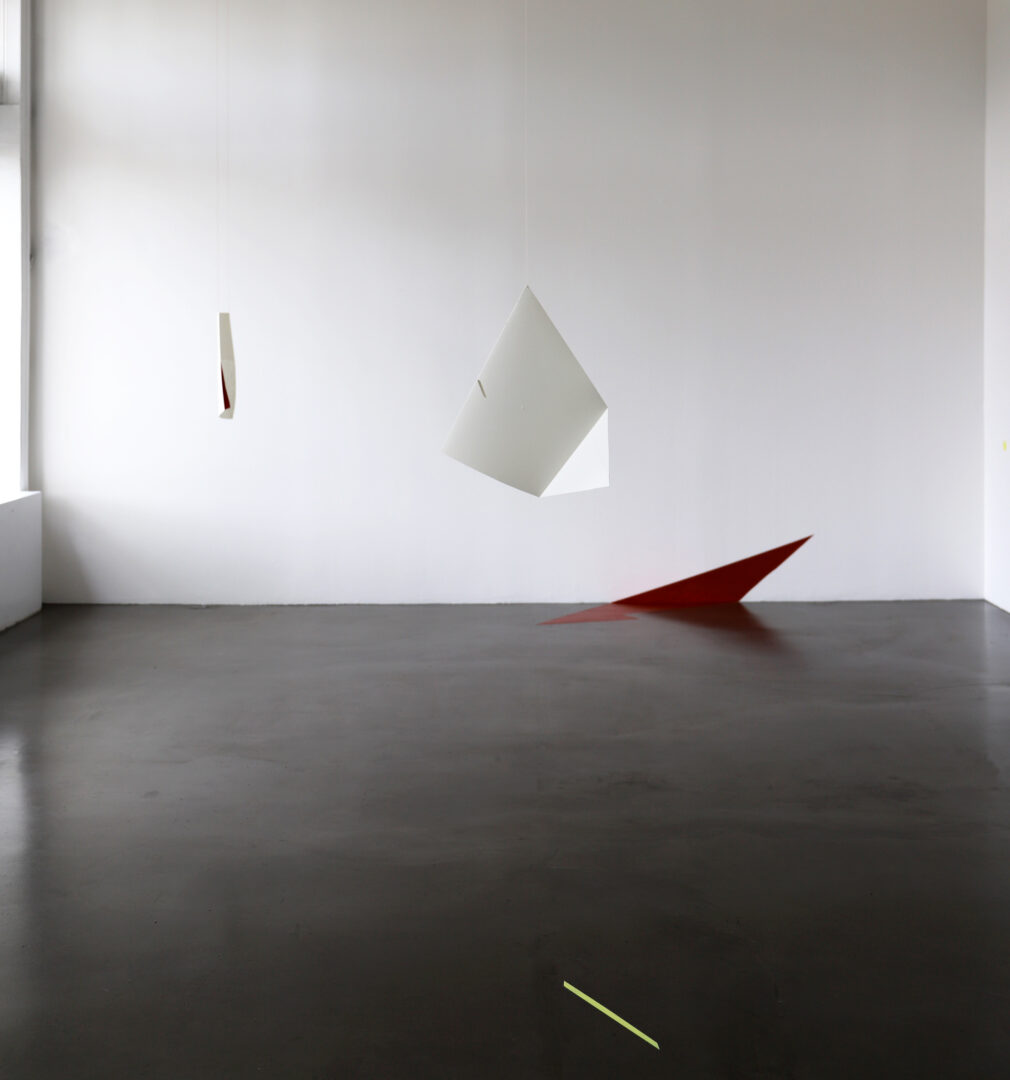
The year 2025 was an opportunity to reactivate a work produced during these three decades in each exhibition. Creating dialogues between artists and forging links between different practices and generations means honouring the constellations specific to a programme, revealing the enduring nature of the works, and asserting the importance of tailor-made support and the value of production assistance.
The current exhibition with Béatrice Balcou draws on notions of ritual, care and attention paid to the works and the conditions in which they appear. How did this invitation come about, and what do you think this exhibition allows us to explore in the relationship between the work, the institution and the public?
Béatrice Balcou’s work brings together concerns that are dear to La BF15. It takes care of the works while inviting a different temporality of the gaze. It also makes visible the professions and gestures that contribute to their implementation. Thus, the subtle ceremonies that Béatrice has been performing since 2013 consist of installing and uninstalling a work with the gestures of a stage manager, in front of a small number of spectators. For our 30th anniversary, she has created a Ceremony (untitled #23) based on an immersive work that Élodie Seguin designed specifically for La BF15 in 2024 around the themes of light and transparency. Also in the first room, Béatrice presents eight wooden picture rails. Les Pièces assistantes, for this exhibition, are awaiting works by female Bauhaus artists who had to overcome various obstacles to make their mark. Closing La BF15’s anniversary year with such an exhibition highlights all the common attention we pay to creation.
A publication dedicated to the last ten years of La BF15 has just been released. Can you tell us about the genesis of this publication?
After a fire in 2013, during which part of our archives were lost, we felt the need to produce a publication, ‘La BF15 2015-2004’. Today, a new decade is coming to an end with ‘La BF15 2025-2015’. These two volumes embody the evolution of the programme so that it can be explored in a different way, no longer through the experience of the work in space, but through its representation in time and in the intimacy of the pages. In our hands, history is written as proposals reveal the multiple questions that artists constantly raise in their experience of the senses. Ways of thinking and producing vary in line with contemporary, societal, ecological and economic issues. Leafing through these pages reveals the evolution of the issues and concerns that drive us over time. Witnessing and participating in this movement is a privilege.
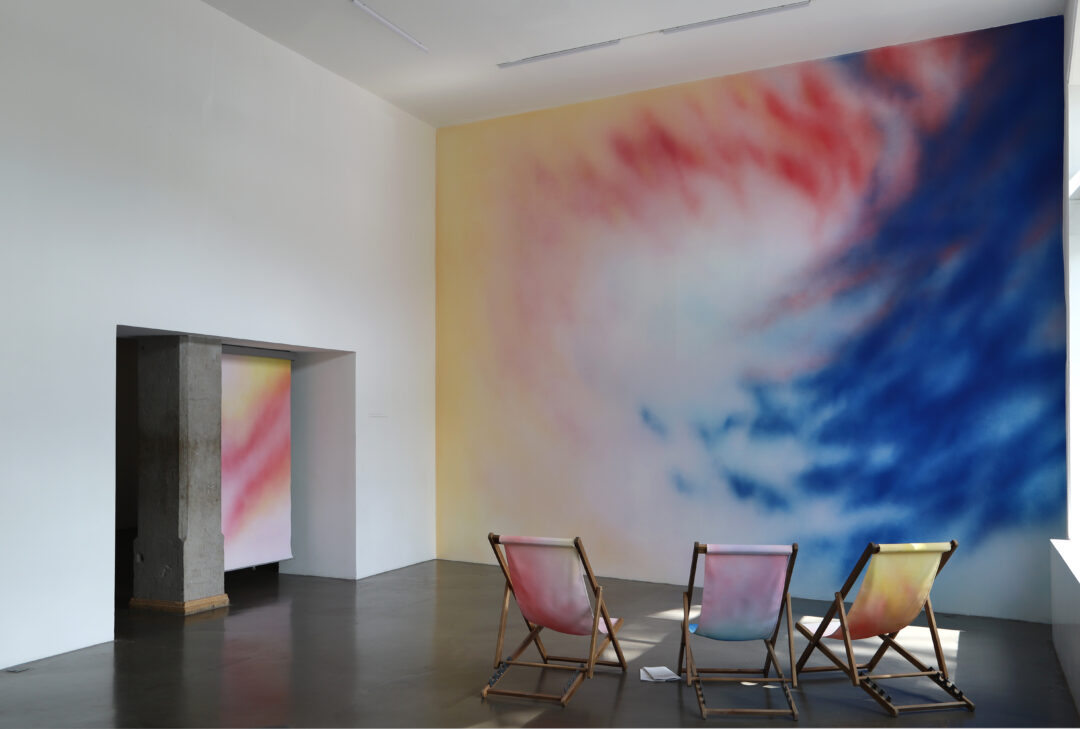
The associative model implies great flexibility but also a high degree of precariousness. How do we navigate twenty years of existence in a context of unstable funding and constant policy changes? And what are the major challenges facing La BF15, both artistically and structurally?
We must constantly invent new modes of collaboration and production.
Currently, with our Burgundian counterpart, we are initiating the BIS programme, an exchange of good practices between two territories and two contemporary art structures: La BF15 in Lyon and Interface in Dijon. This programme confirms our desire to pool our networks, practices and means of production while offering privileged working and exhibition conditions to emerging artists. A joint programme where two exhibitions coincide, based on a partnership between two associations and two artistic scenes.
Despite the support of the City of Lyon, the Auvergne-Rhône-Alpes Region and the Ministry of Culture/DRAC Auvergne-Rhône-Alpes, our resources are very modest. We are increasingly having to rely on partnerships and sponsorships. The search for funding is a real job that requires a lot of energy and distracts us from our own mission. Knowing that, in the end, these private sponsors benefit from tax breaks, it is a lot of energy and detours for what is ultimately the same public expenditure.
In the current context, it is essential that our public utility structures continue and expand. For more than thirty years, a network of associations has been woven in Lyon to support the work of artists and ensure its effective dissemination. This network allows artists to find a fertile ground for research, without concern for market value. It offers springboards between learning and reality, bridges between the studio and the community. These are places where one has the right to make mistakes, the right to try, to experiment, the right to tolerance as well as irreverence, places that defend freedom of expression, outside of norms and institutions. Each structure contributes in its own way to ensuring that art remains accessible to all, free of charge; these qualities of offering and hospitality are precious, and few other spaces offer a similar service. Each is run by passionate and committed teams, despite their limited resources.
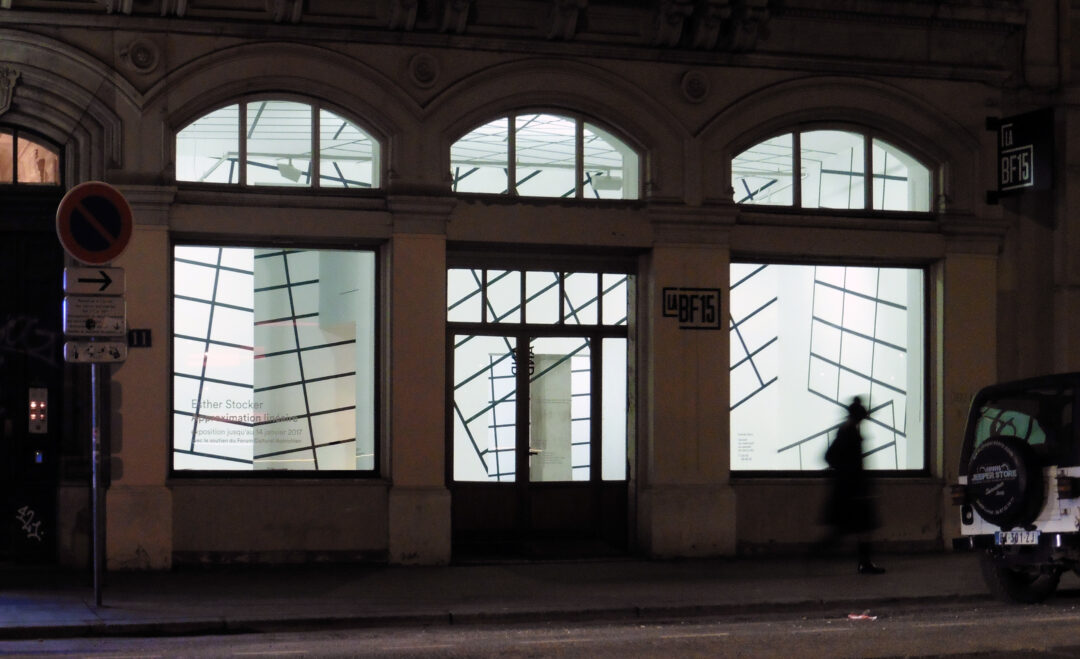
In a country whose culture is celebrated around the world and whose economic impact is significant (we are talking about billions), too many art workers live in precarious conditions. On 18 December, the Senate dismissed a bill to ensure continuity of income for artists and authors and access to decent social rights. This is distressing.
We must not abandon those who allow us to take a step back from our reality while zooming in on its specificities. It is an entire system that needs to be rethought and valued, both literally and figuratively.
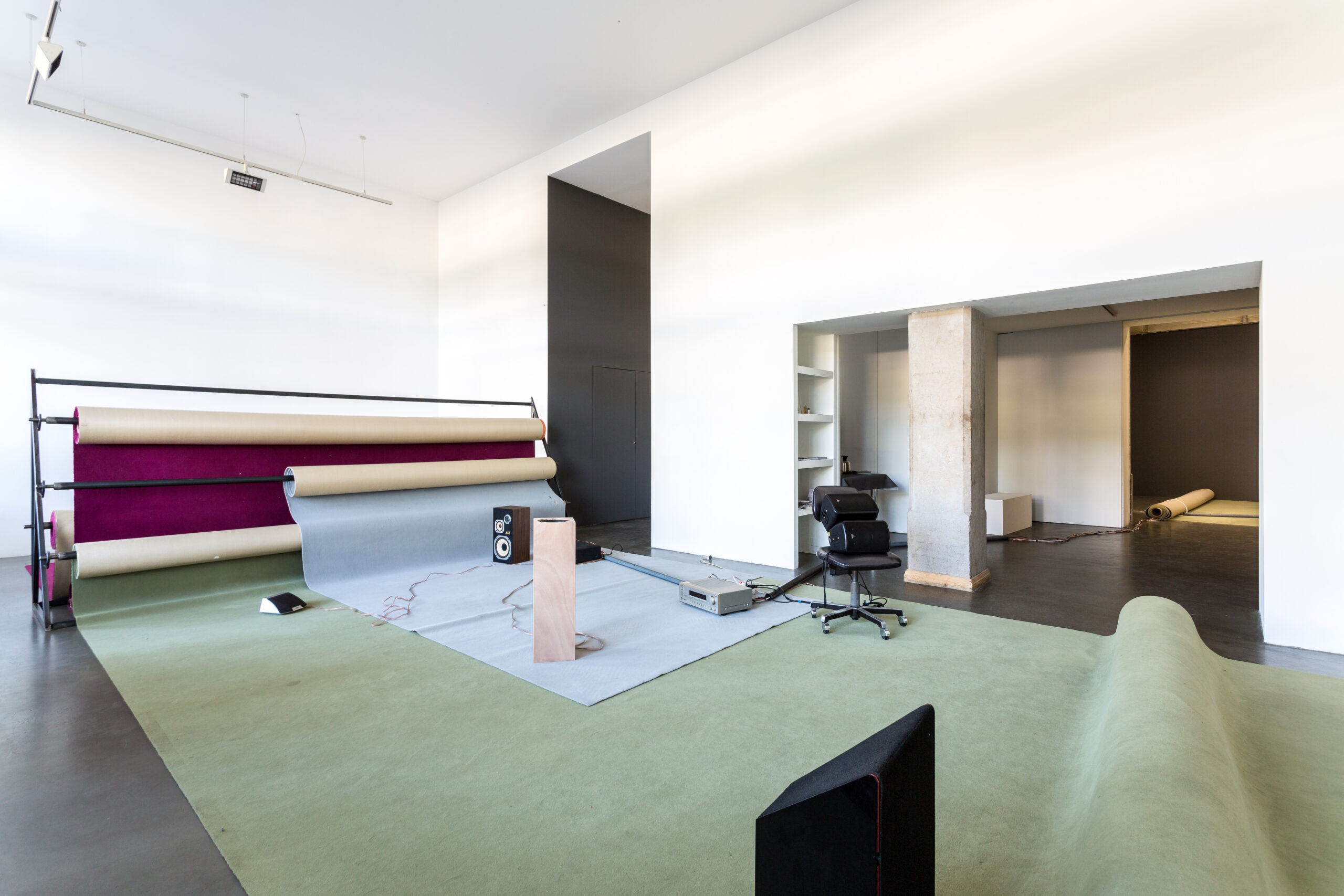
Head image : Anen le Troter Les mitoyennes, 2015, sound piece 13 min, in collaboration with Max Bruckert. Photo Jules Roeser Production La BF15 and le Grame.
Related articles
The Theatre of Cruelty (Theater of Cruelty)
by Patrice Joly
Interview with Camille Richert and Clémence Agnez
by Clémence Agnez
Vanessa Theodoropoulou
by Patrice Joly