Walter Swennen
Walter Swennen, iconoclastic painter, conceptual craftsman of pictorial material
Belgian painter, poet, and thinker Walter Swennen passed away on August 15 in Brussels at the age of 79. An unclassifiable artist, he turned painting into a space for radical experimentation where the languages of poetry, philosophy, and the absurd intersect with disconcerting freedom. He leaves behind a body of work that is as enigmatic as it is essential.
Walter Swennen’s paintings are visual enigmas that continue to defy any attempt at categorization. Little known to the French public, he was considered one of Belgium’s most influential artists, particularly because of his innovative and experimental approach to painting. Born in 1946 in Forest, a suburb of Brussels, Swennen grew up in a modest family of six children, in a national context marked by the duality of official languages. When he was five years old, a decisive event had a lasting impact on his sensibility. His parents, who were of Flemish origin, adopted French as the family language, creating a linguistic divide that would become one of the keys to his work. This tension between Flemish and French, between words and shifting meanings, fueled Swennen’s fascination with language as a material, on a par with painting. Trained in engraving at the Royal Academy of Fine Arts in Brussels, he also developed an interest in psychology and philosophy, subjects he studied at university, drawing on Wittgenstein, Lacan, and Freud for tools to question meaning and its ambiguities. In the 1960s, he turned to poetry, publishing in alternative magazines and participating in happenings alongside Marcel Broodthaers (1), among others, whose conceptual and ironic approach had a profound impact on him. In May 1968, he formed the Groupe Accuse with Brigitte Baptista, Umberto Beni, Francine Lichtert, and Jean Toche, which organized performances and ephemeral actions in the spirit of the avant-garde of the 1960s, influenced by the Beat Generation and the happenings of Fluxus. While these actions were linked to the questioning of forms of power that were widely shared at the time, certain principles already present in Swennen’s interventions would later be replayed in different ways, in particular the function of language and communication (2). It was only in the early 1980s, after a period of questioning, that he fully embraced painting, a medium he approached with total freedom, rejecting any pre-established dogma.
Painting as a playground and a field of thought
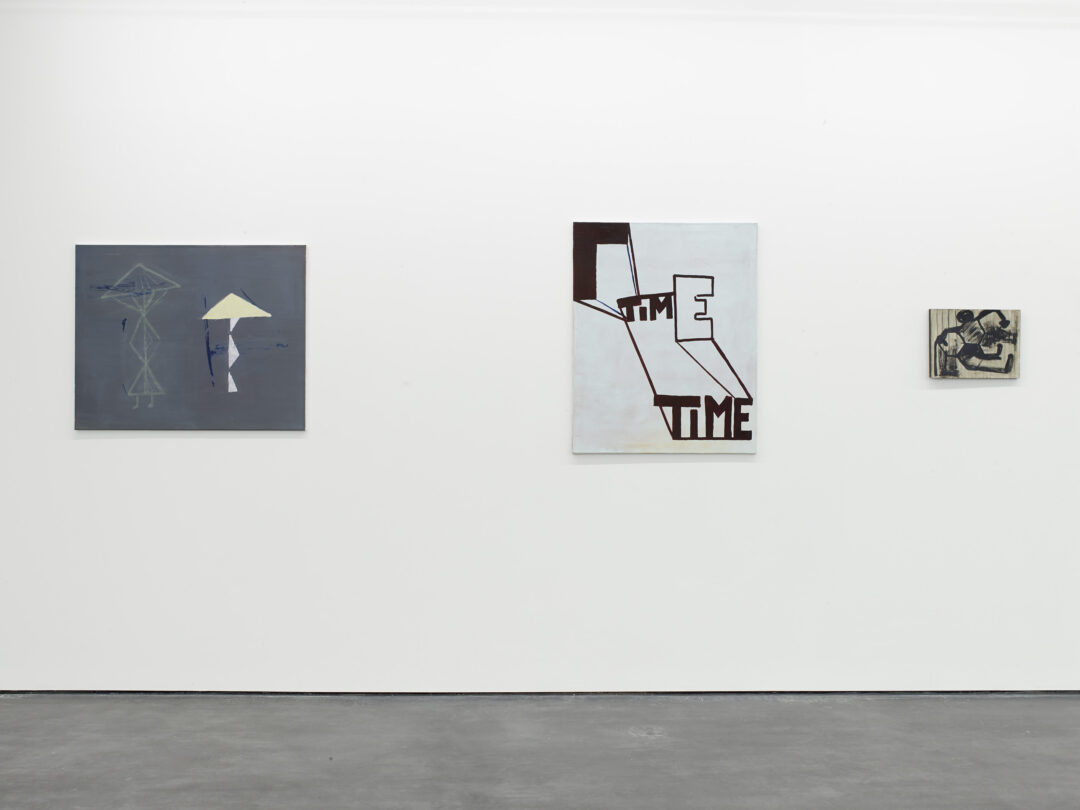
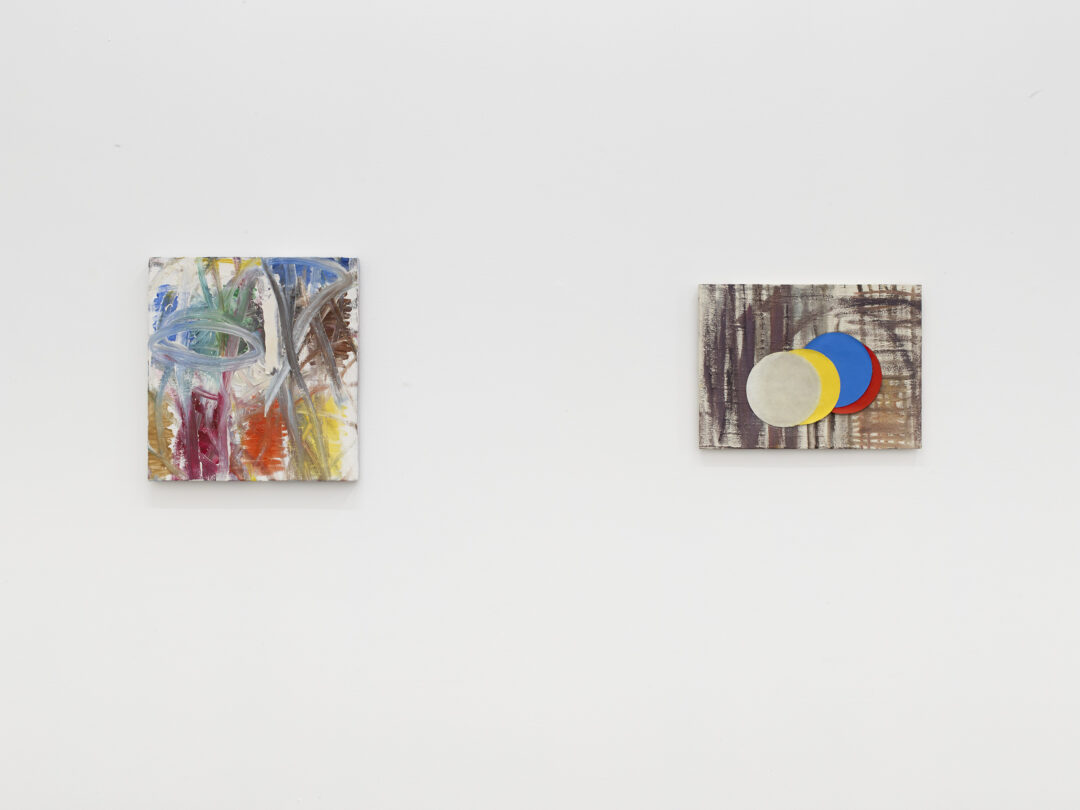
Walter Swennen’s painting obeys no rules other than that of unpredictability. An act of joyful subversion, it is also a rejection of all orthodoxy. “A painting is always the image of a painting,” he liked to repeat, emphasizing the autonomy of the medium in the face of any attempt to subject it to a narrative or illustrative function. His works, often created on eclectic media—used canvases, wooden panels, found objects—are fields of experimentation in which disparate motifs intertwine: everyday objects (bananas, funnels, pots), fragments of text, comic book characters, raw splashes of color, undefined geometric shapes. These elements, drawn from popular culture or scholarly references, whether philosophy, poetry, or psychoanalysis, come together in an associative, almost dreamlike logic that evokes free jazz or Burroughs’ literary cut-ups (3).
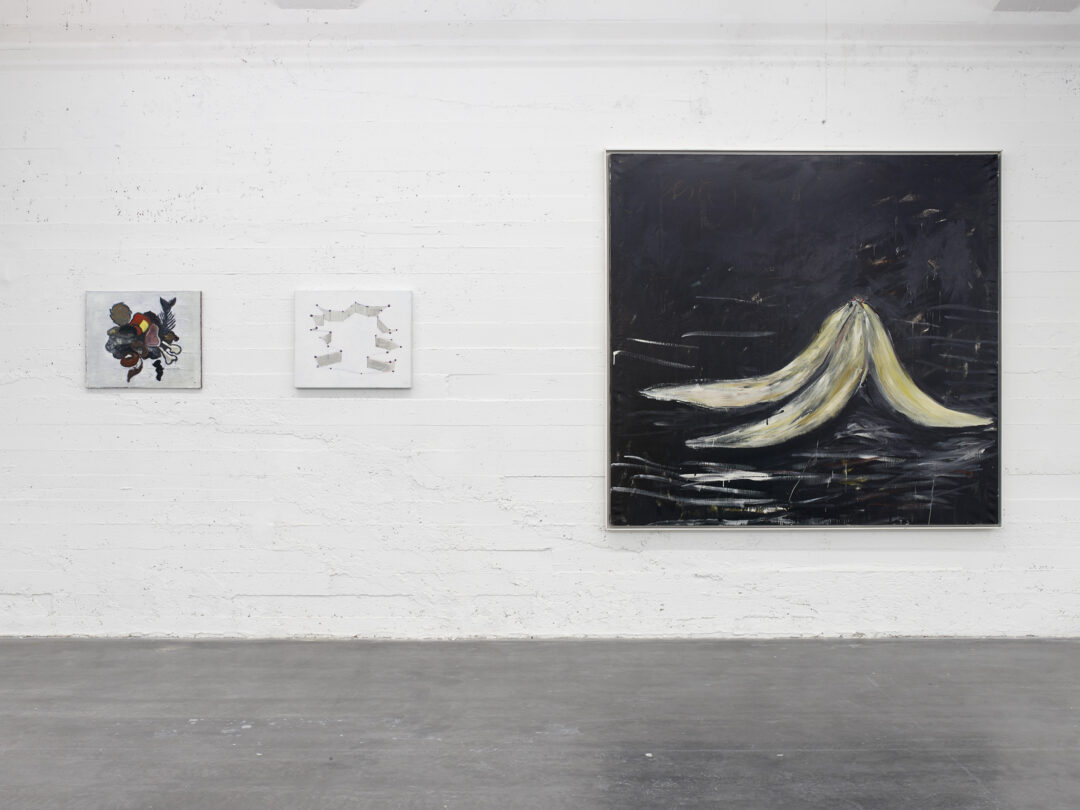
Swennen paints as one improvises, letting the canvas dictate its own path. “My only goal is to finish the painting,” he confided, rejecting the idea of a preconceived project. This approach, both playful and deeply thoughtful, makes him an heir to the conceptual questioning of Broodthaers or Duchamp, while remaining a craftsman of pictorial material. His bright colors, applied in flat areas or with nervous gestures, his compositions devoid of classical perspective, his rough or clumsy textures—whether intentional or not—convey absolute freedom. In “Untitled (Beste P., bis)” (1984), a bright yellow banana peel stands out against a dark, almost black background. Is this banana peel a second warning, as the “bis” in the title seems to suggest? The banana, a recurring motif in Swennen’s work, evokes both Warhol’s pop art and a deeper reflection on the trivial object as a vehicle of meaning. The composition, painted with broad brushstrokes, illustrates his rejection of technical perfection, preferring spontaneity and imperfection as expressions of authenticity. Another example, in “The Cat (2015),” a cat sketched with feigned clumsiness becomes an ironic meditation on representation. Written painting or painted text? The ambiguity at play in “Zij die hier zijn van hier” [Those who are here are from here] (2007) continues into the text itself. The message, which at first glance seems extremely clear, becomes much more ambiguous as it is read multiple times. The artist seeks neither to seduce nor to explain. His paintings, often accompanied by enigmatic or absurd titles, are invitations to lose oneself in the meanderings of meaning, without ever fixing it. A conveyor of the invisible, he makes painting a materialized space of thought in which the absurd becomes a gateway to meaning.
Belated recognition and rebellious legacy
For a long time, Walter Swennen remained a discreet artist, almost marginal to the Belgian scene. His work was celebrated more by his peers than by institutions. It was not until the 2010s that his work gained international recognition, driven by a new generation of curators and collectors sensitive to its radicalism. In 2013, the retrospective “So Far So Good” at WIELS in Brussels marked a turning point, revealing the breadth of his universe to the public. This was followed by major exhibitions, such as “Ein perfektes Alibi” at the Kunstsammlung Nordrhein-Westfalen in Düsseldorf in 2015, “La pittura farà da sé” at the Milan Triennale in 2018, and above all “The Phantom of Painting” (2021-2022), an ambitious traveling exhibition presented at the Kunstmuseum Bonn, then at the Kunstmuseum Den Haag and the Kunst Museum Winterthur. These events established Swennen as a key figure in Belgian art and beyond. He is often compared to his compatriot Raoul De Keyser (1930-2012) or the Dutch painter René Daniëls (born in 1950 in Eindhoven), with whom he shares a similar distrust of systems and a passion for experimentation. When he received the prestigious 2019 Ultima Award for visual arts (4), he remained true to his rebellious spirit by choosing to donate the entire sum to the Belgian Workers’ Party (PT), in a gesture that recalls his discreet but constant political commitment, inherited from the utopias of the 1960s. Represented by galleries such as Xavier Hufkens in Brussels and Gladstone in New York, Swennen has seen his work enter the collections of major museums, from MoMA to the Centre Pompidou, confirming his status as a major painter of the 21st century.
Walter Swennen never painted to please or to conform. His work, both ironic and profound, is a constant challenge to interpretation, a celebration of uncertainty and freedom. Each canvas is an enigma, a burst of laughter in the face of the absurdity of existence, a reflection on the very nature of painting. Swennen was a tightrope walker of the canvas, an artist who, by refusing to be confined by boundaries, opened up new ways of seeing and thinking about the world. While his passing leaves a void, it also leaves a mandate: to continue looking, questioning, and playing with signs and forms. Walter Swennen showed us that painting, like life, is a banana peel on which we must learn to slide with grace. His irreverent and luminous work will continue to challenge future generations, like a wry smile addressed to eternity.
(1) Broodthaers mentions Swennen as an important reference in an open letter dated December 2, 1969, written on the occasion of his Literary Exhibition around Mallarmé held at the Wide White Space gallery in Antwerp.
(2) Olivier Mignon and Raphaël Pirenne, “L’antre de la Belle K.” (The Lair of the Beautiful K.), Place, no. 1, January 2019, https://www.place-plateforme.com/walter-swennen%2C-l-antre-de-la-belle-k.–r.-pirenne—o.-mignon.html
(3) A literary technique invented by author and artist Brion Gysin and experimented with by American writer William S. Burroughs, which consists of cutting up an original text into random fragments and then rearranging them to produce a new text.
(4) A prestigious Flemish cultural and artistic award.
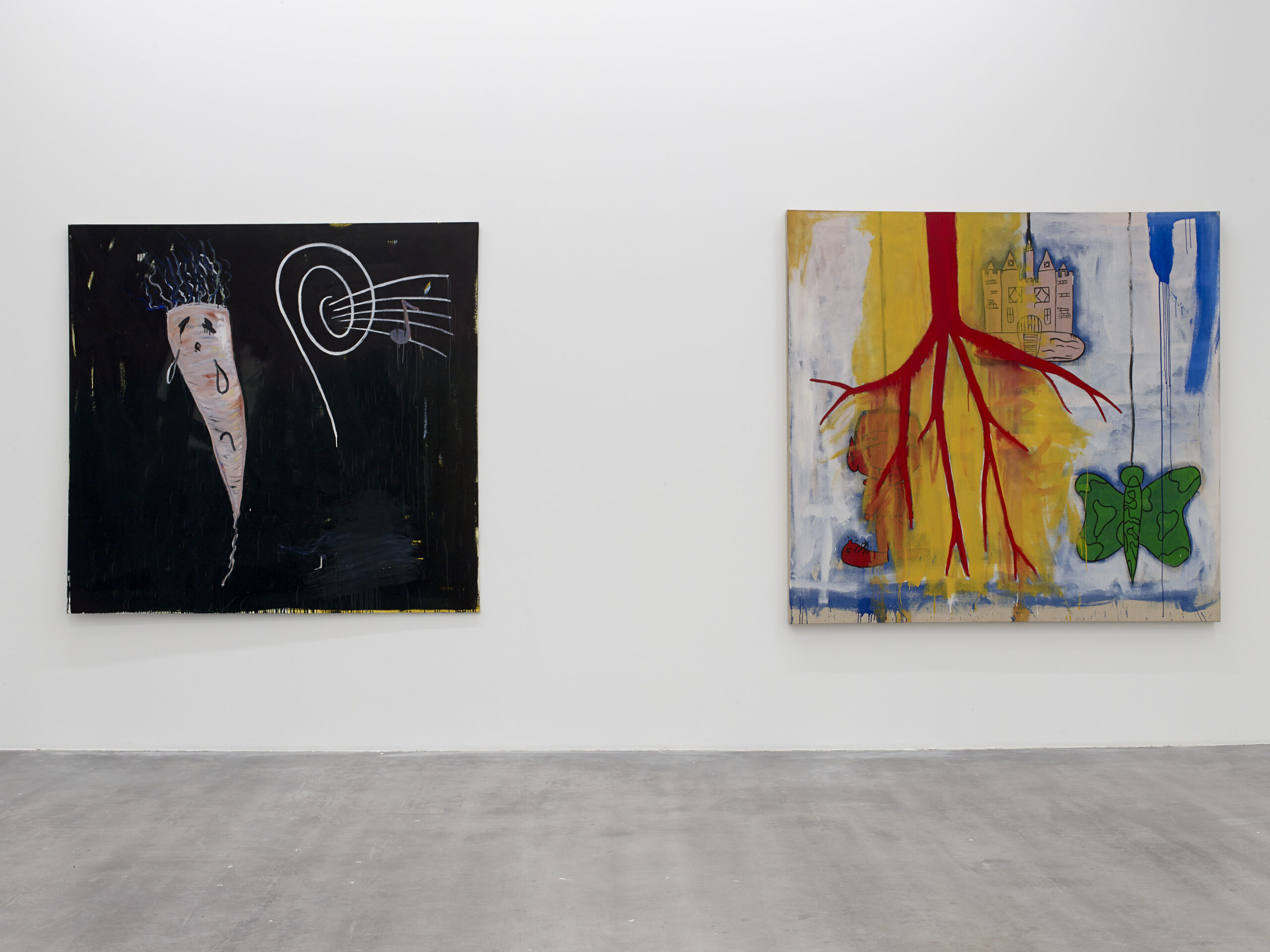
Head image : Exhibition view of Walter Swennen: So Far So Good (05.10.2013 – 26.01.2014) at WIELS Contemporary Art Centre, Brussels. With: Untitled (Légume triste et musique), 1995 and Elsjes Triptiek, 1998. Photo: Kristien Daem.
- Share: ,
- By the same author: David Claerbout, Biennale Son, Laurent Proux, Josèfa Ntjam, Michel François ,
Related articles
Julie Béna
by Anna Kerekes
David Claerbout
by Guillaume Lasserre
Jean-Charles de Quillacq
by Anne Bonnin