1+1. The Relational Years
MAXXI, Rome
29 Oct – 1 March 26
Anyone who experienced, closely or from afar, the effervescence of the 1990s in France and the emergence in the late 1990s of the theory of relational aesthetics by art critic Nicolas Bourriaud—followed a few years later by the opening of the Palais de Tokyo with his accomplice Jérôme Sans—will visit the exhibition 1+1 at MAXXI in Rome with a certain interest, tinged with amused or even slightly emotional nostalgia.
Formulated by Nicolas Bourriaud in an essay published in 1998, the theory of relational aesthetics proposed a shift in artistic production from the object toward social situations to be activated, inhabited, or collectively experienced. The artwork was no longer to be contemplated within an immaculate white cube but to be engaged with through an active relationship between viewer and work, generating new forms of sociability. This movement “tooked as its theoretical and practical point of departure the whole of human relations and their social contexts, rather than an independent and private space.”
The theory achieved the success we know, partly no doubt because the artists associated with it went on to enjoy impressive careers and continue, even today, to benefit from exhibitions worldwide—in museum institutions, private foundations, biennials, and blue-chip galleries. Among them are Pierre Huyghe, Gabriel Orozco, Anri Sala, Philippe Parreno, Dominique Gonzalez-Foerster, Maurizio Cattelan, and Rikrit Tiravanija.
The exhibition, curated by Bourriaud and Eleonora Farina, presents itself as the first major retrospective in the world devoted to this movement, offering the opportunity, thirty years later, to revisit the historical importance of a concept created in a world that would radically change at the beginning of the 2000s with the digital era, growing individualization of society, and governance increasingly shaped by algorithms.
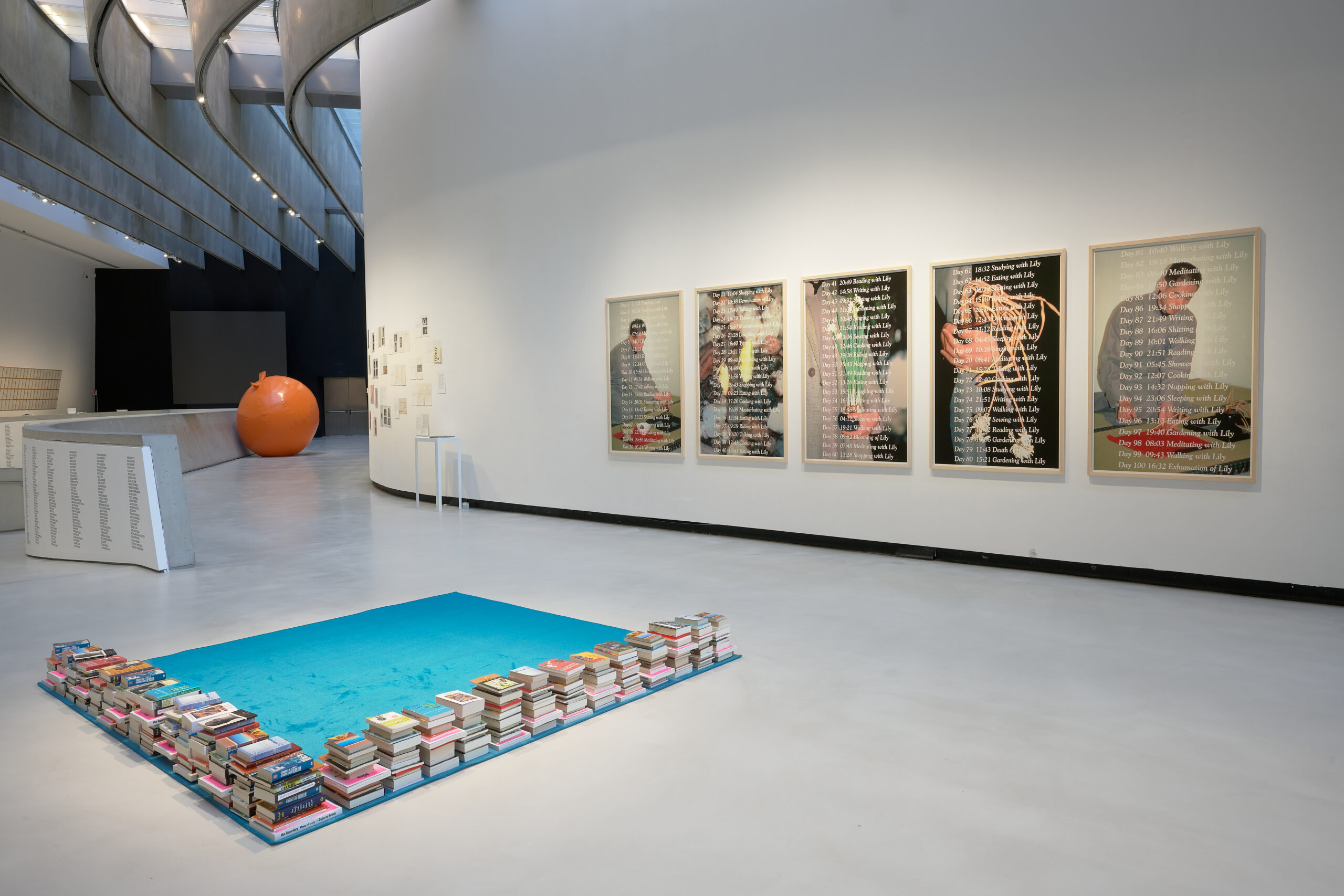
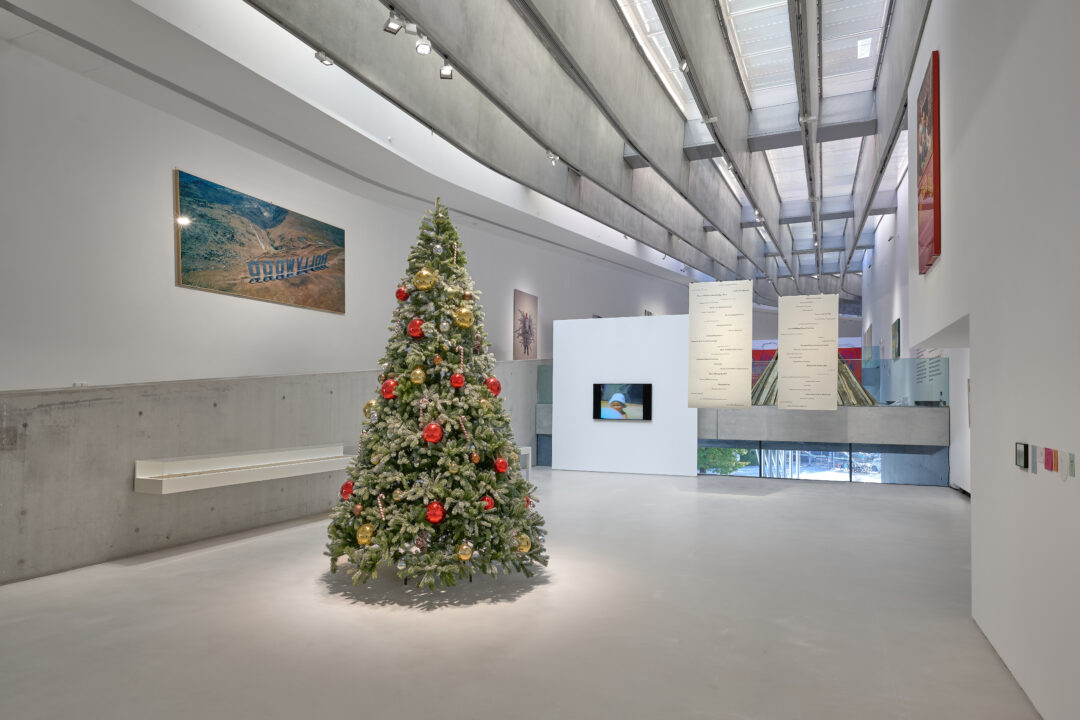
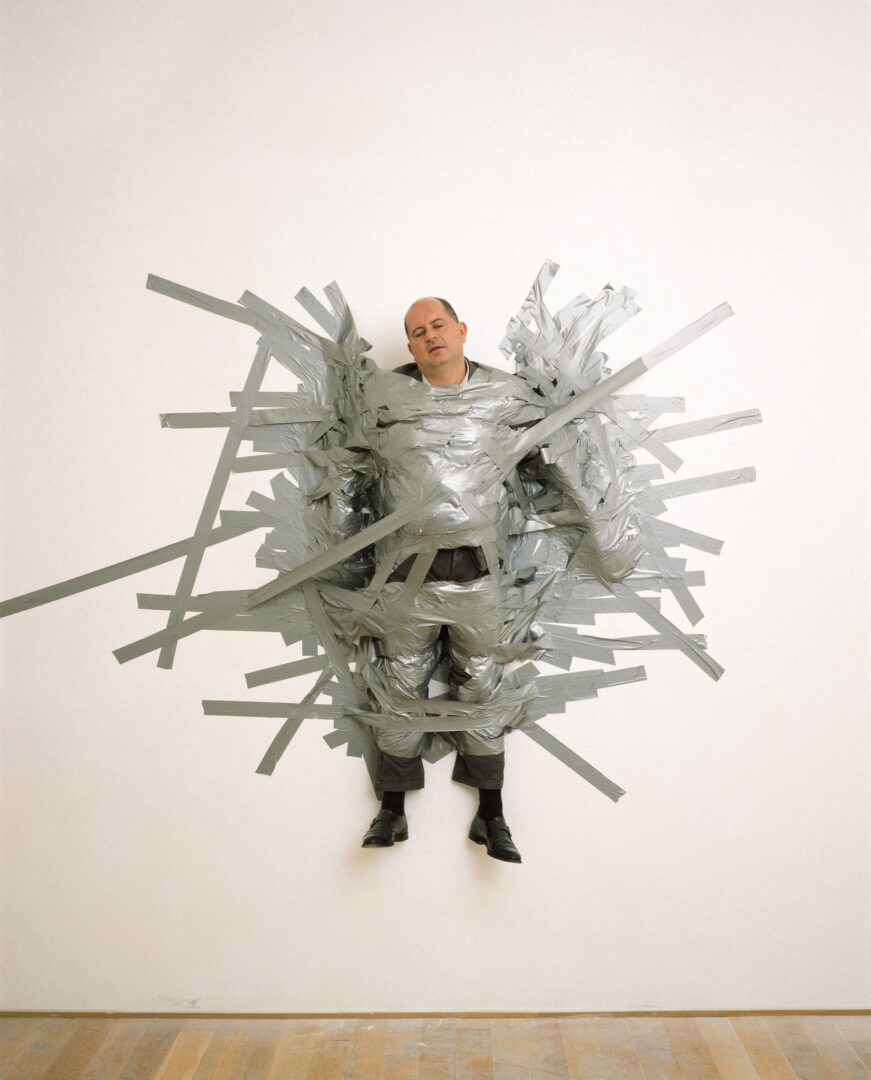
The exhibition unfolds as an “open and situational” path, in Eleonora Farina’s words, guiding visitors through a temporal exploration of works that have left a lasting mark on the movement and on art history. These include Philippe Parreno’s Christmas tree, Fraught Times: For Eleven Months of the Year, It’s an Artwork and in December It’s Christmas (1997); Rikrit Tiravanija’s quintessential relational work Untitled 1990 (pad thai), which displays in a vitrine the remnants of utensils used to cook a meal (1990); Dominique Gonzalez-Foerster’s Tapis de lecture, allowing visitors to lie down while consulting more than 400 books selected by the artist (1997); and Maurizio Cattelan’s famous photograph Untitled, in which he chose to tape his gallerist, Massimo De Carlo, to the wall (1999)—before his infamous banana.
The exhibition is also regularly activated by performances such as Pierre Huyghe’s Name Announcer (2011) and Alicia Framis’s Confessionarium (2014), which ironically transposes the confessional device into a transparent booth where the public can observe visitors confessing, thus highlighting the need for transparency in society as well as within the Catholic Church.
Alongside this selection of iconic works—rediscovered here with renewed interest—the exhibition features artists who may be less well-known but are equally compelling. Among them is Lee Mingwei’s photographic series 100 Days with Lily (1995), documenting a performance in which the artist recounts his experience of living for 100 days alongside a plant in order to mourn his grandmother through a Buddhist ritual. This poetic, process-based piece evokes the fragility and impermanence of life through a critical exploration of time and memory. Also noteworthy is Julia Scher’s prescient surveillance work Occupational Placement (1989–1990), which juxtaposes live surveillance footage with pre-recorded sequences she calls “fake seeds,” thereby unsettling our perception of reality.
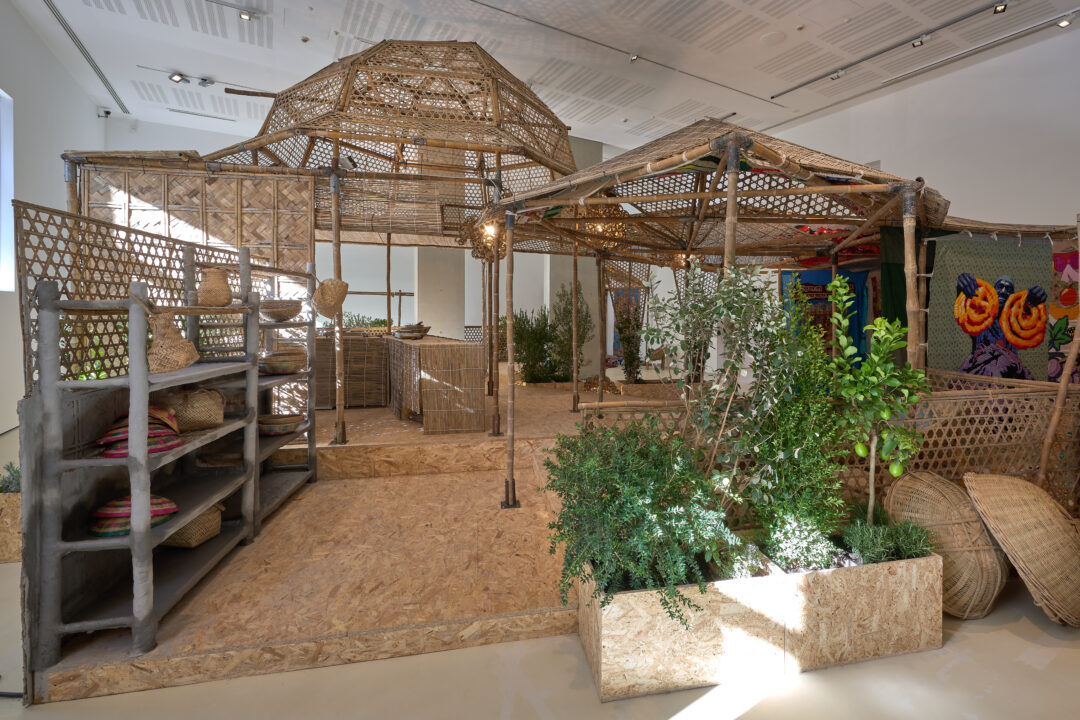
A major commission to the collective Britto Arts Trust—first encountered at Documenta 15—completes the program with Pakghor & Palan, a work structured around a “palan,” a Bengali vegetable garden activated during moments of sharing and communal tasting. The piece brings together different cultures and traditions, encouraging reflection on agriculture, its modes of production, and the circulation of resources.
One notable curatorial decision is the inclusion of certain precursor artists who might at first glance appear external to relational aesthetics, such as Lygia Clark and her relational objects from 1976, Franz West and his Passstücke (1996), and Maria Lai’s photographs Legarsi alla montagna (1981), documenting a performance in which the artist, with the help of the inhabitants of a small Sardinian village, connected all the houses with a blue ribbon (the only color standing out in the black-and-white images), tracing an emotional map of the territory before fastening it to the mountain overlooking the village. These works provide historical perspective and form a counterpoint to the younger generation of artists presented further in the exhibition.
Thirty years after the movement’s emergence, this exhibition allows us to measure its decisive imprint on a generation of artists and curators. It also underscores how profoundly the world of the 1990s—the same world that imagined the end of history after the fall of the Berlin Wall—has shifted paradigms and given way to a deeply reconfigured landscape. Far from an “end of history,” the present, marked by growing conflicts, seems to test the social bonds, micro-utopias, and forms of conviviality championed by relational aesthetics. At the same time, the art object has undeniably regained strategic centrality, embedding itself more directly within systems of circulation and collection.
- Share: ,
- By the same author: Performa Biennial, NYC, Thomias Radin, Ralph Lemon,
Related articles
Hannah Darabi
by Guillaume Lasserre
Art-O-Rama 2026
by Giorgia Basili
18th Lyon Biennale
by Sarah Ihler-Meyer