Biennale Son
Biennale Son, Valais, Switzerland: review and outlook
Orchestrated by Jean-Paul Felley, its founder, and Maxime Guitton, guest curator, the second edition of Biennale Son, which ended on 30 November in the canton of Valais in Switzerland, consolidated the success of the first edition by amplifying its ambition.
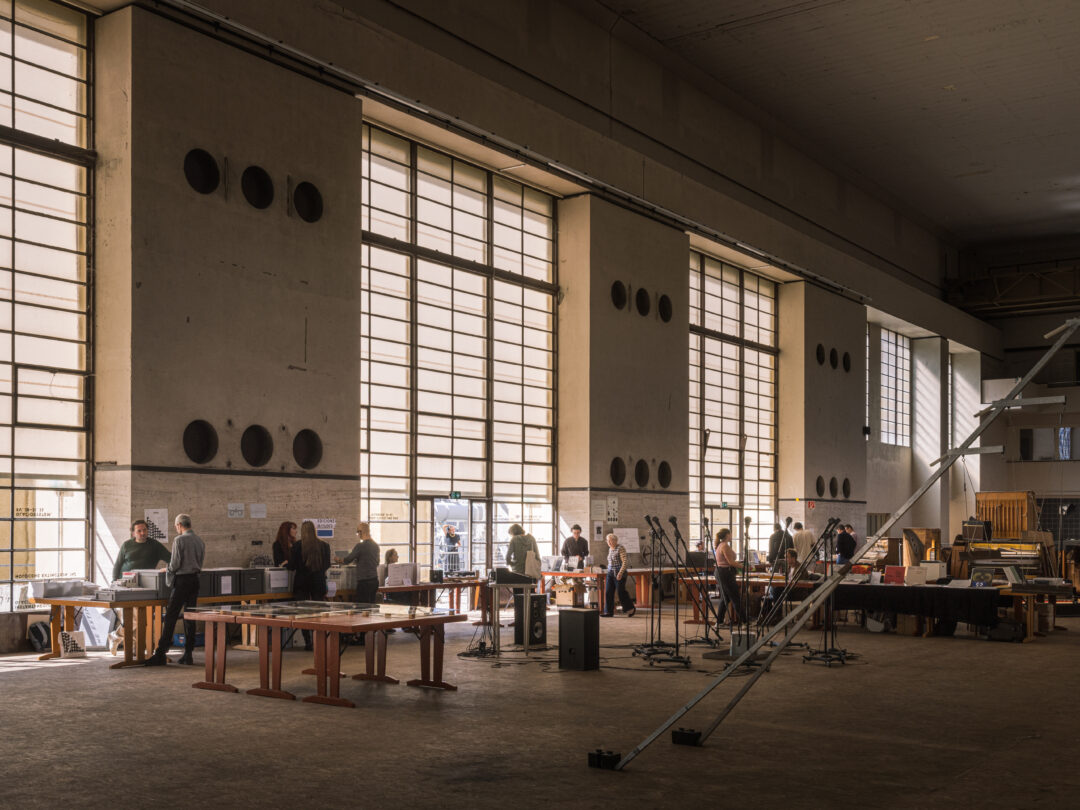
More than 108 artists took over 23 heritage sites, starting with the former Chandoline hydroelectric power station in Sion, renamed La Centrale, which became its iconic headquarters, as well as the Manoir de Martigny, the brutalist Saint-Nicolas church in Hérémence, and the former penitentiary in Sion. The event lasted thirteen weeks instead of six as it had two years earlier, with increased attendance and greater international reach, attracting audiences from all over Switzerland as well as France and Italy. prestigious collaborations, notably with the Centre Pompidou, and an immersive multidisciplinary programme combining installations, performances and silent works, promoting sound as an ecological, political and sensory vector in contemporary art. While for some visitors the geographical dispersion may have diluted the experience, the extension of the event’s duration made it possible to compensate somewhat for this distortion by allowing for a more in-depth discovery. In just two editions, the Sound Biennial has already established itself as a mature and unifying event that firmly anchors Valais on the European sound art map, promising an ambitious third edition.
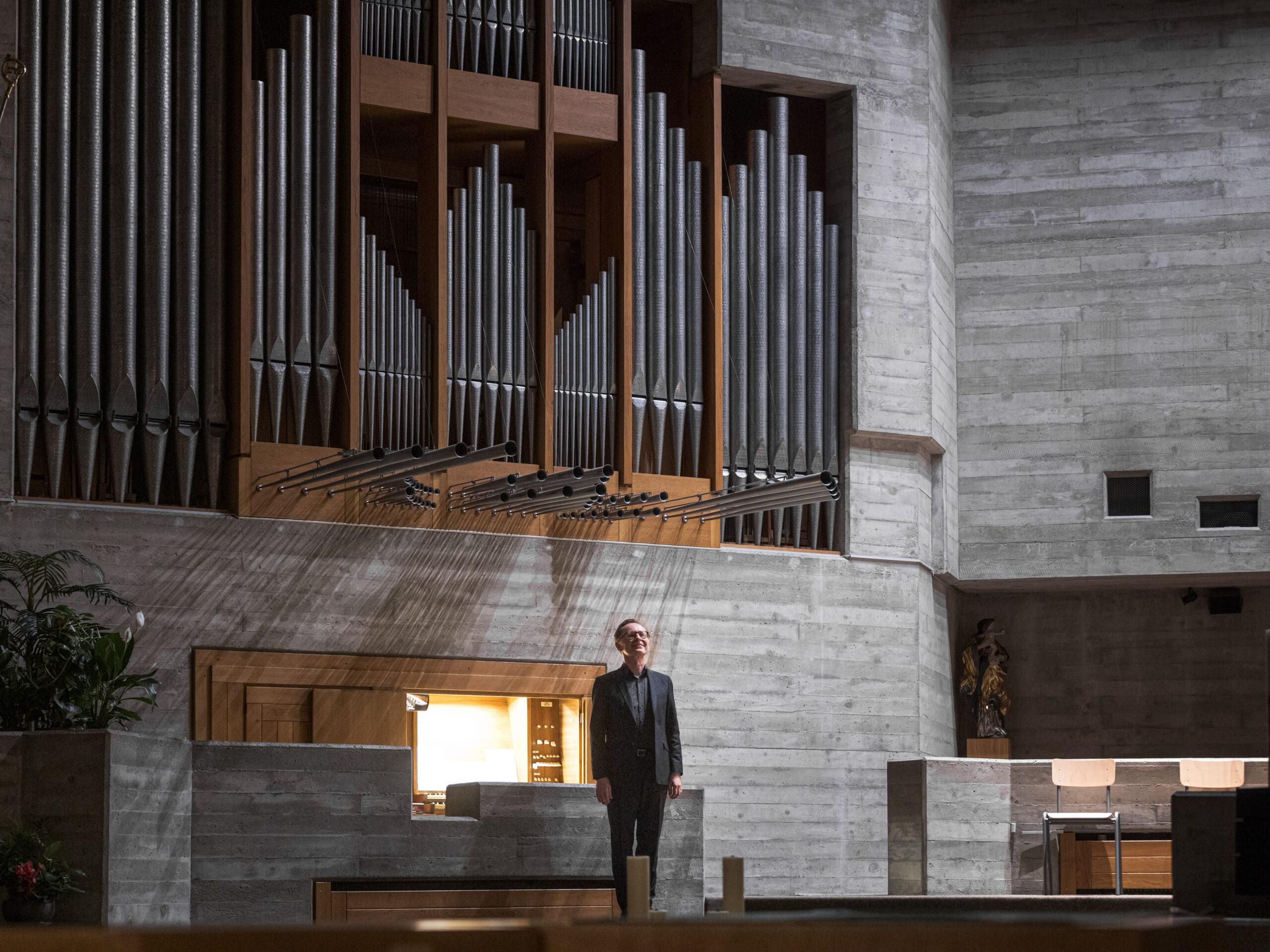
One of the undeniable highlights of this second edition was the recital in the Church of Saint-Nicolas in Hérémence by Thomas Dahl, titular organist at the Church of Saint-Pierre in Hamburg, Germany, and historical interpreter of Hanne Darboven’s Requiem. Dahl integrated excerpts from the monumental Requiem (op. 19-22) by the German conceptual artist into Bach’s Toccata and Fugue in D minor (BWV 565), creating a striking contrast between Darboven’s mathematical, repetitive and almost hypnotic rigour and the dramatic and virtuoso energy of Bach’s Baroque music “. In this unique alpine and architectural setting, with the natural reverberation of the concrete and the light filtering through the abstract stained-glass windows, the programme took on an almost meditative and spatial dimension, perfectly resonating with the exploratory spirit of the Sound Biennale and offering a dialogue between contemporary conceptual minimalism and baroque grandeur in a venue that amplifies both the fragility and the power of sound. We must applaud the initiative of the Sound Biennial, which, in its programming, allows for this maintenance of form, which is invaluable for a demanding work such as Darboven’s Requiem, which, like any work, only exists when it is played to be heard.
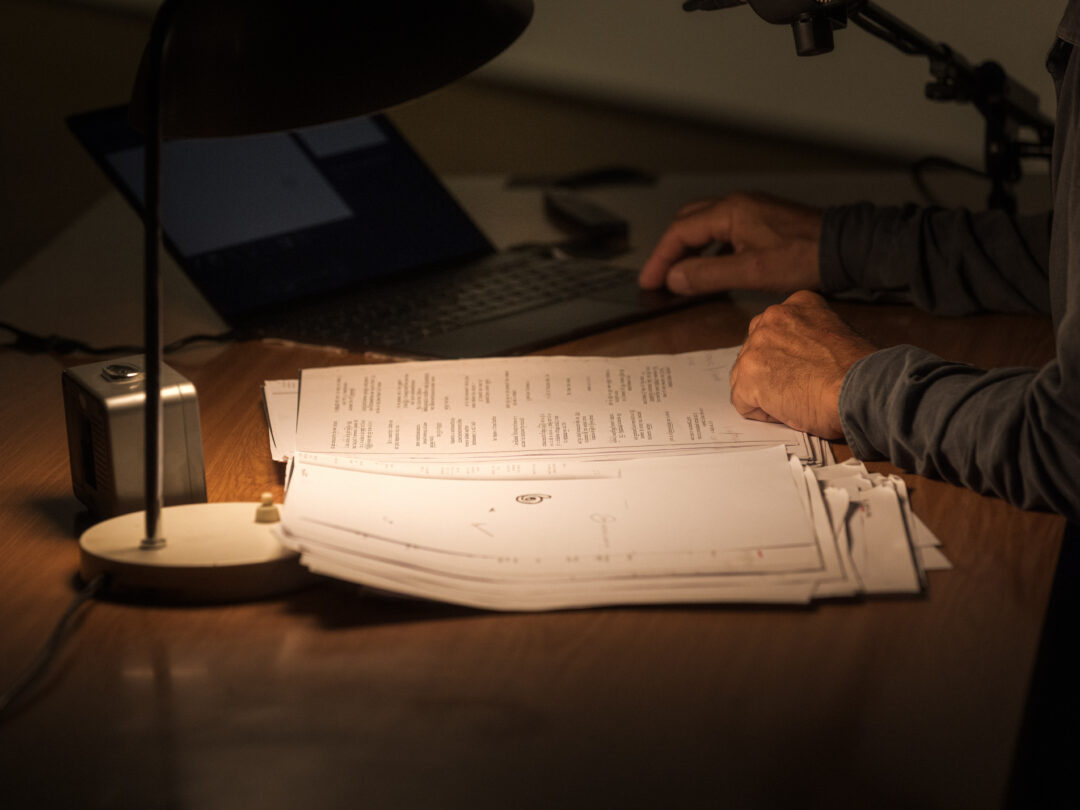
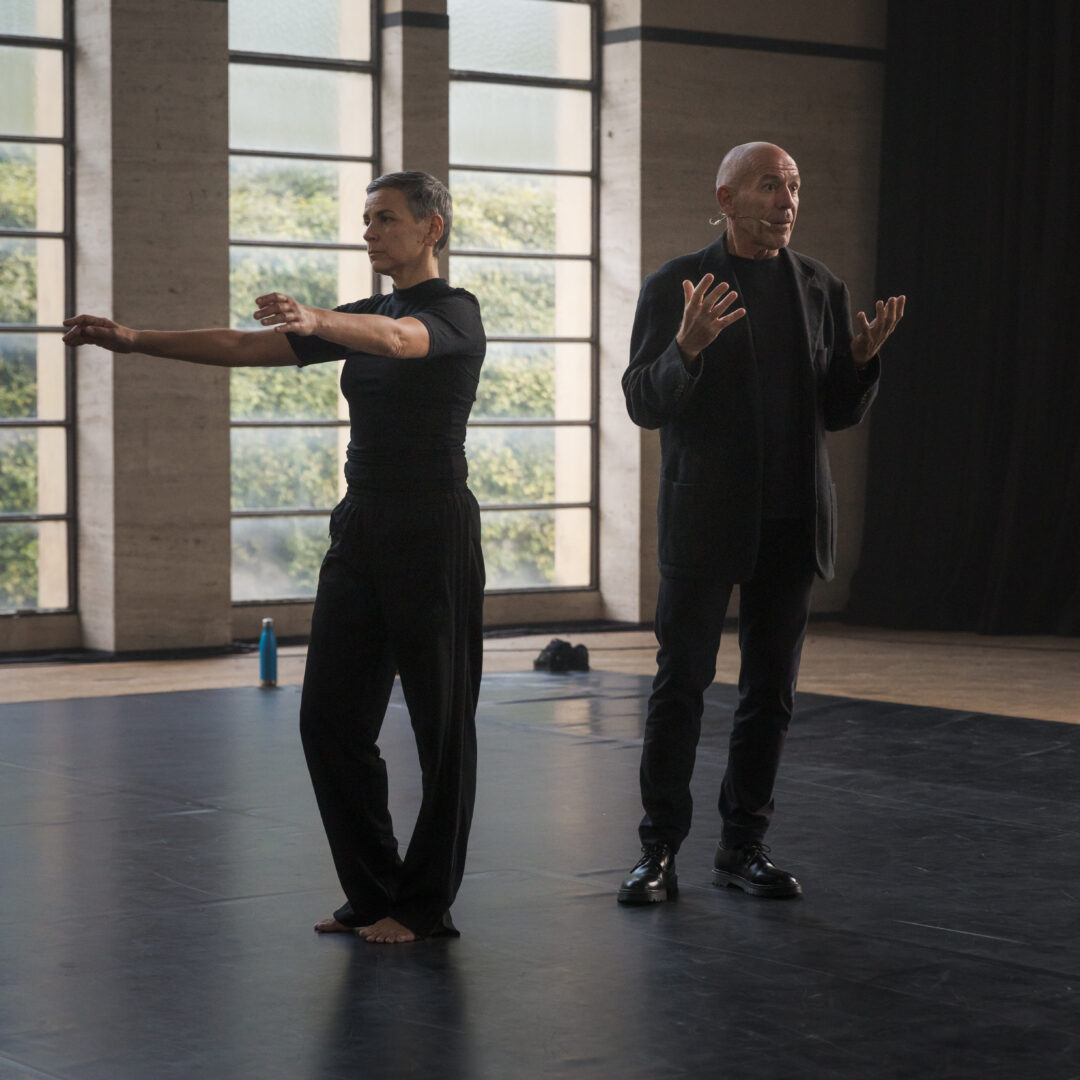
Another remarkable and noteworthy performance, one of the most radical and immersive of the event, was Vincent Barras’ complete interpretation of John Cage’s Empty Words, presented at La Centrale at the end of September. Composed between 1973 and 1975, Empty Words is a marathon work for solo voice, both text and score, based on Henry David Thoreau’s Journal. Cage applies his method of writing in which chance reigns supreme, with the transition from one note to another determined by drawing lots, consulting Chinese hexagrams or superimposing transparencies with crumpled paper, in order to return to a language that predates syntax, which Cage calls ‘demilitarising language’. He gradually deconstructs the text into four parts, each lasting two hours. Cage wanted the work to be performed from dusk to dawn, with breaks to allow the audience to eat and drink and let time and the surrounding sounds seep in. This is exactly the format that has been followed here, lasting around twelve hours in total, with three thirty-minute breaks. In this deconstruction of words, the vowels gradually disappear. Sound poet, performer, medical historian and translator, notably of Cage into French, Vincent Barras was the common thread running through this edition. Together with dancer Caroline de Cornière, he gave a six-hour performance at La Centrale at the end of October, which consisted of expressing the whole body through verbal and gestural language, spoken and danced.
He also closed this second edition by offering an afternoon of radical poetry on the last day, accompanied by Michèle Métail, Laura Vazquez and Olivier Cadiot.
Dance was not left out this year, as demonstrated by Greek-Swiss choreographer Alexandra Bachzetsis’s performative solo Rush(es), an exploration of the complex relationship between the body and identity through physical, intense and instinctive dance. The body became a tool for transformation, resistance and questioning the very meaning of ‘being oneself’ today. One of the specific features of the Sound Biennale is that rehearsals take place during the opening hours of the exhibition at La Centrale. What may seem disturbing at first glance reflects the different temporalities between two ways of exhibiting, showing and listening, between two disciplines, the visual arts and the sound arts. These rehearsals have the advantage of showing how we work with sound and how we arrange the works in relation to each other. We have to accept, for example, a loss of sound in certain pieces, sometimes a more or less controlled cacophony.
This second edition also saw the creation of the first Vinyl Art Fair, entrusted to Italian producer Fabio Carboni – creator of the Die Schachtel label and director of the Soundohm distribution platform – and Sara Serighelli – collaborator at SPRINT, an independent Italian art publishing house. Modelled on art book fairs, this fair was curiously absent from the contemporary art world. ‘It’s not just about music or publishing, but a radical reinvention of the way art can inhabit sound and sound can manifest itself as art,’ says Jean-Paul Felley. A parallel universe of artistic expression, the desire to repeat it requires reflection on its accessibility, aware of the lack of audience at this new event. Without going back over all the exhibitions, including the major one at La Centrale and the one that took over the former Sion penitentiary for the first time, both of which were extensively covered in the feature published in the previous issue of 02, we will nevertheless mention the proposal hosted by the Manoir in the town of Martigny. This former family residence, built in 1730 and converted into a municipal contemporary art centre, was taken over by the Brussels-based French artist Pierre Leguillon, who presented his generous ‘Erratum musical’, a term borrowed from Marcel Duchamp, referring both to the title of the exhibition and the musical section of the Musée des Erreurs (Museum of Errors) that Leguillon founded and installed in his Brussels apartment in 2013. Here, he brings it into resonance with pieces from the Centre Pompidou in Paris and the Musée du Son/Fondation Guex-Joris in Martigny. Modest printed objects connect the rooms, each representing a type of Western museum, whether it be painting, arts and crafts, anthropology, etc. The result, both funny and unique, questions our perceptions of art and music. Above all, the exhibition is uplifting, if the smiling visitors we meet are anything to go by. Pierre Leguillon has the rare talent of making people happy, which is no small feat in these times.
The third Sound Biennial will take place in autumn 2027 with La Centrale, based in Sion. It will be led by Jean-Paul Felley and the newly appointed guest curator, Claire Le Restif, the iconic director of the Crédac contemporary art centre in Ivry. By envisaging the exhibition as a space for passage and transmission, prioritising the sensory experience of the work, she shares a vision that is fully in line with the approach of the Biennale Son. As usual, combining existing works and new creations, the next edition will be built on the work carried out in close collaboration between the two curators and in dialogue with the artists. For the first time, it is set to extend beyond Swiss borders, with an incursion into Paris. This co-curation confirms the Sound Biennale’s commitment to forging links between territories, audiences and artists, in the service of an ever-expanding soundscape.
Head image : hanne Darboven by Thomas Dahl, saint-Nicolas d’Hérémence church. photo Olivier Lovey. © Biennale Son.
- Share: ,
- By the same author: Camille Llobet, After the End. Maps for Another Future, Wolfgang Tillmans, Bergen Assembly, Aline Bouvy,