Vanessa Theodoropoulou
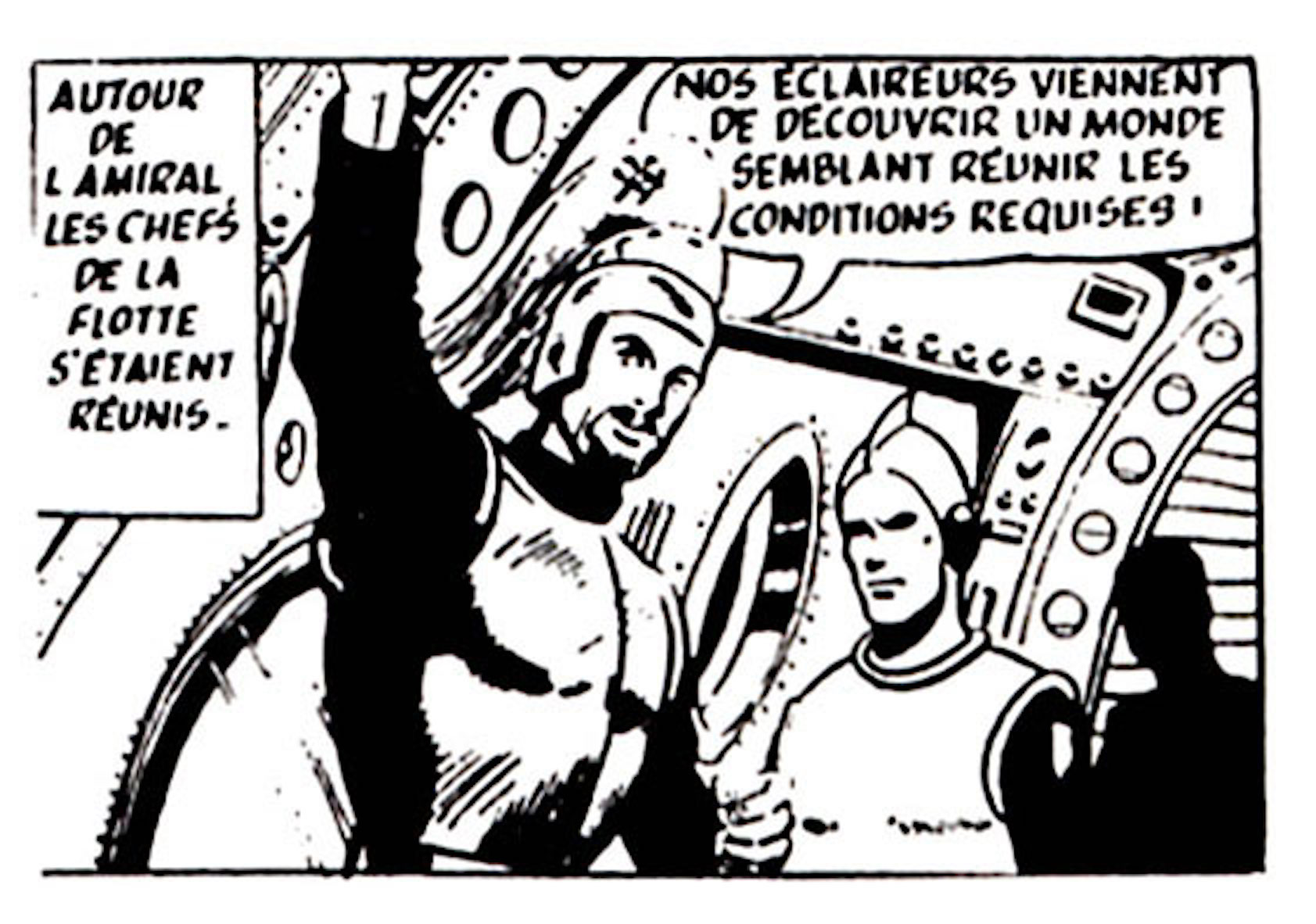
Vanessa Theodoropoulou, lecturer in art history and theory at the École supérieure d’art et de design d’Angers, has just published a book on situationism with Les Presses du Réel. In the 1950s, this literary, artistic, poetic and political movement brought together numerous artists, writers, philosophers and intellectuals around the figure of Guy Debord, a charismatic leader with uncompromising radicalism whose mantra seemed above all to be about changing the world, changing our habits, and putting passion and desire back at the centre of our lives. Situationism had a strong influence on the consciousness of the time by taking a raw and uncompromising look at our societies, hypnotised as they were by the hold of a spectacle that it held responsible for our passivity and subjugation, with the desire to free people from the shackles that prevented them from living their lives to the full. Sixty years after its zenith and thirty years after Debord’s death, what remains of this movement that wanted to revolutionise our mindsets?
Why revisit the Situationist movement after so many years? What prompted you to publish such a comprehensive work? Do you think Situationism is still relevant today, that its precepts are still pertinent in a society that has undergone such profound change?For the mastermind and founder of the Situationist International (SI), the spectacle is the enemy, condensing all the alienation of a society devoted to consumption (of all goods, including and perhaps especially cultural goods) to the detriment of a more passionate relationship with life and reality. But isn’t the concept of the spectacle as Debord defined it in his famous essay The Society of the Spectacle now obsolete?
This book is the result of research that began several years ago. I began by writing a thesis on the history of art about the IS in the early 2000s, at a time when this little-known movement, famous for its political and artistic radicalism, was regarded in my circles as a legend that had to be confronted, either by adhering to it or by trying to deconstruct it. For my part, I had read Debord and Vaneigem during my teenage years in Athens, but I lacked an in-depth study of the SI as an avant-garde movement. In order to understand and historicise this aesthetic-political project in all its breadth, I first had to gather as many documents, archives, correspondence and works left by the Situationists as possible, whether published or not, and study them, turning my back somewhat on the official exegetes. At that point, I met Alice Debord, with whom I had many discussions and formed a strong friendship, and who gave me access to archives and key figures for understanding what had happened, especially from Debord’s point of view. What prompted me to revisit the subject several years later and write this book was the realisation that this type of comprehensive approach was lacking in the existing bibliography, the extent of the influence of Situationist practices on contemporary art, and the conviction that the concept of the spectacle is still relevant today. I believe that the SI, more than any other avant-garde movement of the 1960s that theorised art as action or play, paved the way for the current expansion of artistic practices into fields as diverse as the humanities, social rituals, architecture, anti-capitalist, ecological and other forms of activism, and the production of knowledge. As for the ‘spectacle’, a concept made famous by Debord’s book but developed, as I show in my book, in a context of collective artistic experimentation, its interest lies in the fact that it exposes a modern and postmodern form of subjugation, whose origin is certainly the capitalist system, but which passes through a hold over the senses. The ‘spectacle’ allows us to establish the link between media coverage and the increasing conditioning of our social relations, politics, access to knowledge or entertainment (social networks, artificial intelligence, fake politics and Google silos, etc.), technoscientific, cognitive, attentional, neo-feudal capitalism (…) and its disastrous economic, social and ecological consequences, and “aesthetics” in the old, pre-modern sense of the term.
The main ‘enemy’ of the Situationists, apart from the spectacle, is wage labour, which fragments time and space, structures lifestyles and behaviours, extinguishes all poetic aspiration and playfulness, and channels desires.It seems that the situation has hardly changed, even though wage labourers are increasingly becoming individual entrepreneurs, without their conditions improving: the new proletarians are working more and more, in proportion to the enrichment of the wealthiest classes. The Situationist dream, which could be summed up as a life full of surprises and encounters, banquets, parties and travels, experiments of all kinds and infinite possibilities for aesthetic expression of the self (‘a world governed by the law of desire and enjoyment, play and pleasure’, as Charles Fourier, whom you quote, puts it1), has it not come true for a tiny fraction of the population, the multi-billionaires and lords of finance2, in short, this new globalised aristocracy?
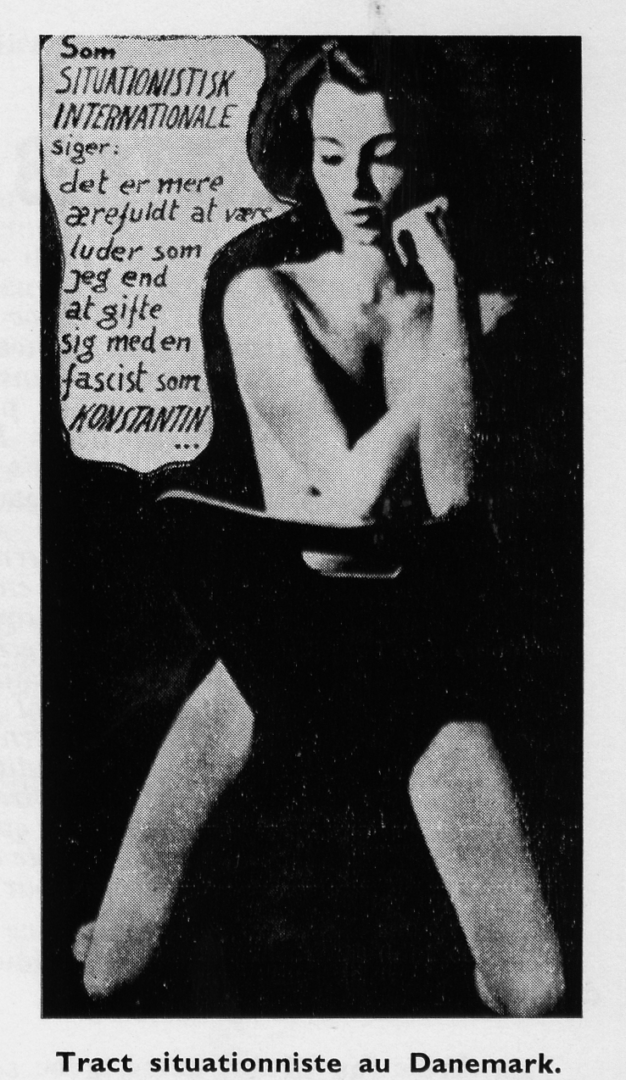
If, for the Situationists, heirs in this respect to Rimbaud, Lafargue, Fourier and the Surrealists, work is synonymous with boredom, conformity and a lack of creativity, their critique of work is deeply historical. It concerns the evolution of capitalism in the post-war period and the Trente Glorieuses, the relations of production, the organisation of “abstract” labour in the Marxist sense, and the socio-economic categories developed by Fordist and post-Fordist capitalism, which transformed the individual into an “object” and the economy into a “subject” according to Marxist analysis, in the process of transforming the world. By producing ‘beautiful’ commodities (material or immaterial goods, services, works of art) at the expense of producing new, non-spectacular ‘practices of life,’ individuals, according to Debordian criticism, become ‘spectators’ (i.e., separated from meaning and effects) of their own activity, which has itself become a commodity. In this system, the “free time” freed up by the development of technology is not really free time, because it is devoted to the satisfaction of “pseudo-needs” through the consumption of leisure activities that are not really playful, passionate or free, but on the contrary aim to produce even more capitalist value, as we know. And the same can be said of today’s pseudo-creative work, which nevertheless gives the impression of fulfilling rather than enslaving. Following this vision of reality as separation and duplication (which the dominant doxa accepts as the only true postmodern condition after the “death” of the subject), it would seem that the most affluent and materially ‘privileged’ sections of the population, those who consume and entertain themselves more than others (and against others), are the happy ‘spectators’ of their own lives, just like those who work to produce goods, or even more so, because they are totally subject to the rather capitalist dream of emotional and sensory dependence on these goods.
Drifting is at the heart of Situationist practices as an element of liberation from habits and greater sensitivity to the surrounding world, but also of intensification of affects.The concept of Situationist drift is based in part on the idea of surprise and the unexpected, which must be captured and optimised. What remains of the latter in a world where itineraries are increasingly marked out, where the same shops are repeated ad infinitum, where the possibilities of encounters are filtered by algorithms that validate them according to their probability of success, when the performative imperativeof capitalism extends its tentacles into the synapses of our soon-to-be-connected brains, when artistic careers are increasingly subject to tourist-consumerist logic?
The problems of drift, said the Situationists, are those of freedom. The situation you describe is one of the impossibility of drift, that is, of breaking with the forces that condition us, which is equivalent to the impossibility of freedom. I think the big misunderstanding, or real problem, stems from the fact that we confuse drifting with pseudo-free navigation (because it is highly signposted, as you say) in the network, reality, fiction and mediatised reality. By spending several hours a day on the Internet, gliding from one piece of content to another, from one real or staged situation to another, from one piece of information to another, we live under the illusion that we are wandering through unknown and fascinating lands, masters of our cognitive or emotional adventures. These two dimensions of life ‘as spectacle’ – the real and the spectacular, to put it briefly – seem to be merging more than ever today. Debord was already talking about the integrated spectacle in the 1980s. Is it possible to seek a form of ‘authentic’ experience (which acts on its own authority according to the definition of the word) or knowledge independent of the environment in which we live and social relations in this context? The interest, the liberating, emancipatory aspect of drifting in the age of screens, stems from the incitement to take the time, the supreme economic value, and to physically go out and encounter the world, renewing perceptions and representations. Drifting is essentially an attempt to explore our mental balance between attention and distraction, other major issues in today’s capitalism, a test of our ability to remain focused in a continuous space-time. By attempting to traverse the monitored or deserted territories of our contemporary landscapes, we finally become very sensitive to the issues of urban planning, population distribution and land use, but also to borders and the free or forced movement of bodies on the map.
Situationism has always had a special relationship with art, certainly due to the presence of Asger Jorn from the very beginning of the movement. Asger Jorn was an artist and founding member of the Cobra collective, for whom art was of paramount importance in our societies, being the most powerful catalyst for a possible sensitive revolt, to refer to the title of your book.Situationism advocates a total art that unfolds in the city and participates in the construction of situations. It can be summed up in the concept of unitary urbanism. That said, Situationism is not the enemy of art, it is only the enemy of frozen, reified art, of art as a trace of a past experience, and therefore outdated. Why this marked opposition to the art object, which seems a little reductive and simplistic if we consider the latter as the receptacle of infinite projections on the part of its author, projections that the viewer can appropriate in order to better emancipate themselves?
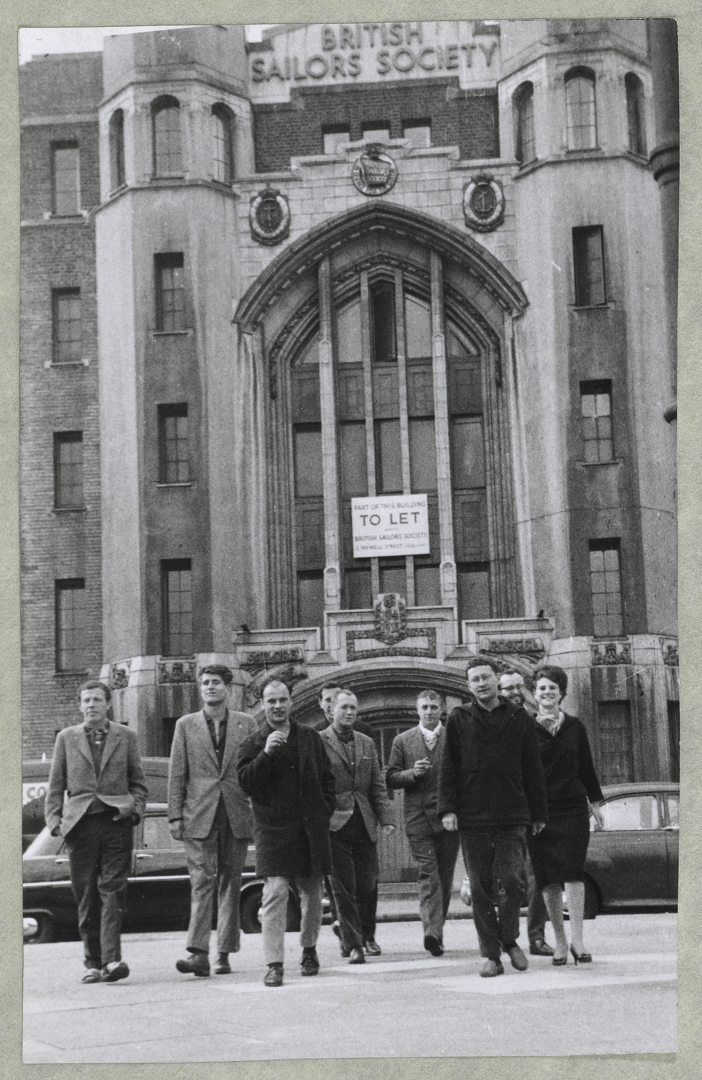
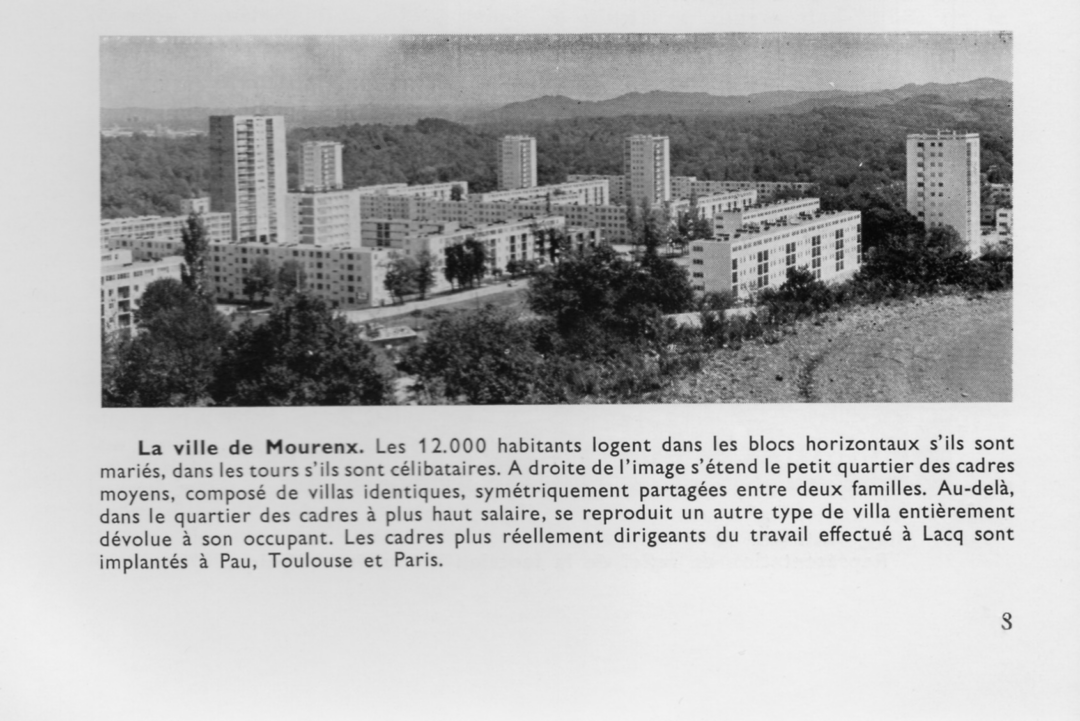
Once again, these ideas need to be contextualised in order to be understood. When he met Asger Jorn and his Italian accomplices, Giuseppe Pinot-Gallizio, painter, pharmacist and self-proclaimed friend of the gypsies of Alba (Piedmont), Piero Simondo, painter and aesthetic philosopher, Elena Verrone, architect, and Walter Olmo, experimental composer, as well as Ralph Rumney, British painter, all co-founders of the IS in 1957, Guy Debord had just left Isidore Isou’s Lettrist group, the latter advocating the reduction of poetry to the letter. Surrounded by such strong and radical personalities as Michelle Bernstein, writer and his first wife, the poet of the city Ivan Chtcheglov, alias Gilles Ivain, author of Formulaire pour un urbanisme nouveau (1953), the founding text of psychogeography, and the visual artist and poet Gil J Wolman, author of an anti-cinematic work entitled L’Anticoncept (1952), and others, Debord, who was already practising dérive, detournement and experimental cinema, wanted to go further than Isou in his radicalism, to create a new avant-garde with his own definition of art. For a series of reasons that I analyse in my book, he formulated at that time the idea that art must become the construction of situations, of real ‘behaviours’ in real ‘settings’, that is, moments of life between individuals brought together with this intention. With Jorn, they shared a connection to Dada and, above all, to surrealism, an ‘unorthodox’, artistic-critical adherence to the principles of Marxism and dialectical materialism, and an aversion to Le Corbusier-style modernism and all its manifestations in culture. The Situationists came together around the conviction that a new “methodology of the arts” (Jorn) in the service of a “new architecture” (Constant) and a new “practice of life” (Debord) was possible. Jorn would adhere to the project of ‘transcending art’ in the construction of situations and the unitary urbanism of the Lettrist International, and Debord to the experimental, baroque and labyrinthine spirit of the International Movement for an Imaginist Bauhaus. It is therefore clear that, even before the departure of most of the artists from the group’s early period, the idea of art as a creator of works of art was not conceivable in such a programme. But once again, the real enemy of the Situationists was not works of art. The enemy to be fought by all means, especially artistic at first, and ‘even artistic’ later on, was the famous ‘spectacle’ and its manifestations in all areas of social life, including the arts.
Did Situationism pave the way for neoliberalism? You refer to the bitter victory of Situationism in the same way that the ‘Situs’ referred to the bitter victory of Surrealism.In the conclusion to your book, you talk about the new possibilities offered by digital media, which potentially make each subject the author, but also the artist of their own life, its perpetual performer, while feeding the cash machine of cognitive capitalism, which gorges itself on this “artistic” and narcissistic self-promotion to turn it into the new raw material for its unlimited profit. This consideration brings us back to the Situationists’ desire to become masters of situations, to overturn the established order, a desire that new technologies would make virtually possible while making subjects responsible and consenting to their own alienation. Is this the bitter victory you refer to in the conclusion of your book?
When the SI entered the European intellectual milieu, surrealism seemed to the Situationists to have been “reclaimed” by the dominant culture. That is to say, its unconditional faith in the law of desire, the unconscious and the irrational, but also its fascination with occultism, magic and the unusual, once subversive in a morally and poetically repressive society, seemed to them to serve to better control, manipulate and enslave minds. Surrealism, the IS polemically asserts in its first bulletin in 1958, has become the art of an impotent bourgeoisie nostalgic for the past. Above all, the ‘new techniques of conditioning’ of spectacular capitalism, i.e. the techniques of influence, manipulation and conditioning of the behaviour of individuals and groups used by the police and police states, the military or the commercial industry (advertising, brainstorming, networks of influence, etc.), now make use of their access to the unconscious and attention, their power over people’s senses, imagination and irrational desires. Faced with such a situation, it is better to ‘rationalise’, to act critically, and then, in a project that will be abandoned, to seize these same techniques for one’s own project. The question I ask at the end of the book concerns, by analogy, the appropriation of some of the IS’s slogans by contemporary performance art. Subversive principles such as being the master of one’s own time and life story, leading a nomadic rather than a sedentary and static life, a “creative” life, playing rather than working, appropriating existing cultural content, etc., are now part of capitalist culture and ideology. And at the same time, virtually no one who works is truly master of their time or the value of their work; displacement is more synonymous with forced expulsion than with a change of scenery. The use of existing cultural content is becoming the stock in trade of AI, and it is increasingly difficult to escape the injunction to perform one’s life and identity on social media rather than play without being constantly exposed, visible and monetised. What strategy should we adopt if we want to challenge this situation and resist the spectacle today?
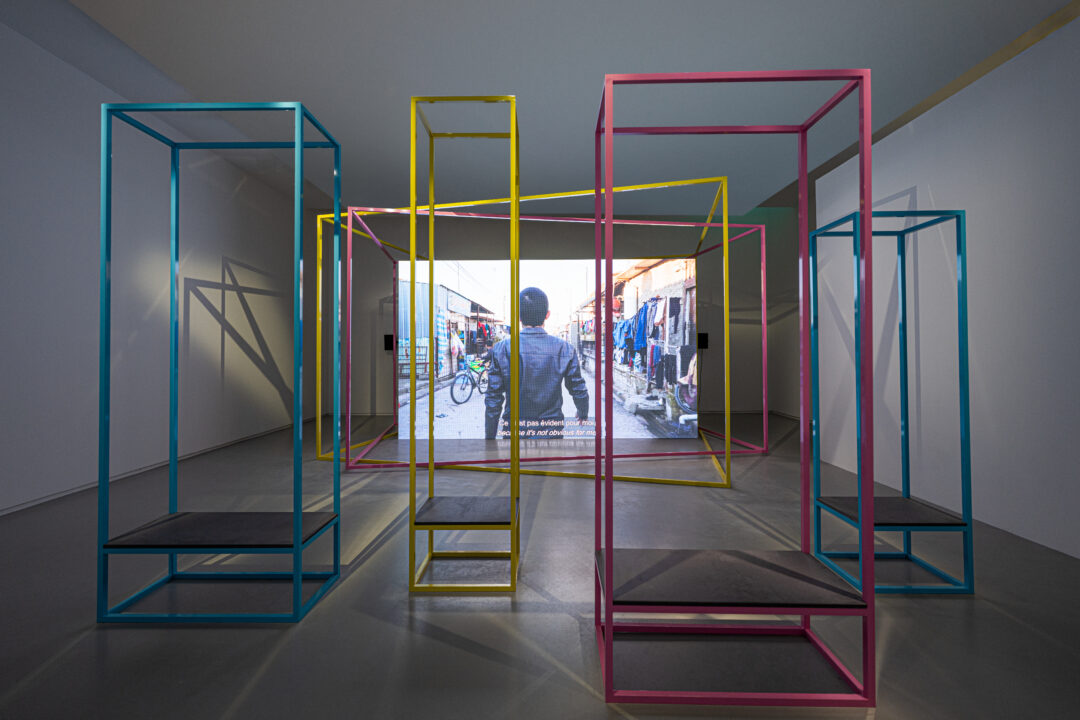
However, there are still ways, even in this new era of digital technologies, to resist their hold, by anticipating situations, to refer to Vilém Flusser as you quote, but also to Anna Longo or Antonio Somaini, who curated the exhibition on AI at the Jeu de Paume3:it is not a question of renouncing technology (which constitutes us), but of diverting its purposes by updating the critique of spectacle. What are the most relevant examples of artists who follow this line of neo-situationism in the era of post-truth and post-identity/subjectivity?
It seems to me that the first step is to recognise the inherently offensive, even harmful, nature of the devices that are supposed to replace us in an “intelligent” way. If every “thing” has agency, a power of aesthetic and political action, this must be thought of as such and judged in the same way as human actions. The problem is not technology itself, of course, but devices, that is, to quote Giorgio Agamben, anything that in one way or another has the capacity to capture, direct, determine, intercept, shape, control and ensure the gestures, behaviours, opinions and discourses of living beings. A ‘neo-situationism’ in art, as you call it, could thus be recognised in those who critically confront the new devices managed by technoscientific capitalism and the states/corporations that serve it, in order to reveal their visible or invisible effects on our lives, as artists such as Hito Steyerl, Omer Fast, Brian Holmes, Neil Beloufa and Julien Prévieux, among others, or in collectives that engage in investigations such as Forensic Architecture or Echelle Inconnue. There are also those who practise forms of détournement, hacking or other techniques, contemporary psychogeographers/cartographers who denounce the exploitation of land, new radicals in architecture, and those who stage situations (Tino Sehgal, Dora García, etc.). There are many who have taken up the mantle, consciously or not, of this project that sought to be revolutionary. The essential thing for me remains to continue and renew criticism, to remain vigilant and to always break down barriers. We must not forget that the primary arena for the struggle (and the game) against spectacle is that of the situations (emotional, professional, etc.) of our daily lives.
1. “The hypothesis of a world where human passions are the primary causes, the foundations and not the effects of the social order (itself coordinated with animal, organic and material movements), a world therefore governed by the law of desire and enjoyment, of play and pleasure, corresponded perfectly to the research of young psychogeographers, but also of the IS, which referred to it on several occasions. ‘
2. Term used by Father Ubu in Alfred Jarry’s play Ubu Roi to refer to finance.
3. ’The World According to AI”, exhibition at the Jeu de Paume museum from 11 April to 21 September 2025, curated by Antonio Somaini.
- Share: ,
- By the same author: Ouassila Arras, The Theatre of Cruelty (Theater of Cruelty), Chris Sharp,
Related articles
Mai-Thu Perret
by Gabriela Anco
Ouassila Arras
by Patrice Joly
The Theatre of Cruelty (Theater of Cruelty)
by Patrice Joly