Bergen Assembly
Across, With, Nearby, (på tvers, med, nær)
Bergen Assembly 2025
Curated by Ravi Agarwal, Bergen School of Architecture, Adania Shibli
September 11 — November 30, 2025
The fifth edition of Bergen Assembly, a triennial contemporary art event held in Bergen, a Norwegian city nestled between fjords and mountains, feels like a collective breath of fresh air amid the storms shaking the world. Conceived by a curatorial trio composed of Indian artist and researcher Ravi Agarwal, whose works question industrial ruins and migratory flows, Palestinian author and cultural studies researcher Adania Shibli, whose texts deconstruct colonial narratives with surgical precision, and the Bergen School of Architecture (BAS), founded in 1968 as an alternative educational laboratory focused on collaborative and inclusive approaches to architecture inspired by the ideas of Oskar and Zofia Hansen’s Open Form, this new opus bears an evocative title: “Across, with, nearby (på tvers, med, nær)[1].”Referring not to a conquering cartography, but to a solidarity-based wandering, a closeness woven through shared invisibilities, it invites us to cross, accompany, touch, and coexist with the paralyzing uncertainties of our time. In a world where geopolitical, climatic, and social ferocity intertwine like incessant waves, this gathering of possibilities aims to be a temporary refuge, based on the ideas of mutual care, kinship, and love as social forces.
To understand this fifth edition, it is important to remember that Bergen Assembly is not just another contemporary art event. Its essence lies in a “sustainable” and experimental model that prioritizes a continuous process of artistic production, structured around public events, interdisciplinary research, and collaborations between artists, practitioners from other fields (such as architecture, ecology, and social sciences), and the local public. Each edition is led by different curators, who explore urgent themes such as collective resistance, colonial legacies, ecological crises, and solidarity, transforming the city into a space for critical reflection and co-creation. This rejection of a fixed format sets the event apart. It is not a simple showcase but a living “assembly” in which art becomes a tool for negotiating with social reality, promoting participatory rituals, workshops, and interventions that extend beyond dedicated spaces to anchor the experience in the urban and cultural fabric of the city. Bergen Assembly thus appears as an insurgent and inclusive platform that questions the structures of knowledge and power through a decolonial and collective approach.
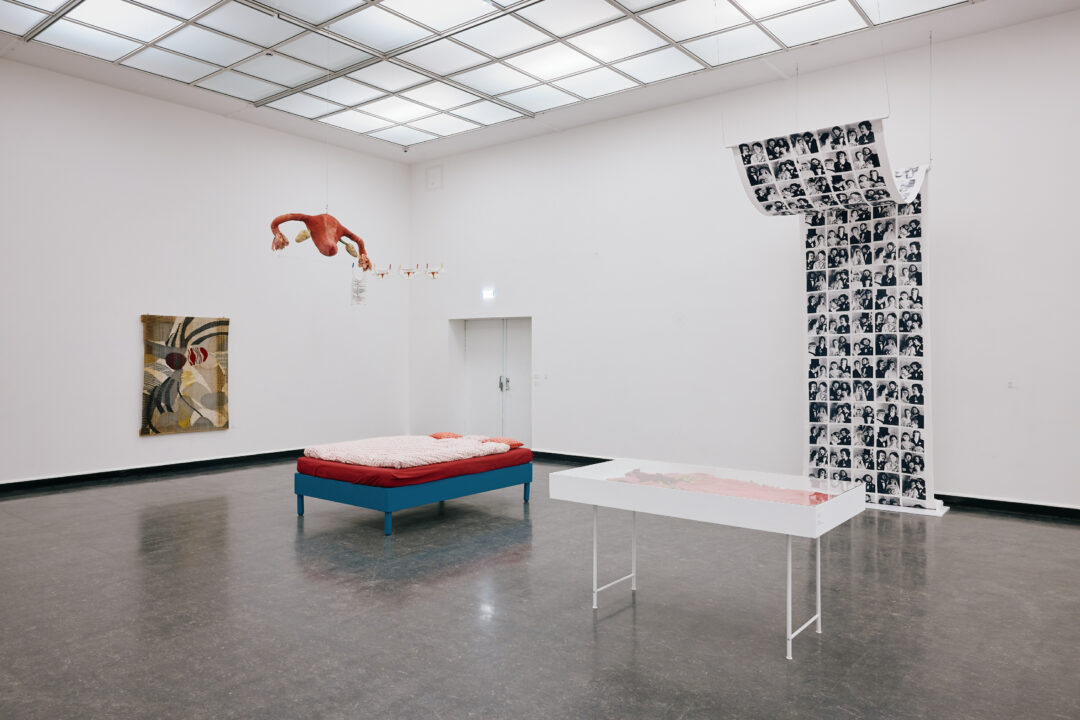
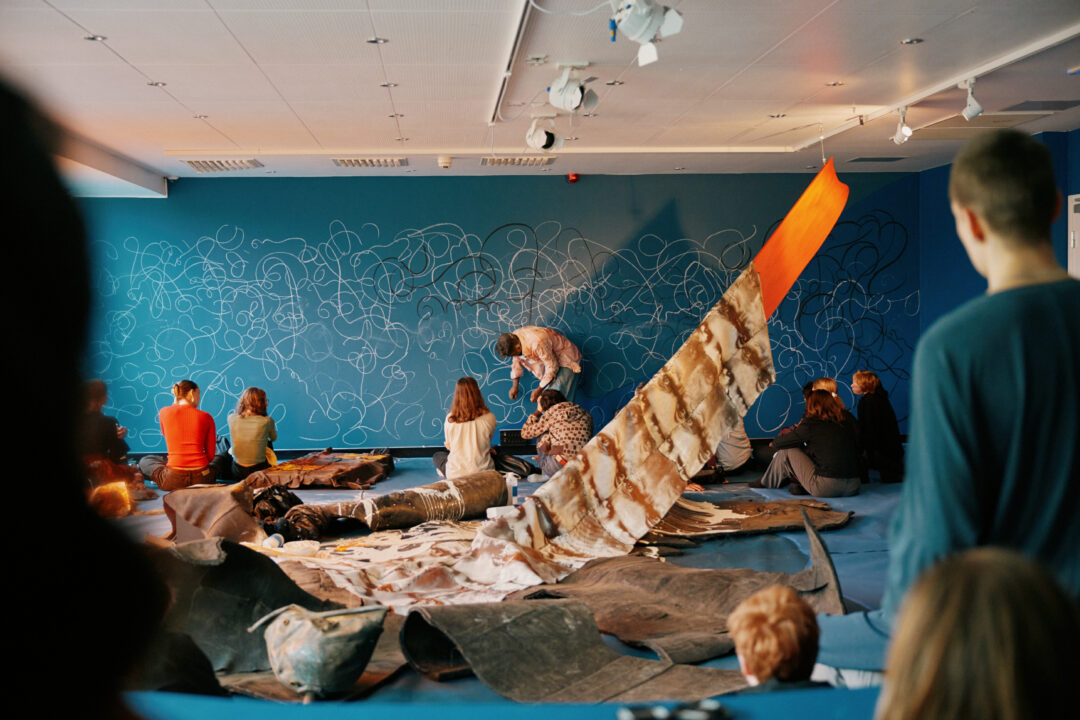
The process for this edition began in 2023, with cross-disciplinary courses at BAS that are nomadic workshops combining architecture, writing, and visual arts, in which participants—artists, thinkers, and activists—explored themes such as shared care, post-destruction reflection, Sámi[2] practices, unconscious problem solving, and urban planning and artistic practices that reclaim ruins. These preliminary laboratories, open to the public since February 2025, transform the triennial into a living process. The exhibitions are scattered across a dozen venues in Bergen, from the historic Kunsthall to the independent gallery Entrée, from the bar-club ROMMET to the Textile Industry Museum in Salhus, which can be reached by taking the Literature Boat Epos. At the heart of this geographical dispersion, which echoes the fractured topography of Bergen, a city of islands and bridges, unfolds a rich program. Collective openings, conferences, meetings with artists, poetry readings, immersive concerts, and ritual performances mark the opening days of the event with their festive yet introspective intensity. Among the highlights, the Maasai Mbili collective, a group of activist artists based in the Kibera neighborhood of Nairobi, Kenya, which explores migration and indigenous knowledge through its creations, transforms the Entrée gallery into an immersive “living studio.” Graphic works are displayed everywhere, on the walls and stacked on the floor, inviting visitors to pick them up. Here, the collective offers a map of the city of Bergen from the perspective of marginalized groups.
Contributed by Skeivt arkiv, Bergen’s queer archive, “Archives for Social Change” is a project that collects and highlights stories and narratives related to social change. It brings together five independent archives containing the neglected and often silenced stories of communities that have fought, organized, and cared for one another in the face of exclusion and oppression. The project’s approach transforms the archive into a living space for sharing and collective reflection, inviting the public to explore testimonies and documents that tell the stories of social struggles and transformations. Stranges Stiftelse, a former poorhouse for women founded in 1609, serves as the setting for the exhibition, fostering intimate and reflective exchanges. Also exploring archives of resistance and collective memory, the Communist Museum of Palestine, hosted by the mobile studio Tenthaus installed in front of Bergen Cathedral School, embodies an ongoing effort to question and reinvent the uses and forms of art, knowledge, and its institutions, emphasizing mutual aid, shared study, and solidarity. It presents an exhibition of works donated by artists in solidarity with Palestine, scattered throughout the city, in residents’ homes and community institutions, as a network of resistance against narratives that deny the Nakba. Adania Shibli leaves her mark here. Her research on Palestinian memory transforms the space into a nomadic museum in which art is not a museum object but an act of breaking colonial chains. Ravi Agarwal, for his part, brings an ecological and industrial dimension. His interventions, visible in the video installations by artists Lapdiang Artimai Syiem and Monica Ursina Jäger, presented in what remains of the medieval Nonneseter convent, question ruins as sites of healing. The Ecuadorian collective Al Borde occupies the Assembly’s Open Office with workshops on community architecture, transforming the triennial’s office into a collective hut. And BAS, with its nomadic heritage, infuses everything. Its previous cross-disciplinary journeys crystallize in performances and sculptures that blur the boundaries between learning and creation, the whole taking the form of a rhizome. There is no grand curatorial narrative imposed here, but rather intimate intersections that range from cross-disciplinary learning to kinship across cultures, and love as a disruptive force against ambient cruelties. Among the wide range of commitments implemented through collective action and anti-colonial movements is the Situationist-inspired collective Gruppe 66, which was one of the first to create artistic actions and happenings in Norway. The Kunsthall pays tribute to it with a retrospective that includes documentation on the situationist methods deployed by the collective’s artists in the 1960s and 1970s, and invites several contemporary artists (Susan Philipsz, Jakkai Siributr) and collectives (Maasai Mbili Artist Collective, Tenthaus Art Collective) to present new CO-RITUS[3] events inspired by Gruppe 66.
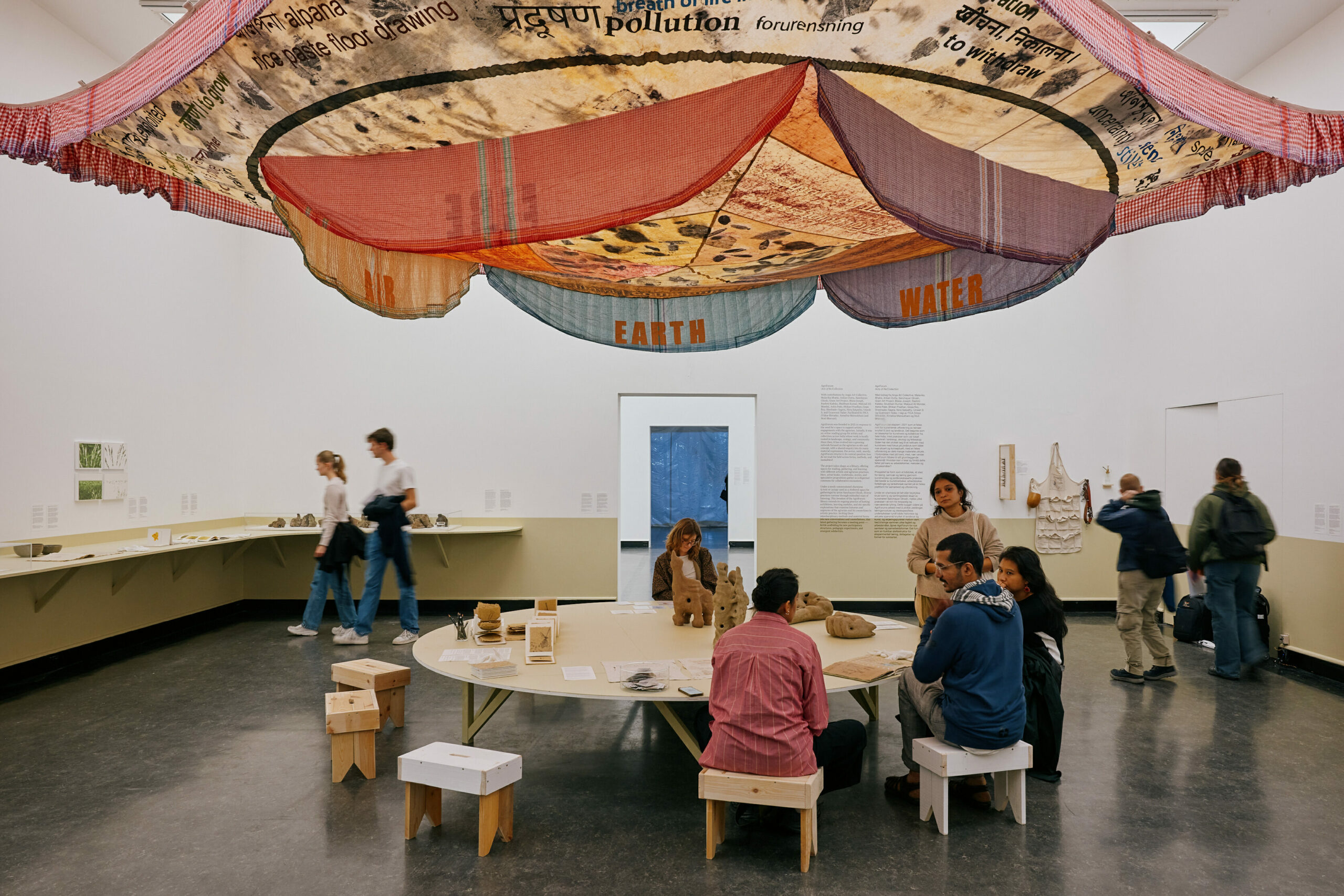
At the Grand Terminus Hotel, the immersive installation “The Unseen – Fjord Conversations” by Swiss artist Monica Ursina Jäger, composed of four large textile panels inspired by the water strata of the fjords, sculptural objects in the shape of books, painted in watercolor on birch plywood, and a journal compiling notes and materials from field research, explores the invisible or neglected aspects of Norwegian fjords, highlighting the human impacts that affect them, such as trade, extractive industries, and environmental disturbances, beyond the usual idyllic and touristy image. The work, which also includes the hypnotic video presented at Nonneseter, questions the perception of the fjord as a dynamic space, shaped by natural forces and human intervention. The result of a collaboration with researchers from the Bjerknes Center for Climate Research in Bergen, it combines artistic and scientific approaches to reveal the hidden layers of the marine landscape, such as seabed ecosystems and transformations induced by industrial activity. The installation invites a renewed understanding of the fjord as a place of scientific inquiry, industrial exploitation, and cultural imagination, highlighting themes of sustainability, post-natural landscapes, and interdisciplinary dialogue between art and science.
But this Assembly, so generous in its intentions, exposes itself to the trap of performative utopia. While mutual care is a noble concept, evoking post-traumatic collective therapies, in the context of Norway—a prosperous country far removed from the conflicts it addresses—it can sometimes sound like a well-meaning luxury. The absence of direct confrontation—no debates on Norwegian investments in the oil industry—leaves a feeling of incompleteness. Compared to past editions, 2025 marks a shift towards the intimate and the processual. The 2016 edition, curated by Tarek Atoui, explored sound vibrations and affective infrastructures in a fractal puzzle that avoided any rigid curatorial framework. The 2019 edition, curated by Iris Dressler and Hans D. Christ, reactivated the dead to question political assemblies, with an intersectional “Parliament of Bodies” echoed here by queer and decolonial affinities. The current edition, by stretching out time, avoids ephemeral spectacle. This Assembly in gestation, in which art is not a finished product but a work in progress, deconstructs the capitalism of the exhibition in favor of a slow rhythm, close to that of the fjords.
A fragile yet necessary proposition, this fifth edition of Bergen Assembly establishes itself as a space in which art, crossing disciplines, weaves links to combat the paralysis of the present. In an era of disasters, where love as a “social force” sounds like a welcome but undoubtedly insufficient mantra, this edition invites action rather than contemplation. Under the rainy skies of Bergen, “Across, with, nearby” appears as a whispered utopia, deserving to be amplified.
[1] “Across, with, nearby”
[2] Indigenous people of Sápmi (Lapland). Formerly known as Lapps, a foreign and pejorative term.
[3] First attempt to eliminate the concept of the spectator in the creative process by transforming them into participants, in order to better attack the consumerist structure of real society and artistic and urban life. The first CO-RITUS events were organized in Copenhagen and Sweden in 1962 by Situationists from the Second Situationist International. But the theory was developed in the 1961 CO-RITUS manifesto.
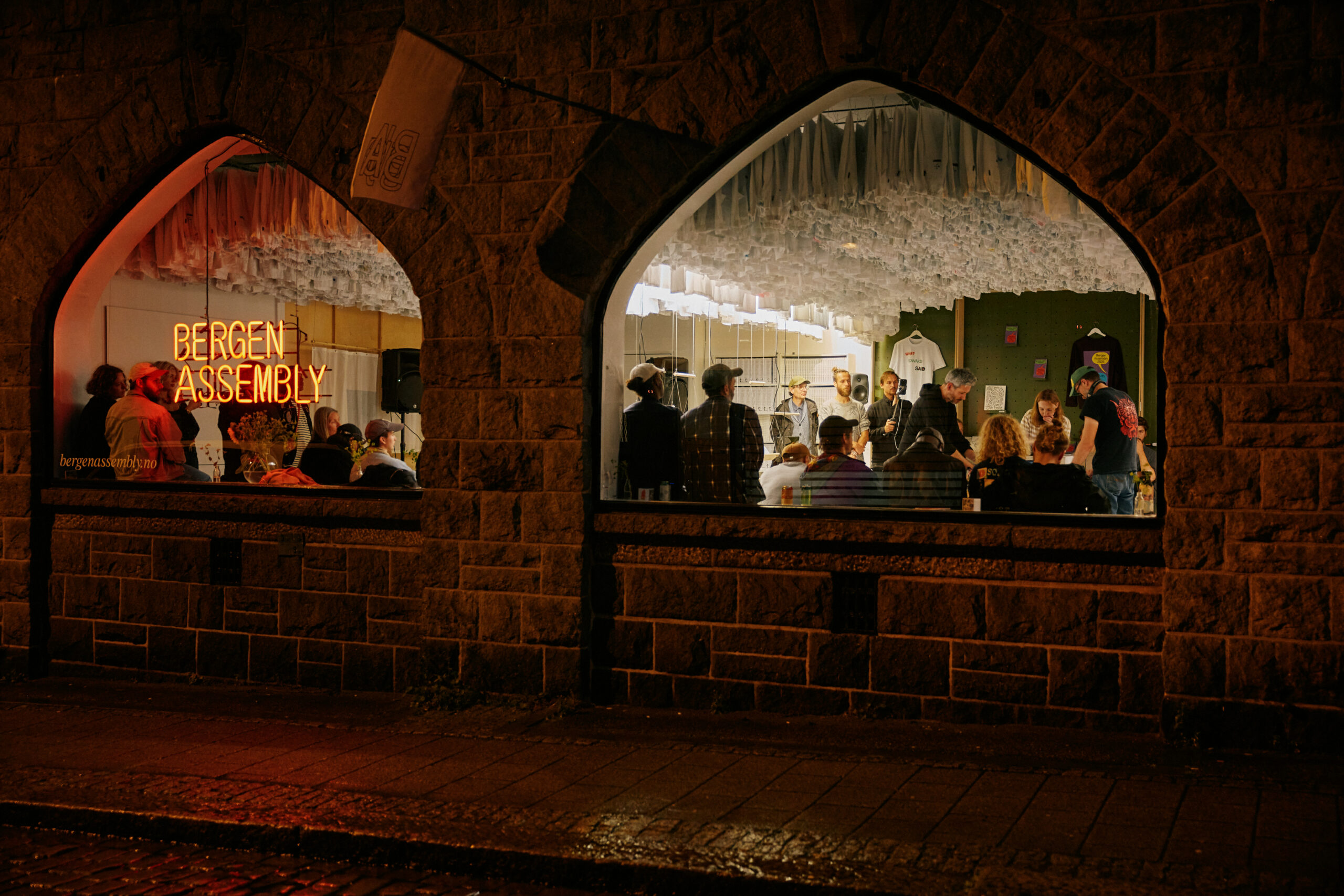
Head image : Bergen Assembly Open Office, outdoor view. Photo: Abrakadabra.
- Share: ,
- By the same author: Biennale Son, Camille Llobet, After the End. Maps for Another Future, Wolfgang Tillmans, Aline Bouvy,